A stuff sack is the cheapest piece of gear in a travel kit and the easiest to buy wrong. A bag that is a couple of inches short will not close around a sleeping bag, and a drawstring channel held by one stitch line will spill a down quilt across a hostel floor. The listings below are the best budget stuff sacks I would shortlist for travel, camping and backpacking, described strictly by what each product page states: stated capacity, closure style, fabric wording and what the name promises. Where a listing never gives a number, this guide says so instead of guessing. That is the same rule that applies to carry-on luggage: if the spec sheet does not state it, treat it as unknown until the product page proves otherwise.
Quick answer
The Frelaxy Stuff Sack Set 5-Pack (3L&5L&9L&15L&20L) is the strongest fit for most trips because it is the only pick here that covers five stated capacities, from 3L to 20L, in a single purchase, so one order handles a sleeping bag liner, a puffy layer, toiletries and dirty laundry separately. Choose the ALPS Mountaineering Dry Compression Stuff Sack instead when your load is likely to get wet and you want a dry-style closure plus compression rather than a plain drawstring.
Budget stuff sacks worth comparing
A useful comparison starts with what each sack is designed to do. Two of these are compression sacks that pull a sleeping bag down with straps, three are drawstring sets built for separating small items, and one is a dry compression sack aimed at wet conditions. None of them are framed as expedition equipment, and none of them are priced like it. What separates them is how clearly the capacity is stated and whether the closure matches the way you pack.
Top pick
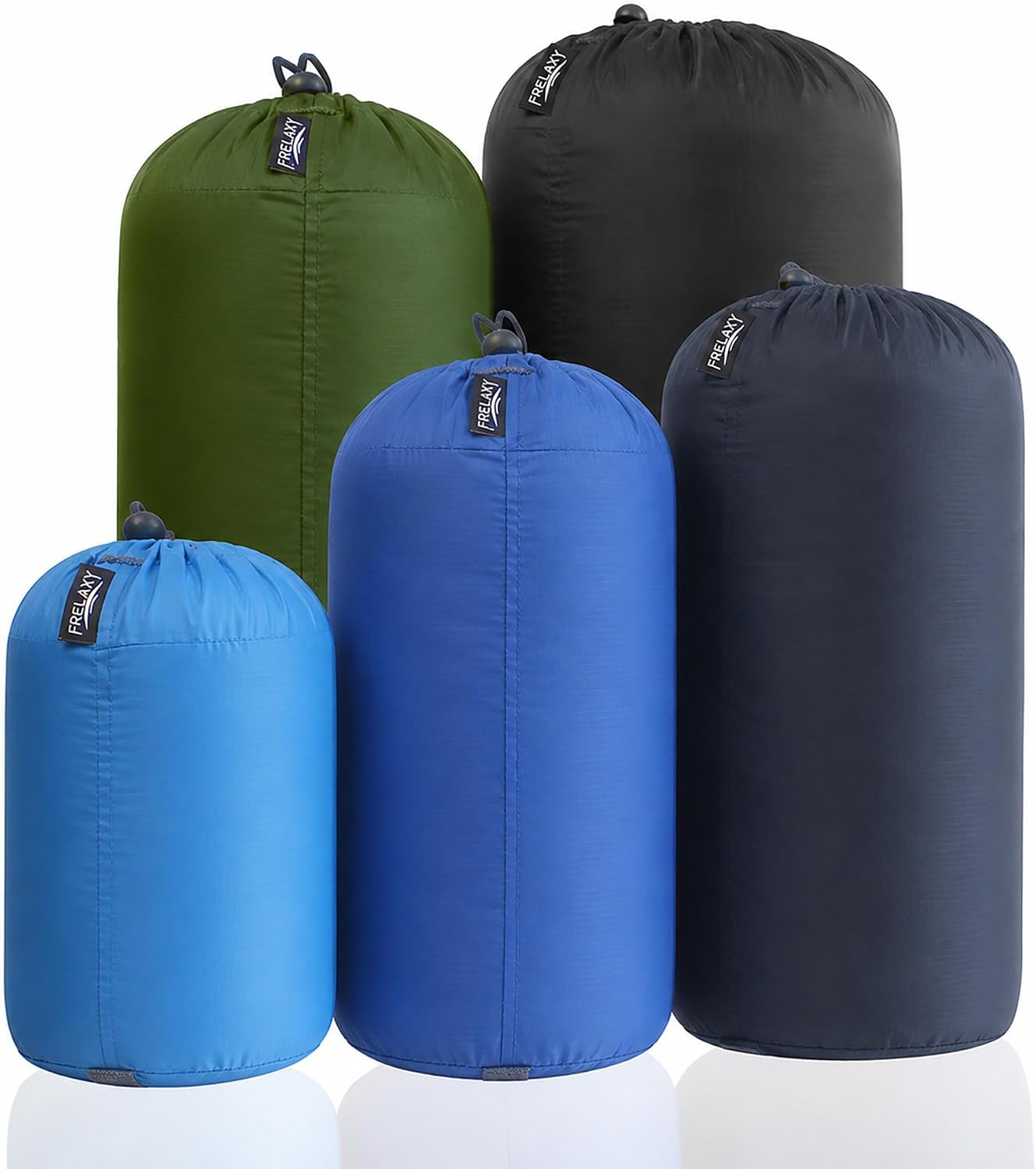
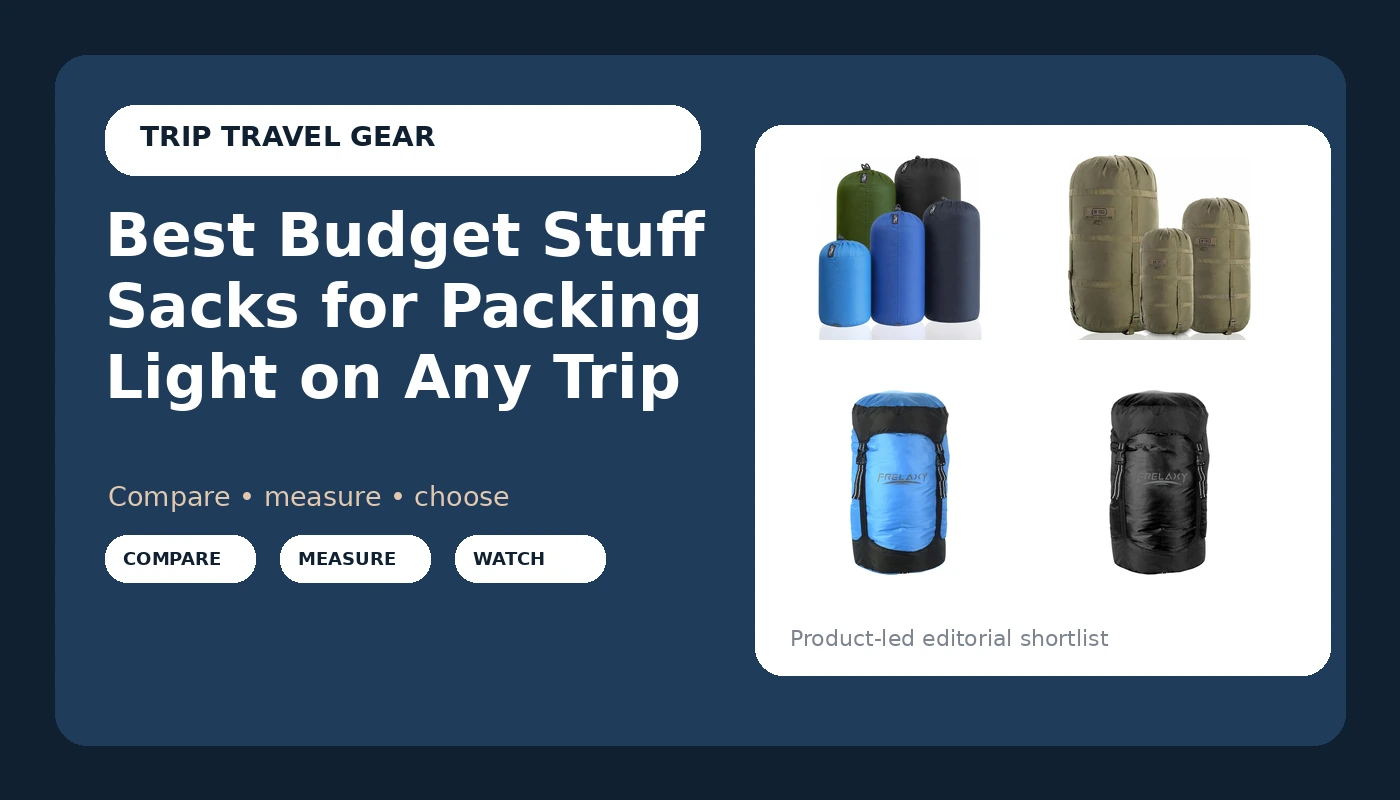
Frelaxy Stuff Sack Set 5-Pack (3L&5L&9L&15L&20L), Ultralight Ditty Bags with Dust Flap for Traveling Hiking Backpacking (Sky Blue&Blue&Navy&Army Green&Black)
Five drawstring sacks in stated 3L, 5L, 9L, 15L and 20L sizes, each in a different color, with a dust flap and an ultralight build aimed at travel, hiking and backpacking.
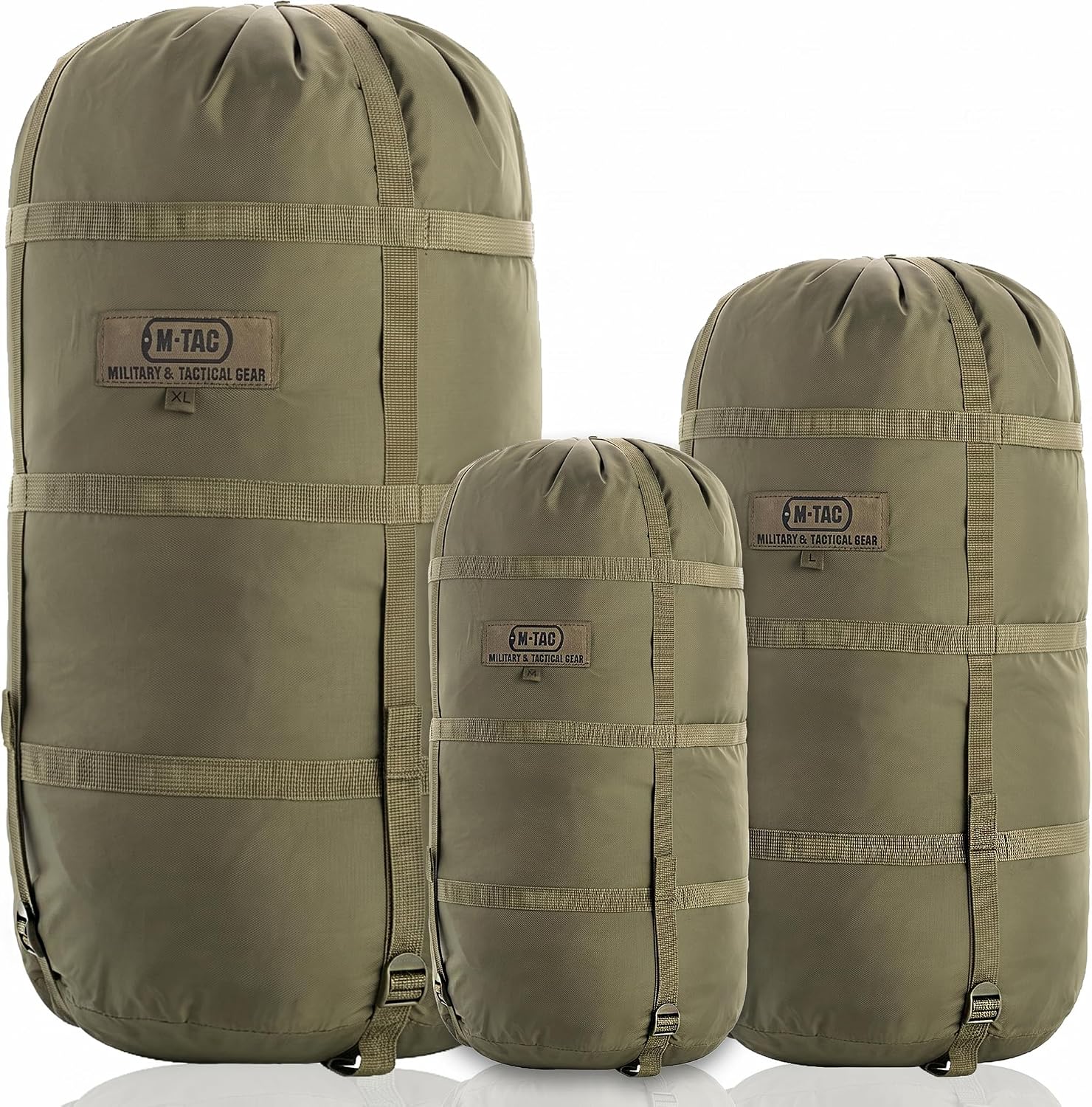
M-Tac Compression Stuff Sack for Sleeping Bag Military Water Resistant Compression Bag Lightweight Nylon Compression Sack for Travel, Camping, Hiking, Outdoor
A single nylon compression sack described as water resistant and lightweight, with compression straps intended to pull a sleeping bag down to a smaller pack volume.
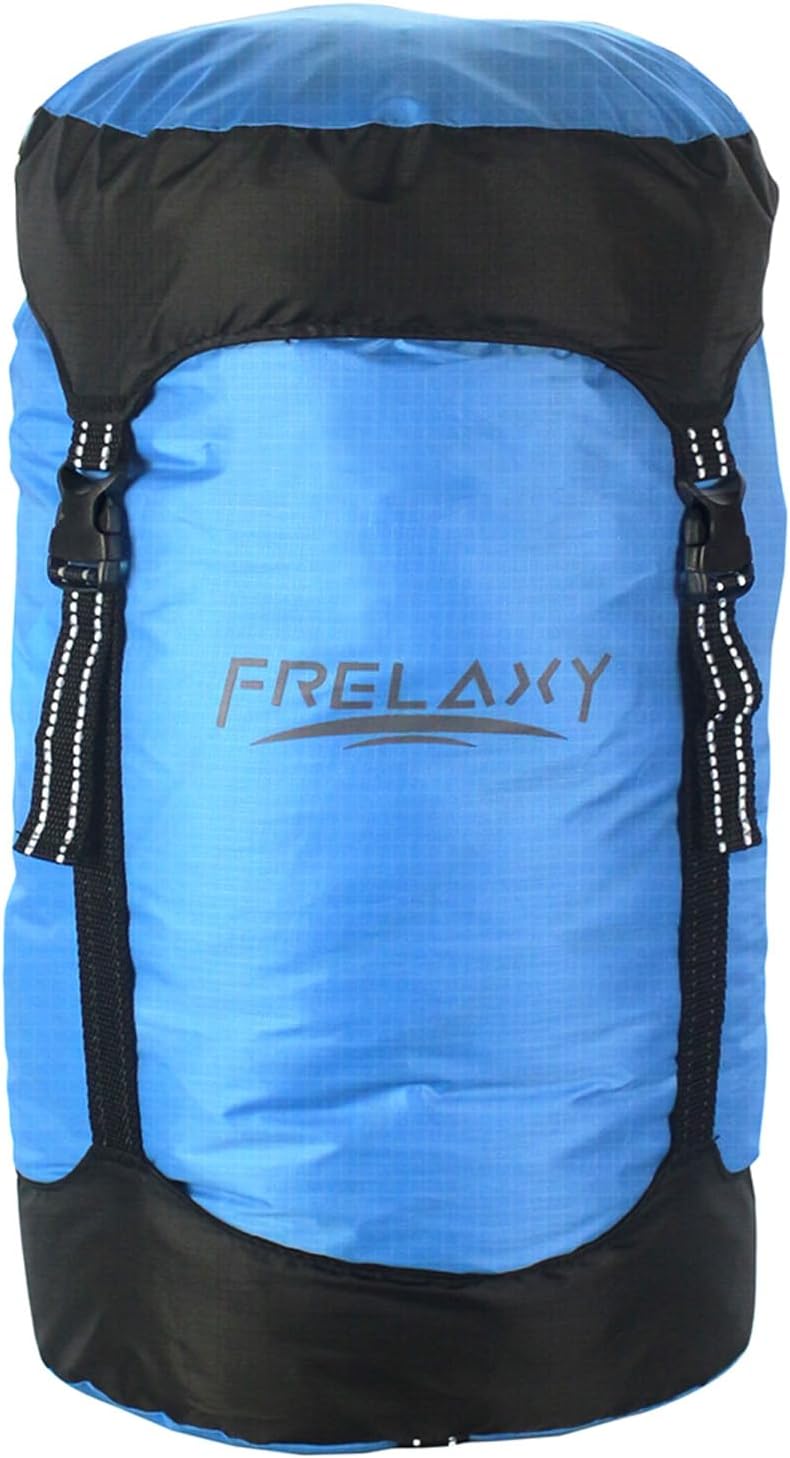
Frelaxy Compression Sack, 40% More Space! Sleeping Bag Stuff Sack
A compression sack marketed for sleeping bags, with the listing naming a 40 percent space claim and a strap-based compression design.
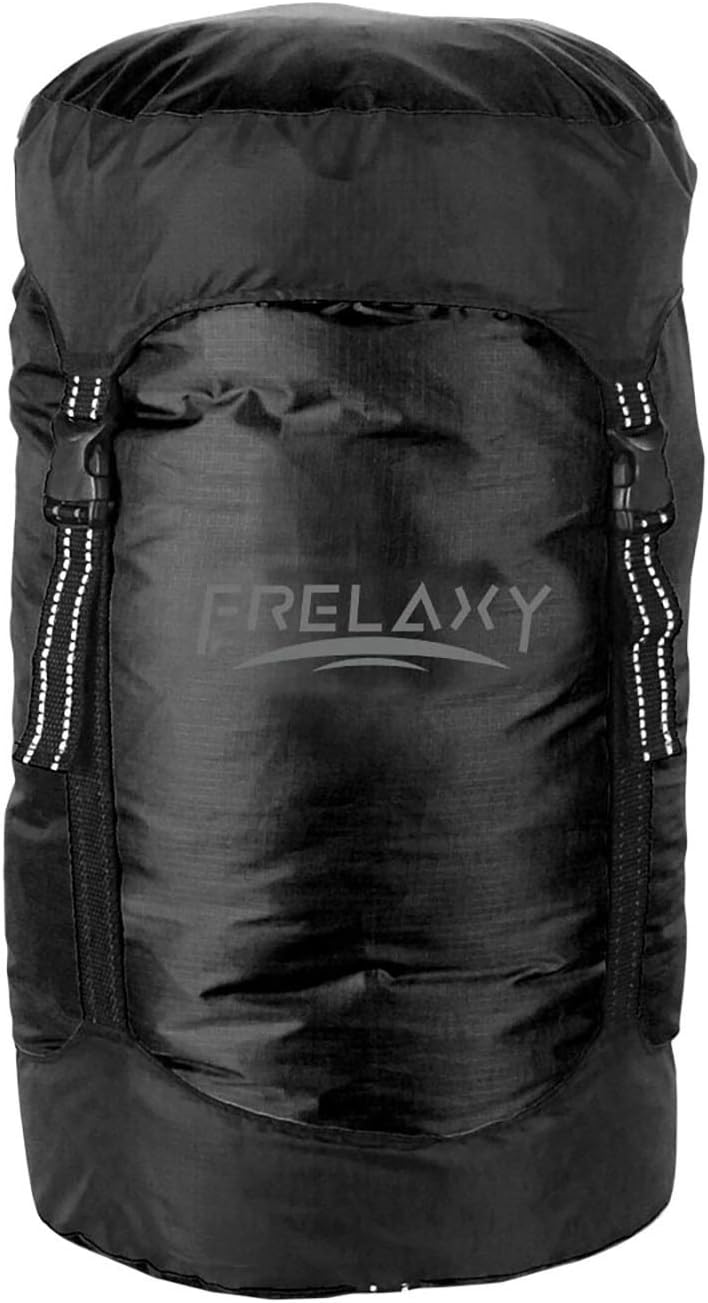
Frelaxy Compression Sack, 40% More Space! Sleeping Bag Stuff Sack
The same compression sack model name in a separate listing, which means the size and color options differ between the two pages and need checking on the product page.
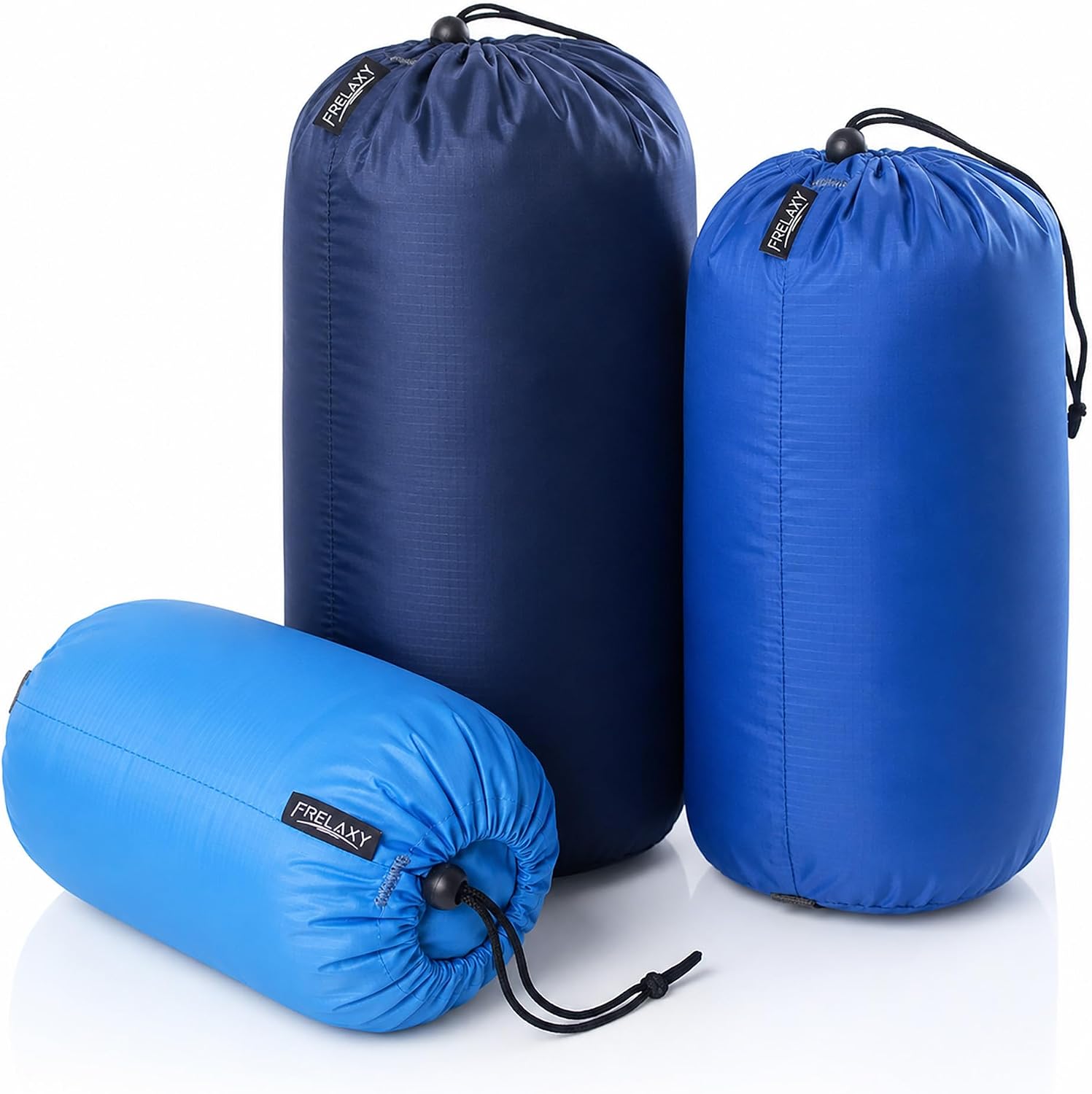
Frelaxy Stuff Sack Set 3-Pack (3L&5L&9L), Lightweight Drawstring Bags
Three lightweight drawstring bags in stated 3L, 5L and 9L sizes, the smallest and simplest set here and the one to pick if you only need to organize small items.
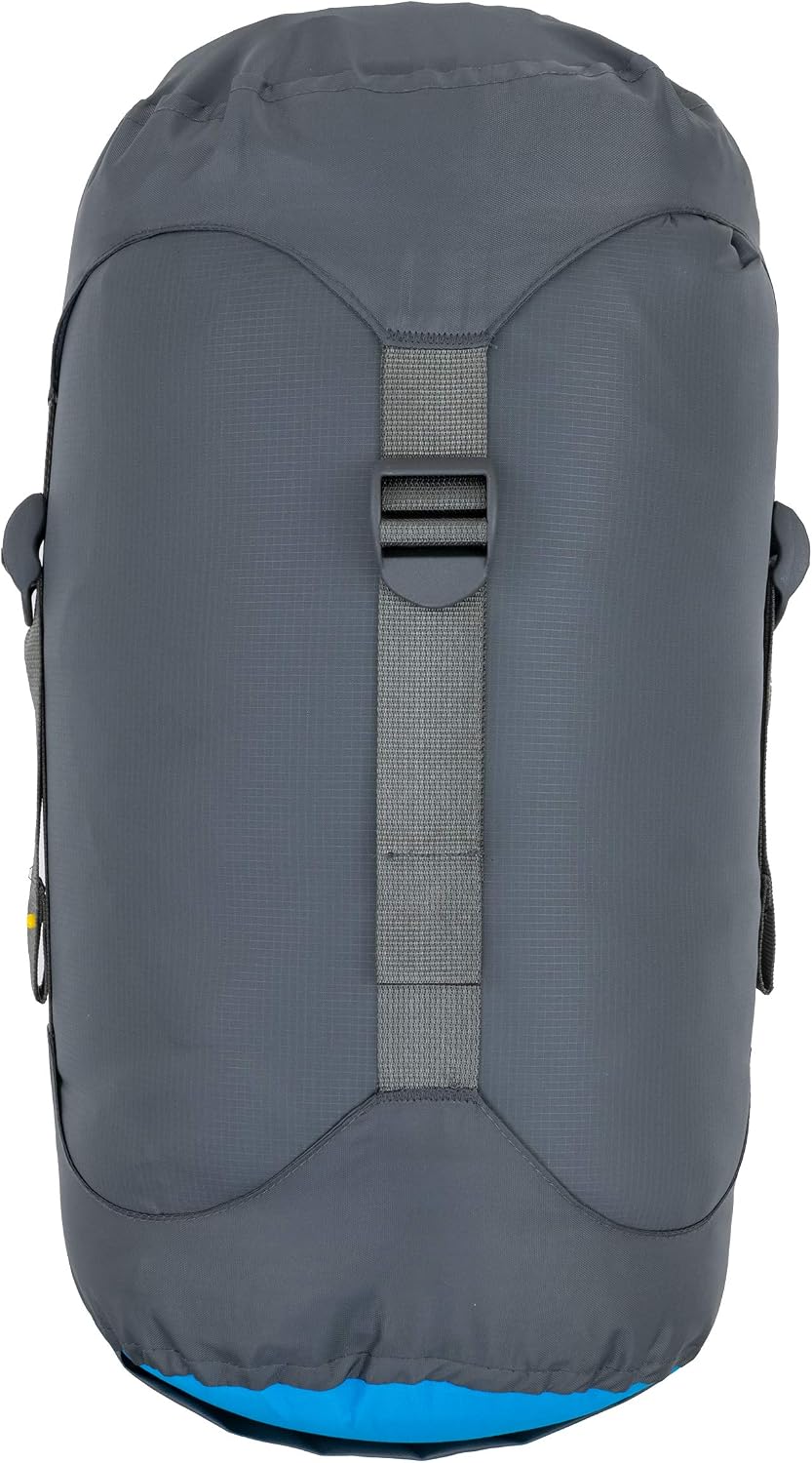
ALPS Mountaineering Dry Compression Stuff Sack
A dry-style compression stuff sack from a mountaineering brand, built around keeping contents away from water while still compressing a sleeping bag or soft layer.
How these products were compared
This guide compares stated capacity in liters, closure and compression style, fabric and water-resistance wording, packed bulk as described by the listing, and how completely each product page documents its own sizes. Product names, images and retailer links are matched by product code so that every card points to the product shown, and nothing here is presented as hands-on testing.
A Stuff Sacks comparison built only on marketing copy is not worth much, which is why the capacity line matters more than the color range. Many top rated Stuff Sacks listings show a photo of a bulging bag and never state the packed volume, the fabric weight or the closed diameter. When a listing does state capacity in liters, treat that as the starting number and check whether it refers to the filled volume or the flat bag, because the two are not the same thing. For the two Frelaxy compression sack pages that share one model name, the pages are separate listings, so confirm which size and color you are adding to the cart before checkout.
How to choose the right stuff sack
Start with the volume of the thing you are packing, not the volume of the bag. Roll or fold your sleeping bag, puffy layer or quilt, push it into a box or a measuring jug, and note roughly how many liters it takes up when compressed by hand. Then buy a sack at or slightly below that number if it is a compression sack, or slightly above it if it is a plain drawstring sack, because a drawstring bag does no compressing on its own. This is the whole of how to choose Stuff Sacks: the belt, the strap or the cord can only take up slack you have already squeezed out.
Second, decide whether you need compression at all. A compression sack with two straps can turn a bulky synthetic bag into a dense cylinder, but that same dense cylinder is heavy against your back and puts load on the seams every time you cinch it. Drawstring sacks like the Frelaxy sets are for separation and light organization, not volume reduction. If you are building a pack for a first trip, a Stuff Sacks size guide is more useful than a brand list, and the simple version is this: 3L for chargers and cables, 5L for a tee shirt stack, 9L for a fleece, 15L for a sleeping bag liner, 20L for a full sleeping bag or a week of dirty laundry.
Third, read the water-resistance wording carefully. "Water resistant" and "dry" describe different intentions, and neither is a rating you can compare across brands without a stated standard. A dry-style sack with a roll or fold closure will shed rain and splashes from a wet pack bottom; a nylon compression sack described as water resistant will handle condensation and a damp tent floor but should not be trusted in standing water. If your sleeping bag matters to you, line the sack with a plastic liner for anything more than a drizzle, and read the sleeping bag temperature ratings explained guide before you commit to a bag that needs a specific packed size.
Fourth, look at the closure hardware. A drawstring with a cord lock is light and cheap and it fails by fraying at the channel. A compression sack with side-release buckles fails by cracking a buckle or pulling a strap anchor out of the seam. Neither failure is dangerous, but both are annoying at 6 a.m. in a tent, so check the reviews for the specific word "buckle" or "drawstring" before you buy. Skim Stuff Sacks reviews for those two words and a pattern usually appears within a page or two.
Finally, decide whether you want a set or a single sack. A set spreads the risk: if one sack is the wrong size, the others still work, and the color coding lets you find the first-aid kit without emptying the pack. A single compression sack is a better use of money if you have exactly one bulky item to shrink. This Stuff Sacks buying guide leans toward sets for travel and singles for sleep systems, and the picks below reflect that split.
Frelaxy Stuff Sack Set 5-Pack (3L&5L&9L&15L&20L)
The top pick is the Frelaxy five-pack because the listing names its sizes, which is rarer than it should be in this price bracket. You get five drawstring sacks in 3L, 5L, 9L, 15L and 20L, each in a different color, with a dust flap over the opening and an ultralight build aimed at traveling, hiking and backpacking. For a traveler, the practical effect is that one order covers the whole packing system: small electronics up to 9L, clothing at 15L, laundry or a sleeping bag at 20L, and a color difference between clean and dirty that is obvious in a dim hostel room.
The trade-off is that these are drawstring bags, not compression bags. They will organize a load and keep a pack tidy, but they will not shrink a sleeping bag, and a 20L sack full of down will still be a 20L sack when you cinch it. The dust flap is a flap, not a sealed closure, and the ultralight fabric wording tells you the priority was weight rather than abrasion resistance. If your bag lives in and out of a truck bed, a heavier nylon compression sack will outlast it. If it lives in a backpack and a hotel room, the five-pack is the more useful purchase.
Alternatives to consider
The M-Tac Compression Stuff Sack for Sleeping Bag Military Water Resistant Compression Bag Lightweight Nylon Compression Sack for Travel, Camping, Hiking, Outdoor is better suited to one bulky item that has to shrink, since it is a single nylon compression sack described as water resistant and built around straps rather than a drawstring. The Frelaxy Compression Sack, 40% More Space! Sleeping Bag Stuff Sack is a stronger fit when you want the compression sack treatment at a budget price and the 40 percent space claim in the listing matches what you are trying to squeeze.
The Frelaxy Stuff Sack Set 3-Pack (3L&5L&9L), Lightweight Drawstring Bags covers the minimal case: three small and medium drawstring bags for someone who already has a sleeping bag sack and only needs to organize clothing and cables. The Frelaxy Compression Sack, 40% More Space! Sleeping Bag Stuff Sack in its second listing and the ALPS Mountaineering Dry Compression Stuff Sack cover the two ends of the compression decision, with the ALPS sack the one to choose when water exposure is the bigger risk than pack volume. Because the two Frelaxy compression pages carry the same name, treat them as one model with two sets of size and color options and confirm the details on the page you buy from.
Day-to-day use and maintenance
Empty every sack after a trip. Down and synthetic insulation left compressed for months loses loft, and a damp sack left in a pack is how mildew starts. Turn the sack inside out, shake out grit, and check the drawstring channel or the strap anchors for frayed thread before the next trip. A cord lock that slips is usually a worn cord, not a broken lock, and replacing the cord is cheaper than replacing the sack.
Wash by hand in cool water with a mild soap, rinse thoroughly, and air dry out of direct sun. Do not machine dry a coated or water-resistant fabric, because heat can damage the coating and the sack will stop shedding water. Store sacks loosely rather than cinched, and keep them away from anything with a sharp edge in the pack, since ultralight fabric punctures more easily than the shell of a travel backpack. None of these sacks are designed as bear-proof or theft-proof storage, and none should be used to carry food in a place where animals are a problem.
Buying checklist
- Measure the packed volume of what goes in, in liters, before you shop.
- Choose drawstring or compression based on normal use rather than one occasional trip.
- Confirm that the exact listing states the capacity you need and the color you want.
- Read the water-resistance wording and do not read it as waterproof.
- Check Stuff Sacks reviews for the closure part that fails: cord, cord lock, buckle or strap anchor.
- Verify the current retailer price, availability and return terms before you order.
Final recommendation
Choose the Frelaxy Stuff Sack Set 5-Pack (3L&5L&9L&15L&20L) when you want one budget purchase to organize a whole pack across five stated sizes. Choose the ALPS Mountaineering Dry Compression Stuff Sack when wet conditions and pack volume both matter, or the M-Tac Compression Stuff Sack when you only need to shrink a single sleeping bag. The best budget stuff sacks are the ones whose listings tell you the capacity and the closure before you pay, and every pick here earns its place on that basis rather than on a claim nobody can check.