Sports gear is bulky, shaped wrong for a suitcase, and often still damp when you have to pack it. That is the gap budget equipment bags are meant to close, and the cheap ones fail in predictable places: the strap that tears at the box stitch, the zipper that splits at the corner, the wheel housing that cracks on the first curb. This guide covers six bags at the affordable end of the sports travel market, from a 106-liter duffel to a wheeled catcher's bag, and names the trade-off each one makes. Everything below is drawn from the listed specifications and product data. Nothing here is a report from a trip I took with the bag, and where a listing does not state a number, I say so rather than guess.
Quick answer
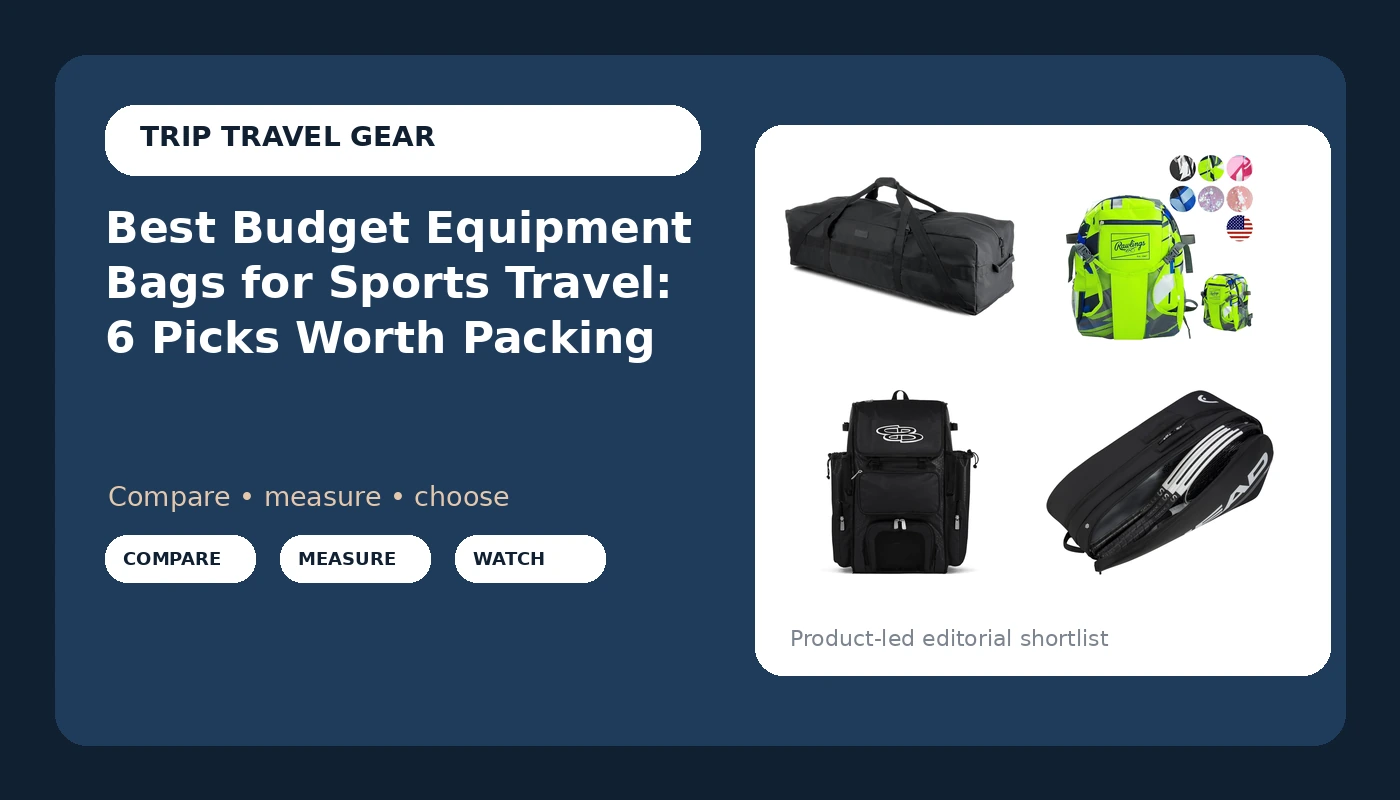
The 106L 45" Extra Large Heavy Duty Equipment Travel Storage Duffle Bag is the strongest fit for one-bag sports travel because its listed 106-liter capacity and 45-inch length take helmets, pads, and bulky gear that a shaped sport bag will not, and it is not tied to a single sport. Choose the Rawlings Remix Backpack Equipment Bag instead when a younger player needs a light, hands-free bag for T-ball or youth softball. Choose the Rawlings YADI 2.0 Wheeled Catcher's Bag when the load is a full catcher's set that you would rather roll than carry.
Which budget equipment bags are worth comparing
All six are listed below in the order this guide recommends them, with the top pick first.
Top pick
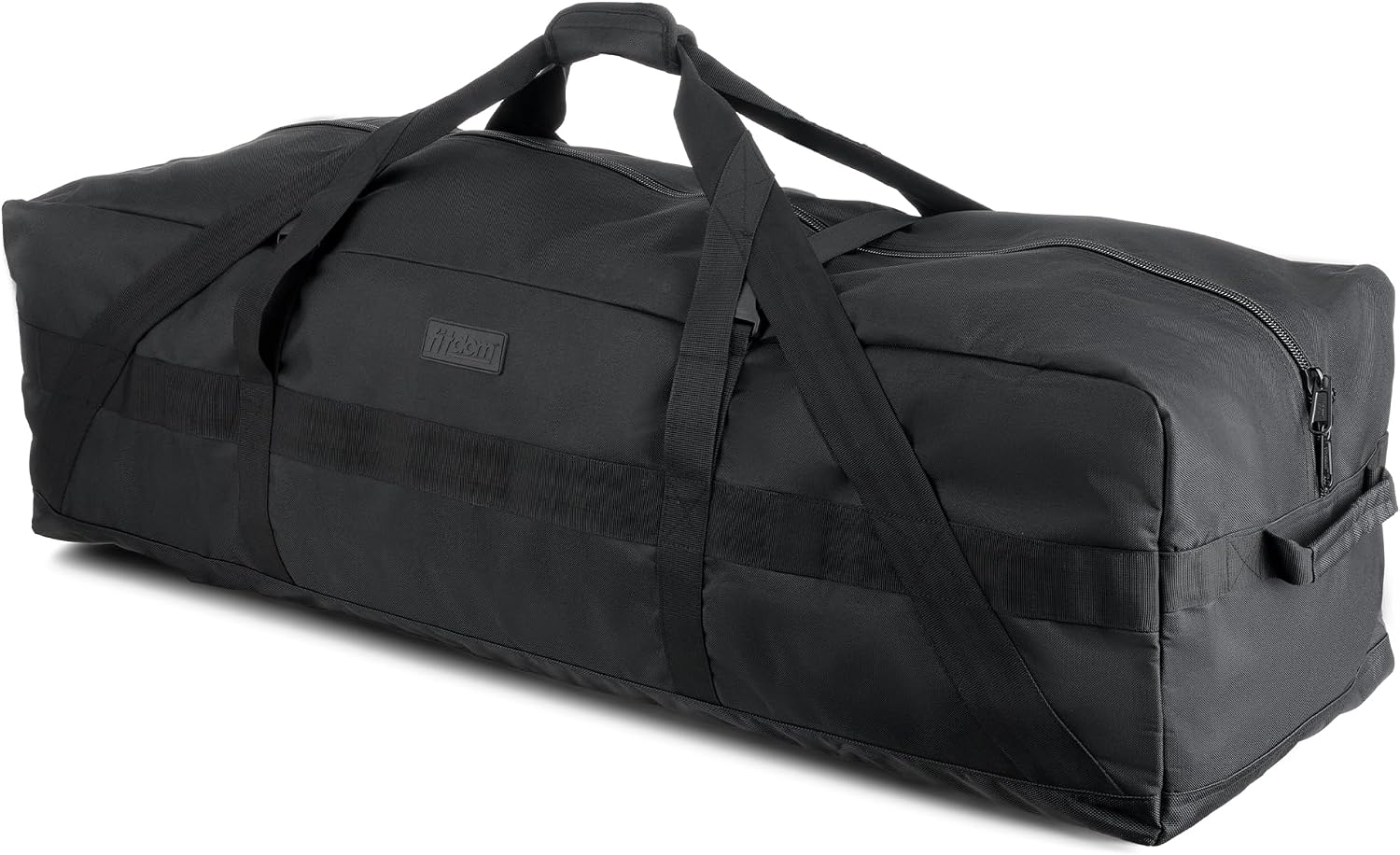
106L 45" Extra Large Heavy Duty Equipment Travel Storage Duffle Bag
A 45-inch, 106-liter duffel for bulky gear: helmets, pads, shoes, and travel extras. Heavy-duty storage build with no wheels and no sport-specific compartments, so it fits whatever sport you are hauling this season.
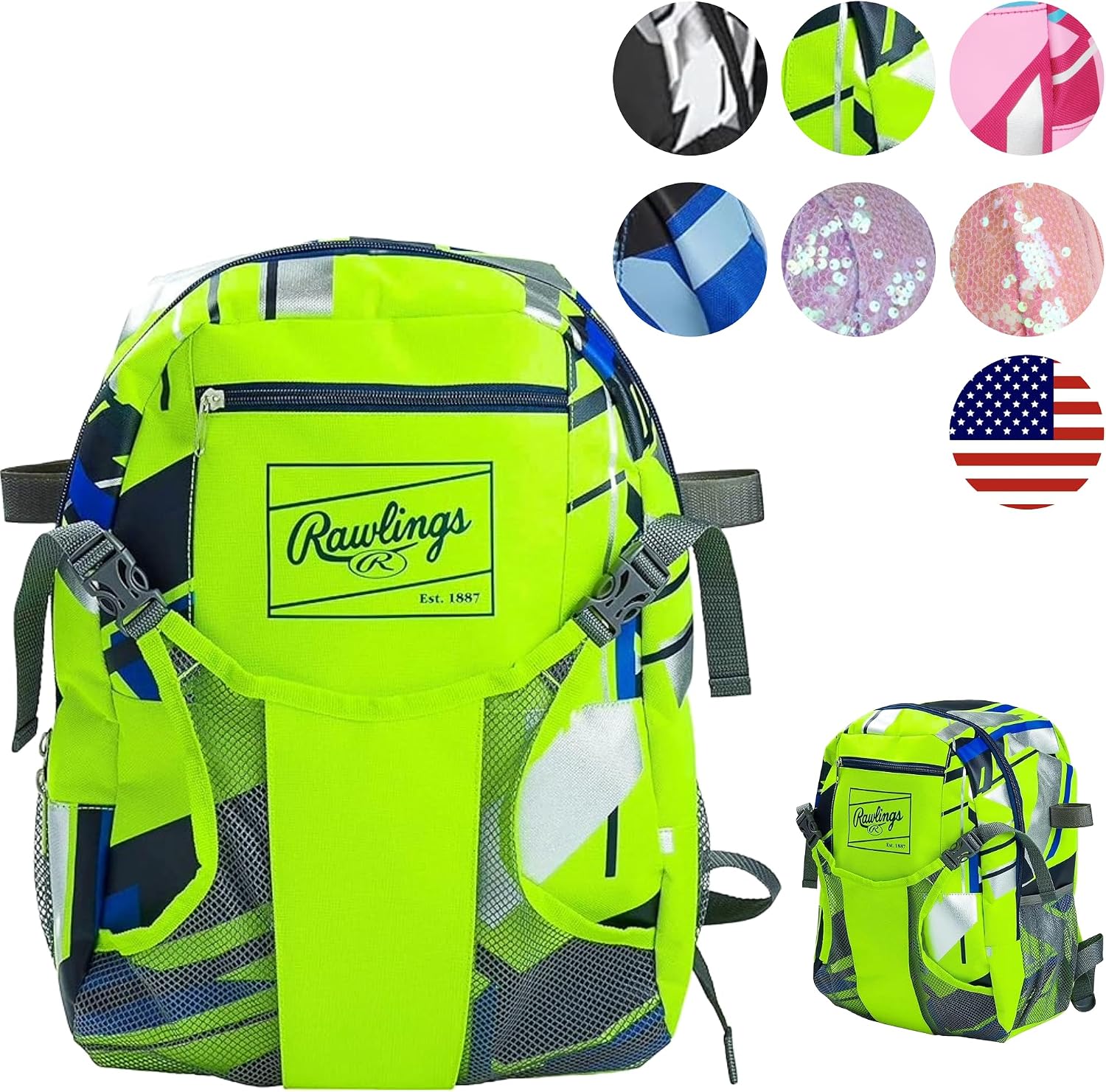
Rawlings Remix Backpack Equipment Bag | T-Ball & Youth Softball | Multiple Colors
A backpack equipment bag aimed at T-ball and youth softball, offered in multiple colors. Sized for a young player's gear rather than a full adult set.
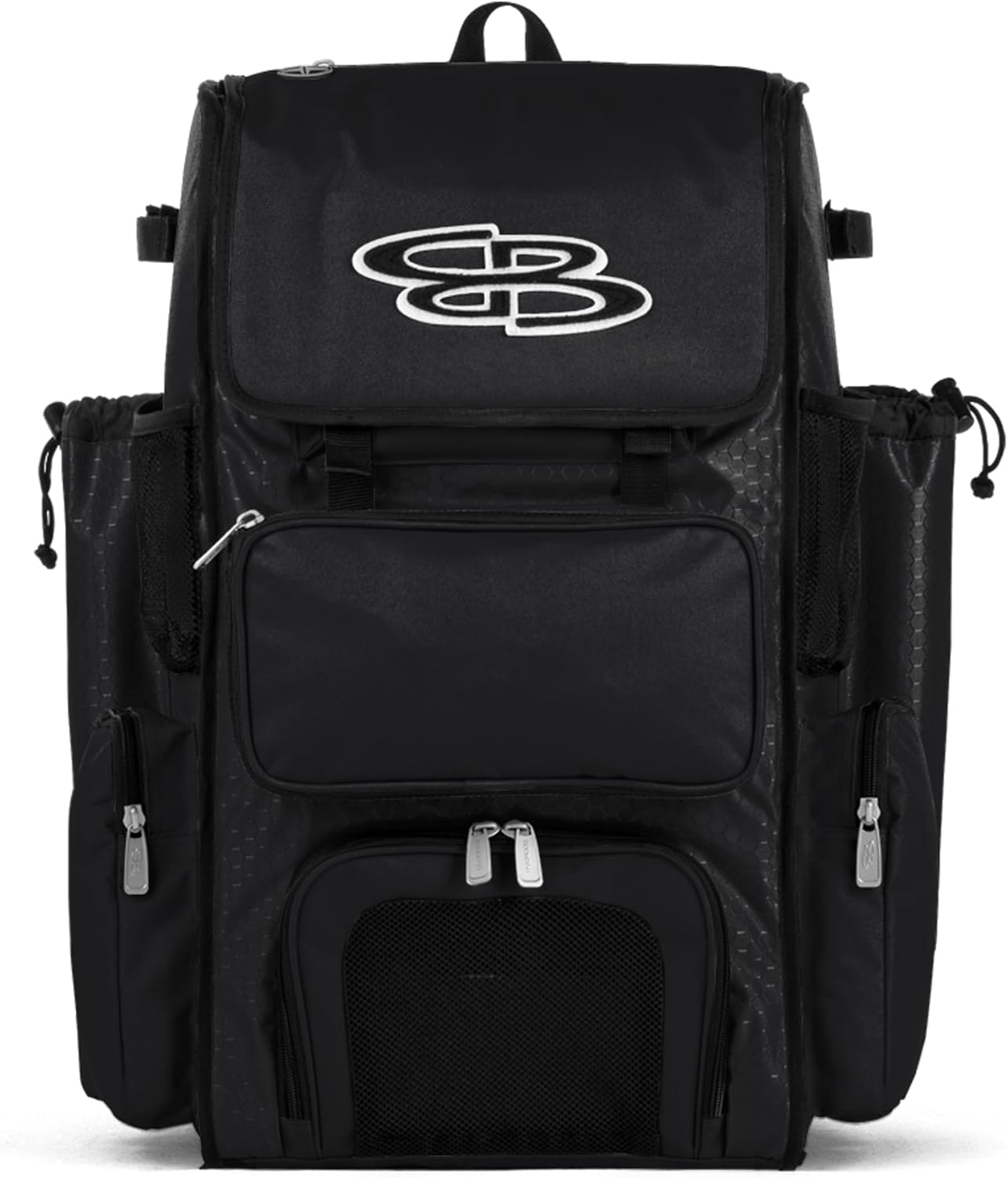
Boombah Superpack Bat Pack -Backpack Version (no wheels) – Holds up to 4 Bats – For Baseball or Softball
A backpack-version bat pack listed as holding up to four bats, built for baseball and softball. No wheels, so the load rides on your shoulders.
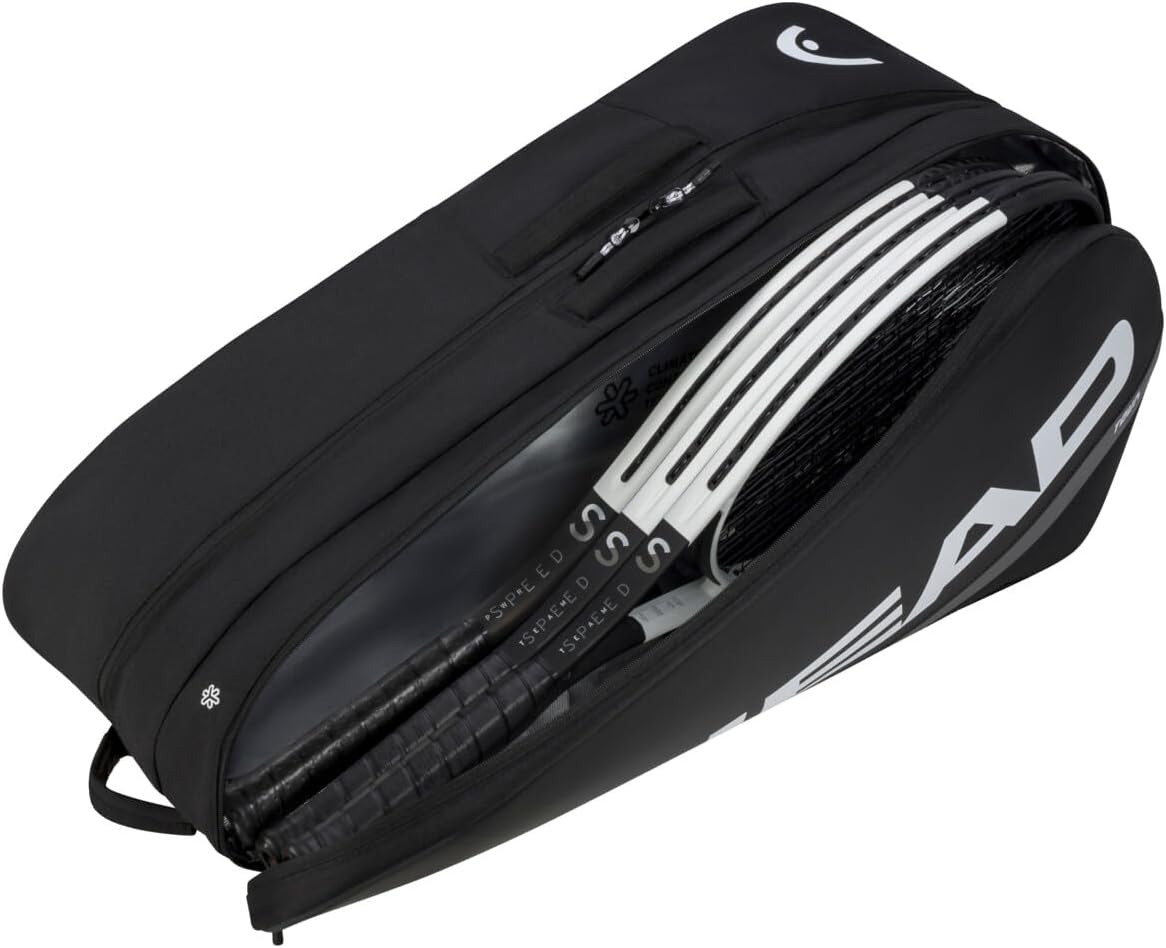
HEAD Tour Racquet Bag L (9R) – 2022 Model (Discontinued/Older Version)
A nine-racquet tour bag from HEAD's 2022 line, listed as an older or discontinued version. Expect limited colorways and shifting availability rather than a current-season model.
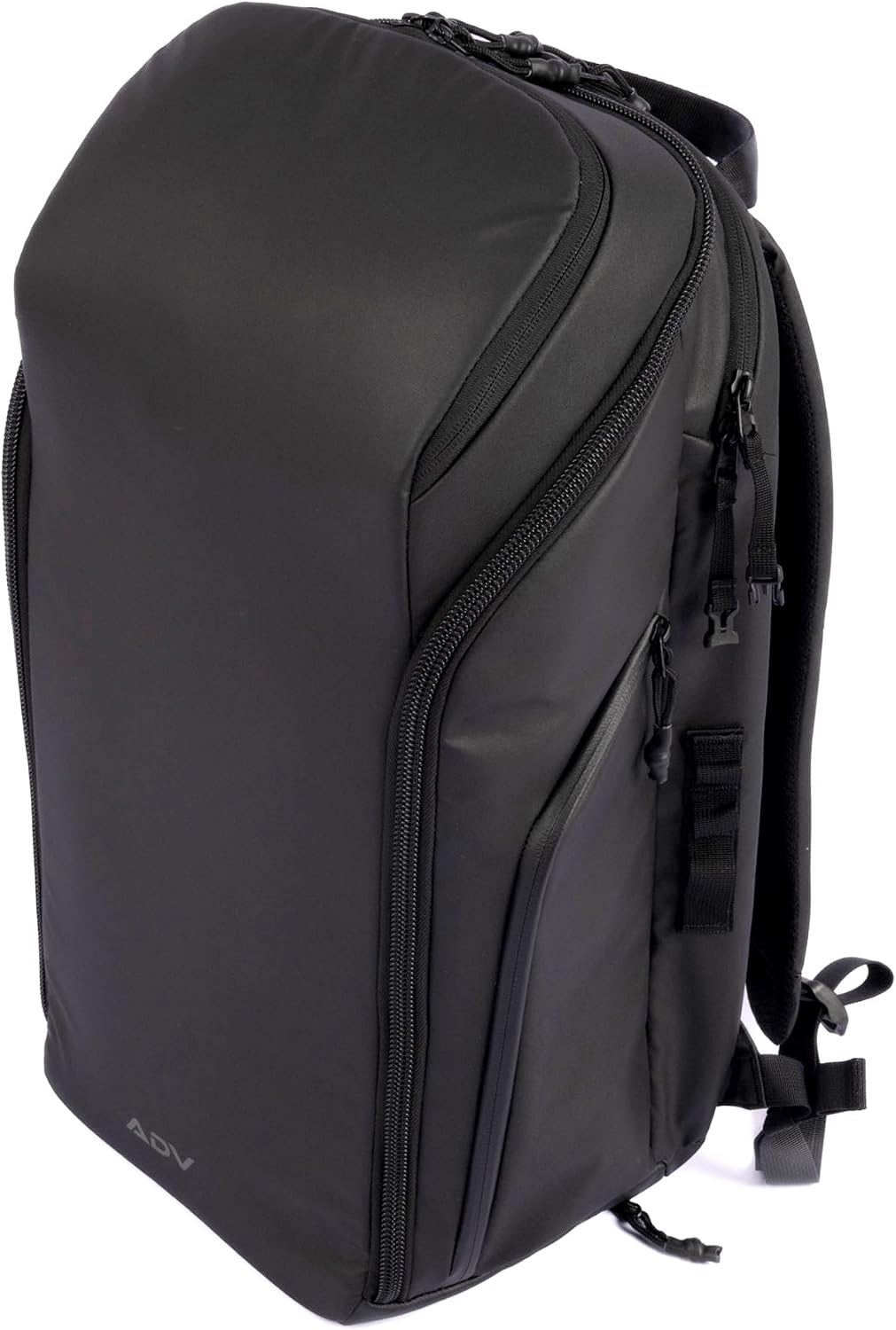
ADV Tennis Pro V3 – Tennis and Pickleball Backpack V2 – Flex Backpack
A tennis and pickleball backpack listed as a flex backpack, aimed at players carrying racquets or paddles plus court gear. The most specialized carry system in this group.
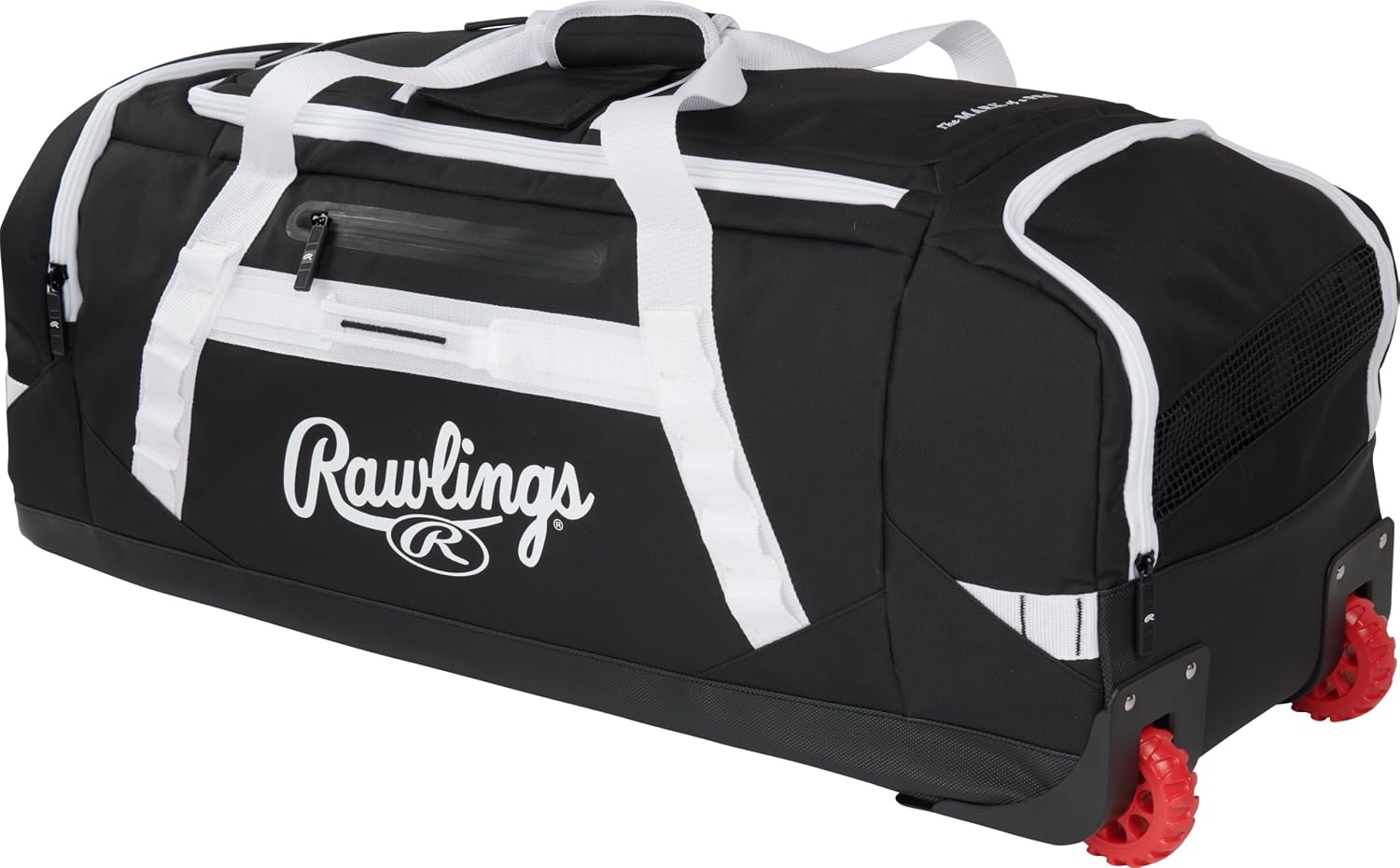
Rawlings | YADI 2.0 Wheeled Catcher's Bag | Yadier Molina Model | Baseball/Softball | Multiple Styles
A wheeled catcher's bag from the Yadier Molina line, built for baseball and softball catcher's gear and offered in multiple styles. Wheels and a handle do the hauling instead of your shoulder.
How these products were compared
This guide compares listed capacity and dimensions, carry style, sport-specific fit, stated materials and hardware, and how each bag is likely to hold up under regular travel. Product names, images, and retailer links are matched by product code so that every card points to the product shown.
The comparison is deliberately not a ranking of quality. A nine-racquet tour bag and a 106-liter duffel solve different problems, and a bag that is wrong for your sport is not rescued by being well made. Capacity quoted in liters is treated as a volume claim only, because liters say nothing about the shape of the opening or whether a helmet will pass through it. Where a listing leaves out a dimension, that omission counts against the bag, since a bag you cannot measure is a bag you cannot plan a trip around.
How to choose the right equipment bag
Start with the pile, not the product page. Lay out everything the bag has to hold on the floor, including the helmet, the shoes, the water bottle, and the padding you usually forget, then measure the widest and longest pieces. A catcher's set and a set of tennis racquets are not the same shape, and no amount of clever compartment design fixes a bag with the wrong silhouette.
Match the bag's shape to the sport. The Rawlings YADI 2.0 Wheeled Catcher's Bag exists because catcher's gear is deep and awkward; a general duffel will hold it, but the load settles at the bottom and the bag sags. The HEAD Tour Racquet Bag L (9R) is built around racquet handles and frame length. If you play two sports, buy for the bulkier one and accept some empty space in the other.
Decide whether wheels earn their place. Wheels and a telescoping handle add hardware, and hardware is what fails first on a cheap bag. A wheeled bag is worth it when the load is heavy and the walk is long, which is exactly the catcher's-bag case. For a bag that gets lifted into a car trunk and carried fifty yards, a plain shoulder strap or backpack harness is lighter and has fewer parts to break.
Then look at the fabric and the fittings. Heavy duty is a marketing word until a denier or a material is stated, so read the listing for a number and treat the absence of one as information. Check the strap attachment: a strap sewn across a single seam is the first thing to go. On wheeled models, look for a photo of the back of the bag, because a front-on shot hides the wheel housing.
Treat any Equipment Bags size guide as a starting point and measure your own gear anyway. A useful Equipment Bags comparison puts carry style and strap attachment ahead of color and pocket count, because those are the parts that decide whether the bag survives a season.
Equipment Bags for beginners should follow one rule: buy for the sport you play most, size up by one increment rather than two, and confirm the return window before you cut the tags off. That is the short version of how to choose Equipment Bags, and it belongs in any Equipment Bags buying guide worth reading. For a broader look at how bag dimensions interact with airline limits, see the carry-on luggage size guide.
106L 45" Extra Large Heavy Duty Equipment Travel Storage Duffle Bag
This is the top pick because it is the least specialized bag here, and for a budget purchase that is a feature rather than a compromise. The listing states 106 liters and 45 inches, which is enough volume for a helmet, pads, shoes, and a change of clothes in one bag, and the duffel shape means the load does not have to fit a molded pocket or a racquet sleeve. It is described as heavy duty and as travel storage, so the stated intent covers the field and the trip in the same bag.
The trade-off is structure. A soft duffel with no wheels and no internal frame carries well when it is full and awkwardly when it is half empty, and 106 liters packed with gear gets heavy on a shoulder strap quickly. There are no sport-specific compartments, so small items need a packing cube or a stuff sack to stay findable. If you need to roll the load instead of carry it, this is the wrong bag, and the wheeled catcher's bag further down is the right one.
Alternatives to consider
The Rawlings Remix Backpack Equipment Bag is better suited to a young player in T-ball or youth softball who needs a hands-free bag that is easy to get on and off and is offered in multiple colors, while the Boombah Superpack Bat Pack is a stronger fit when the sport is baseball or softball and the bat is the awkward item, since it is listed as holding up to four bats in a backpack version with no wheels.
The HEAD Tour Racquet Bag L (9R), ADV Tennis Pro V3, and Rawlings YADI 2.0 Wheeled Catcher's Bag cover the specialized end of the group. The HEAD bag is a nine-racquet tour bag from the 2022 line and is listed as an older or discontinued version, so availability and colorways may shift; buy it if the racquet capacity is right and you are comfortable with an older model. The ADV bag is a tennis and pickleball backpack built around a flex carry system, which suits a player who splits time between the two sports and wants one bag for both. The YADI 2.0 is the wheeled answer for a full catcher's set.
Day-to-day use and maintenance
Empty the bag after every use rather than at the end of the season. Grass, chalk, and sweat left in the bottom of a duffel turn into a smell that no amount of airing fixes, and damp gear pressed against a coated fabric is how linings start to peel. Wipe the interior with a damp cloth, let the bag dry fully open, and store it that way instead of folded shut in a garage.
Check the failure points on a schedule. Run the zipper the full length a few times and look for a pull that has started to separate from the slider. Flex the strap attachments where they meet the body of the bag. On the wheeled catcher's bag, clear hair and grit out of the wheel housing, because that is the part that seizes first. Before a trip, weigh the packed bag on a kitchen scale and compare it with the carrier's published limit rather than a remembered one. Airline limits change, and the number on the carrier's own page is the only one that counts.
Buying checklist
- Measure the longest and widest piece of gear, then compare it with the bag's listed interior dimensions, not the exterior.
- Choose capacity based on your normal load rather than the one tournament a year when you bring everything.
- Confirm that the exact model includes the feature you want, since colorways and versions vary within the same product name.
- Read the cleaning and care instructions before the first trip.
- Verify the current retailer price, availability, and return terms.
Final recommendation
Choose the 106L 45" Extra Large Heavy Duty Equipment Travel Storage Duffle Bag when you want one bag that handles bulky gear across sports and you are willing to carry it. Choose the Rawlings Remix Backpack Equipment Bag when the player is young and the load is light, the Boombah Superpack Bat Pack when four bats need a home, or the Rawlings YADI 2.0 Wheeled Catcher's Bag when the gear is a catcher's set and the walk from the lot is long.
Before you commit, skim Equipment Bags reviews for the specific model and look for the failure people repeat, which is usually a zipper, a strap, or a wheel. A short list of top rated Equipment Bags is only useful if the bag matches the gear you actually own. That is the whole test for the best budget equipment bags: the affordable bag that fits your sport and survives a season beats a better bag that does not fit at all.