
Two checked bags can measure the same, weigh the same, and still come off the carousel in completely different condition, and the difference is almost always the shell. Marketing around suitcases materials is confident and rarely specific: airline approved, scratch resistant, lightweight construction. None of those phrases tells you what happens to a 28-inch case when a loader drops it corner-first onto concrete, or how a stiff ABS seam behaves after an hour in a cold cargo hold. The materials are not a ranking. They are trade-offs, and each one changes the way a bag fails.
This page works through those trade-offs, then connects them to five specific products whose listings actually state a shell material, a closure type, and a set of exterior dimensions. That is the minimum bar. A listing that hides the wheel housing or quotes capacity without interior measurements does not make the cut, no matter how good the photograph looks.
Quick answer
Polycarbonate flexes on impact and returns toward its original shape. ABS is stiffer, less expensive, and more likely to crack at a stressed seam. A zipperless hard case removes the zipper as a failure point but also removes the give that lets you close an overpacked bag. Woven fabric softsides handle abrasion well and gain weight when soaked. The number enforced at the counter is linear inches, and the number that decides how the bag feels at hour six is packed weight. Verify both against your carrier's published limit before you buy.
5 useful options
| Model | Best fit | What stands out |
|---|---|---|
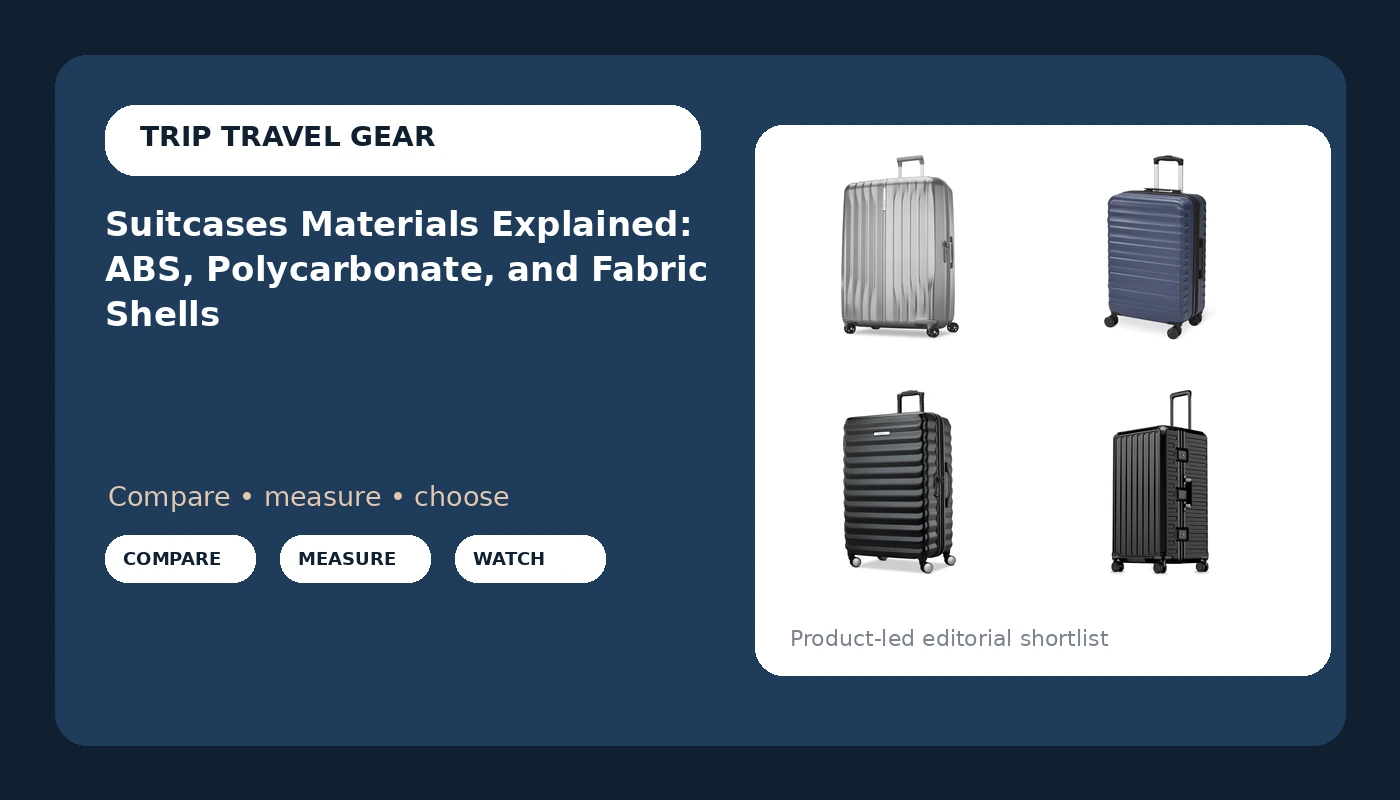
| Samsonite UpLIFT X-Large Checked Hardside | Long checked trips where shell flex matters | Polycarbonate hardside, spinner wheels, integrated TSA lock |
| Amazon Essentials Hard Shell Medium | Tight budgets and shorter checked trips | ABS shell, expandable, listed at 26.8 x 17.8 x 11.3 in |
| Samsonite Hard-Sided 28-Inch Expandable Element | Travelers who want expansion plus a built-in lock | 28-inch checked size, expandable, 360 degree spinner wheels |
| LUGGEX 30 Inch Zipperless | Heavy packers who want to remove the zipper risk | Zipperless closure on a 30-inch checked shell |
| Slohif Luggage Cover | Protecting a shell from scuffs and belt grime | Stretch cover sized for 28-30 inch cases, washable |
The polycarbonate reference point: Samsonite UpLIFT X-Large Checked Hardside
What polycarbonate buys you is forgiveness. Where a stiff shell takes an impact and transfers the load to a seam, a polycarbonate shell bends and returns, which is why the material turns up so often on bags aimed at people who fly a lot. The trade-off is surface wear: a shimmer or gloss finish scuffs visibly, and flex is not the same as puncture resistance, so a sharp edge still wins. Note also that the listing title calls this bag airline approved without naming a carrier or a linear-inch figure. Treat that as marketing and confirm the limit with the airline you are actually flying.
The budget ABS option: Amazon Essentials Hard Shell Medium Suitcase
ABS is the material that makes a cheap hardshell possible: it is rigid, it takes a finish cleanly, and it costs less than polycarbonate. The trade-off is brittleness. Stiff shells concentrate impact at corners, wheel housings, and the seam where the two halves meet, and older plastic has less give than new plastic. This is genuinely where the best budget suitcases live, as long as you accept that a crack, if it comes, will come at a corner. Expansion is the other thing to price in, because unzipping that extra depth changes the linear-inch total, which is why you measure the bag expanded rather than collapsed.
The 28-inch expandable: Samsonite Hard-Sided 28-Inch Expandable Element
A 28-inch case is where a lot of checked-bag trips land, and it is also where the expansion zipper earns its keep on the return leg. The thing to inspect on any expandable hardside is the second closure, because expansion adds a zipper run that does structural work every time the bag is full. The lock matters less than people expect: it protects contents from casual access, not from a determined thief, and it only helps if you set the combination before you leave the house rather than at the check-in desk.
The zipperless shell: LUGGEX 30 Inch Zipperless Large Checked Suitcase
Zippers fail in predictable ways: the pull separates, the coil jumps a tooth, or the tape peels away from the shell. A zipperless case removes that entire category of failure, which is why the design shows up on higher-end checked luggage. The cost is forgiveness. There is no extra inch or two to squeeze a souvenir into, and the frame has to line up exactly every time, so packing discipline becomes part of the purchase. At 30 inches it is also a large bag, and large bags get heavy: weigh it packed on a kitchen scale, not empty on the listing page.
The protection layer: Slohif Luggage Cover
A cover is the least glamorous item here and one of the more practical. Hardshells do not crack from scuffs, but scuffs are what make a five-year-old bag look finished, and a cover also makes a recognizable case less of an announcement. Two caveats. The listing calls it TSA approved, and TSA acceptance really applies to locks, since a screener can slide a sleeve off without cutting anything. And a 28-30 inch range is a range, so fit depends on where in that window your case actually sits, especially with the expansion open.
Prices and availability may change. Product images, names, and retailer links must be matched by verified ASIN. Do not state a current price, rating, stock status, or measured result without current evidence.
How suitcases materials differ in a baggage hold
Treat what follows as suitcases materials explained in the order that decides your money: shell, closure, wheels, handle.
ABS. A styrene-based plastic that is cheap, rigid, and easy to mold, which is why it dominates the entry price band. It holds a finish well and hides fine scratches better than gloss polycarbonate. Its weakness is brittleness: impacts concentrate at corners and at the shell seam, and cold makes stiff plastic stiffer. A crack, when it happens, usually starts at a corner or around a wheel housing.
Polycarbonate. More ductile than ABS. It flexes under a hit and returns, spreads impact across a wider area, and delivers more strength per pound, which is why it carries a higher price. Gloss finishes show scuffs. Flex is not puncture resistance. The material is genuinely better at absorbing the ordinary abuse of a baggage system, and it costs accordingly.
Polypropylene. A middle ground: more flexible than ABS, less expensive than polycarbonate, and common on mid-priced hardsides. Textured finishes hide wear better than smooth ones, which matters more than most spec sheets admit.
Aluminum. The strongest surface and the heaviest, and it dents rather than cracks. The weight penalty is real on a checked bag you still have to lift off a carousel.
Woven fabric. Nylon and polyester softsides abrade instead of cracking, absorb water, take a patch after a cut, and usually add exterior pockets. On a softside the frame and the zipper carry the load, so the closure matters more than the shell.
The short version of suitcases materials is that stiffness and toughness are not the same property, and the trade-off is not a ranking.
What the dimensions and the closure tell you
Suitcases buying guide material usually starts with size and stops there, which is backwards. The size only matters against a specific limit.
- Add the three exterior dimensions to get linear inches, then compare that total to the carrier's published checked-bag limit, which is commonly 62 linear inches on major US carriers but varies by airline and fare.
- Measure the bag expanded if the listing offers expansion, because the second zipper changes the total and a sizer does not care what the bag looked like collapsed.
- Weigh the empty bag on a kitchen scale, subtract it from the carrier's weight cap, and treat the remainder as the real packing budget.
- Inspect the closure hardware: zipper gauge, number of pulls, and whether a frame or latches replace the zip entirely.
- Check the wheel housing and the handle stages. Suitcases reviews are worth reading for one thing above all, and that is what breaks first.
Before you buy: a five-minute check
- Weigh the packed bag at home rather than trusting the listing's empty weight.
- Confirm the linear-inch total against your carrier's published limit, since a suitcases size guide that names no airline is only half a guide.
- Set the lock combination and test the zipper pulls before the airport, not at the counter.
- If you use packing cubes, check the interior dimensions rather than the exterior, because cubes only work when the numbers match.
- Read the reviews for the repeated failure, not the star average. That is how to choose suitcases without flying with them first.
Which option should you choose?
Choose the Samsonite UpLIFT X-Large Checked Hardside when you want the material that absorbs impact best and you are willing to accept visible surface wear in exchange. Choose the Amazon Essentials Hard Shell Medium Suitcase when the budget is the deciding constraint and a medium checked bag at roughly 55.9 linear inches covers your trips. Choose the Samsonite Hard-Sided 28-Inch Expandable Element when you want a standard 28-inch checked size with expansion for the return leg and a built-in lock. Choose the LUGGEX 30 Inch Zipperless Large Checked Suitcase when you have had a zipper fail on you before and would rather pack to a frame than rely on give. Choose the Slohif Luggage Cover when the shell you own is fine and you just want to keep it looking that way.
Top rated Suitcases usually share the same handful of shell, wheel, and handle configurations, which is the point: the material choices repeat because the failure modes repeat. Suitcases for beginners should start with the closure and the wheels, not the print.
One caveat on all five: the specs here come from the listings, not from a baggage handler's logbook. Confirm dimensions, weight, and any policy claim with the carrier and the retailer before you commit.
The bottom line
Suitcases materials are a trade-off you can read off a spec sheet: polycarbonate flexes, ABS is stiffer and cheaper, zipperless removes a failure point and removes your margin, and fabric trades rigidity for repairability. Pick the shell whose failure you can live with, then do the arithmetic that actually gets enforced, which is linear inches, expanded, plus packed weight against the carrier's cap. A cover is cheap protection for whichever shell you land on. Check the numbers twice and the bag once.