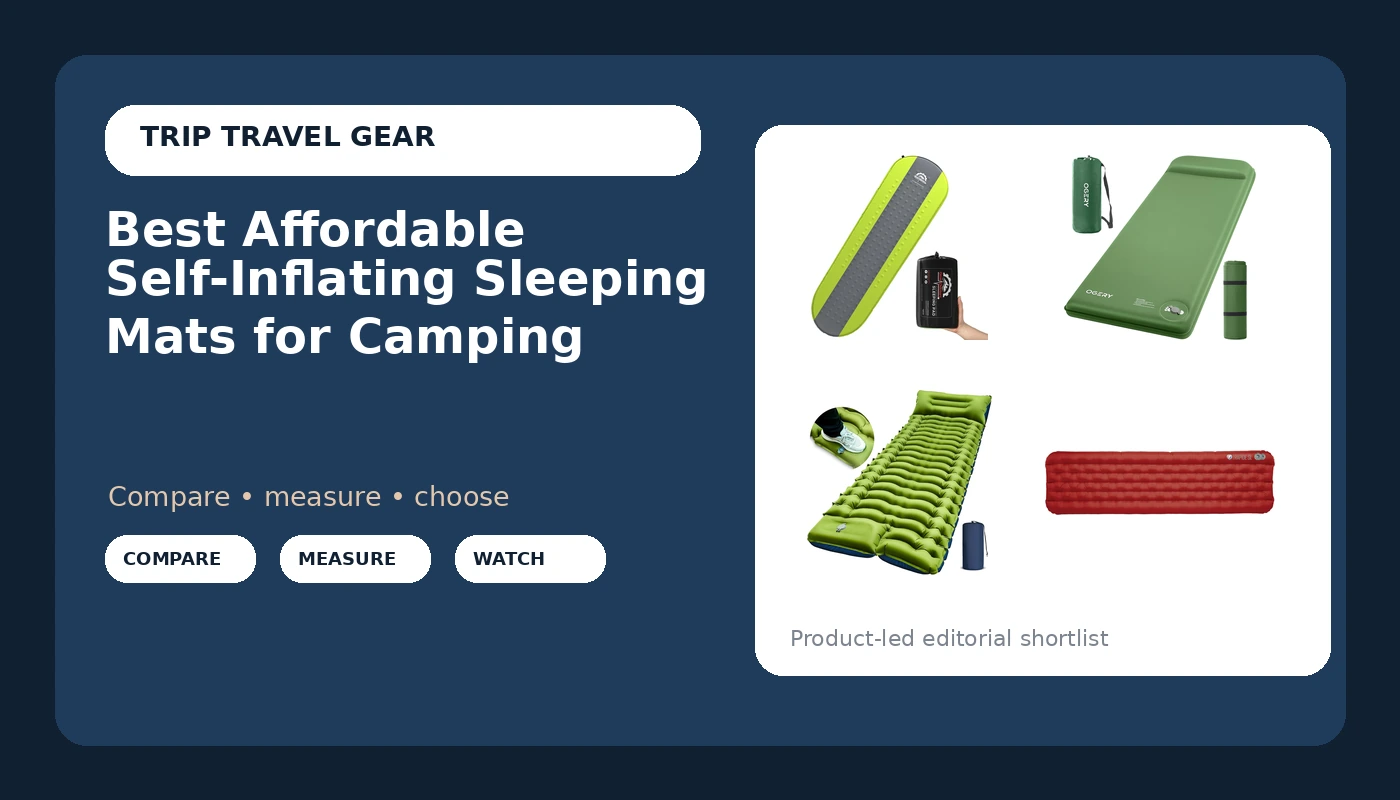
Shopping for affordable self-inflating sleeping mats is mostly an exercise in reading past the label. A good share of the pads that surface under that search are not self-inflating at all: they are air pads with a built-in foot pump, and they solve a different problem. A true self-inflating mat carries an open-cell foam core that draws air in when you open the valve, so you unroll it, crack the valve, and go set up the tent while it does the work. An air pad needs the pump, the lungs, or a lot of patience.
That distinction decides more purchases than any star rating. This guide separates the two categories, compares the numbers the listings actually state, and matches each recommendation to the trip you take most often. It is written for the traveler who wants a pad that survives a season of car camping and the occasional flight, not for the summit push where every ounce gets argued over.
Quick answer
The Gear Doctors Oxylus 4.3 R-Value Insulated Air Foam Self Inflating Sleeping Pad is the strongest fit for three-season camping and cold-ground car camping because it is the one pad here that pairs a self-inflating foam core with a stated 4.3 R-value and a four-season claim. Choose the OGERY Self-Inflating Sleeping Pad, 3-Inch Memory Foam Camping Mattress instead when basecamp comfort matters more than packed size, or the Big Agnes Rapide Super Light Insulated Sleeping Pad, Wide Regular (25×72) when you are carrying the pad on your back and weight leads the decision.
Best affordable self-inflating sleeping mats worth comparing
Two of the six pads below are foam-core self-inflating mats. The other four are inflatable air pads: three inflate with a built-in foot pump and an integrated pillow, and one is a plain ultralight air pad. That split is the first thing to sort out in any Self-Inflating Sleeping Mats comparison, because a pump pad and a foam-core pad are not interchangeable on a cold night or in a small car.
Top pick
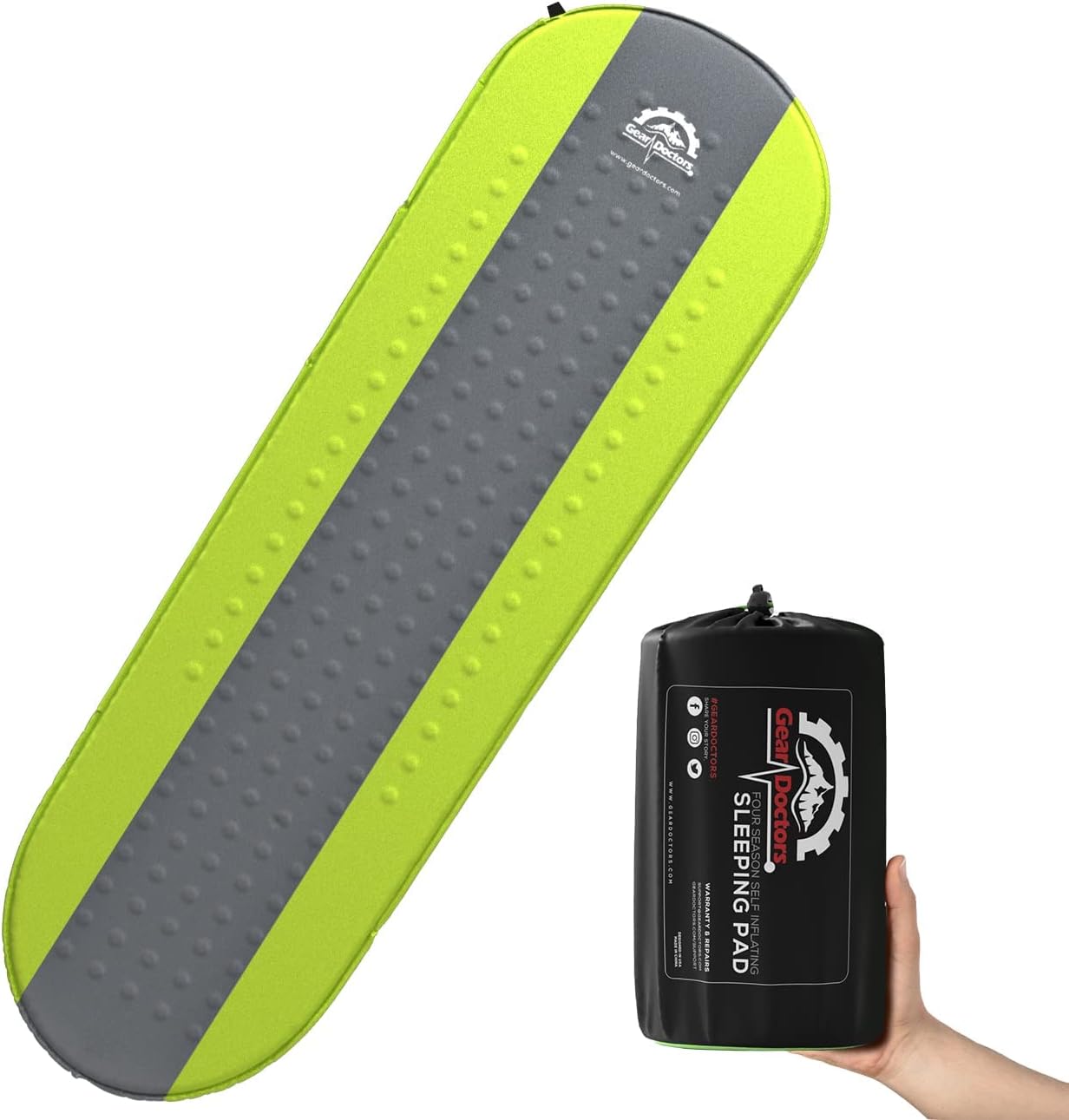
Gear Doctors Oxylus 4.3 R-Value Insulated Air Foam Self Inflating Sleeping Pad
Self-inflating insulated air foam core with a stated 4.3 R-value and a four-season claim. The R-value is the number worth comparing here; the listing also calls the pack compact, so confirm packed size and weight before you commit.
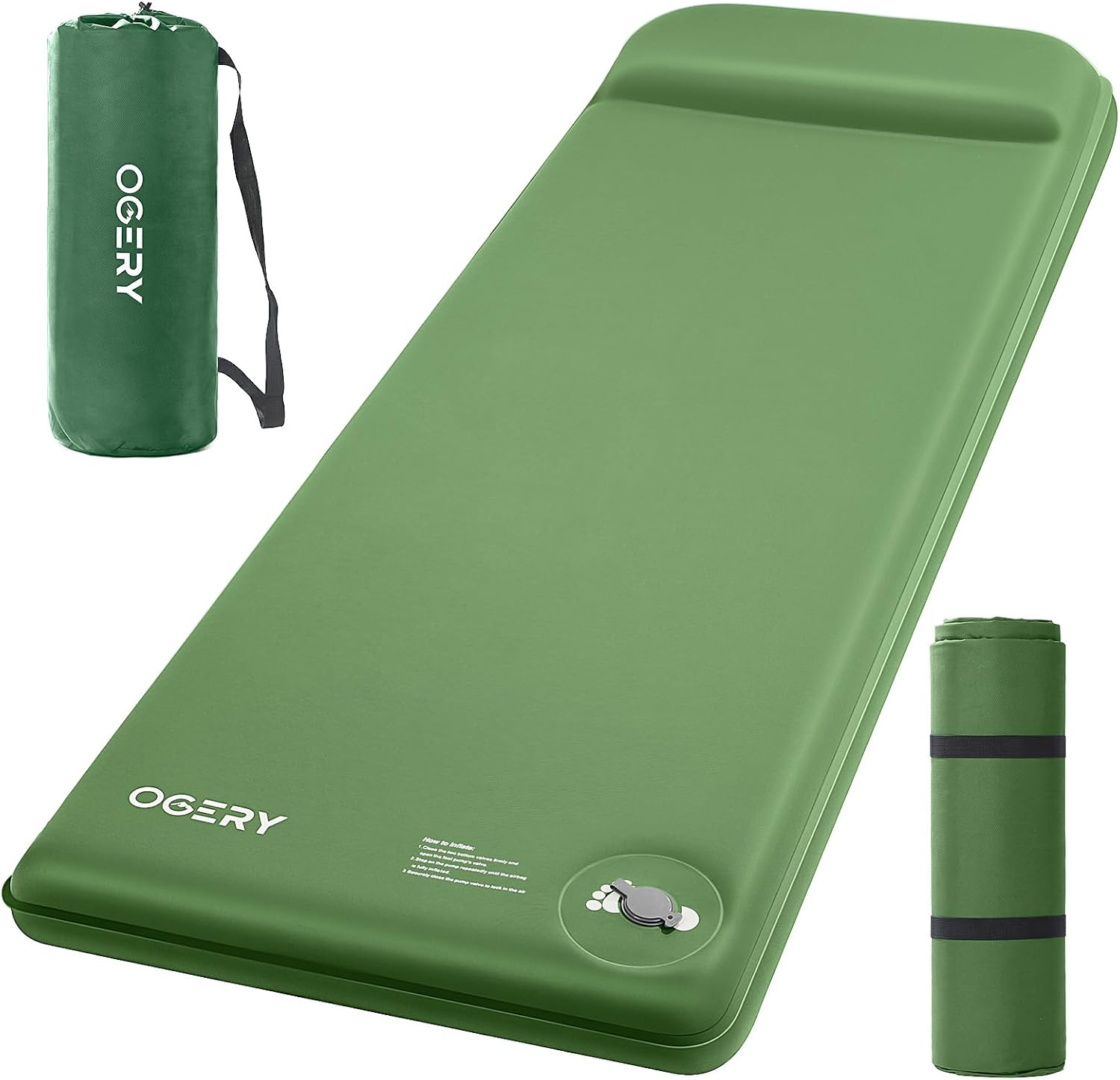
OGERY Self-Inflating Sleeping Pad, 3-Inch Memory Foam Camping Mattress
A 3-inch memory foam surface on a self-inflating pad, aimed at comfort rather than pack size. Best suited to car camping and basecamp use, where a thicker mat earns the space it takes up in the trunk.
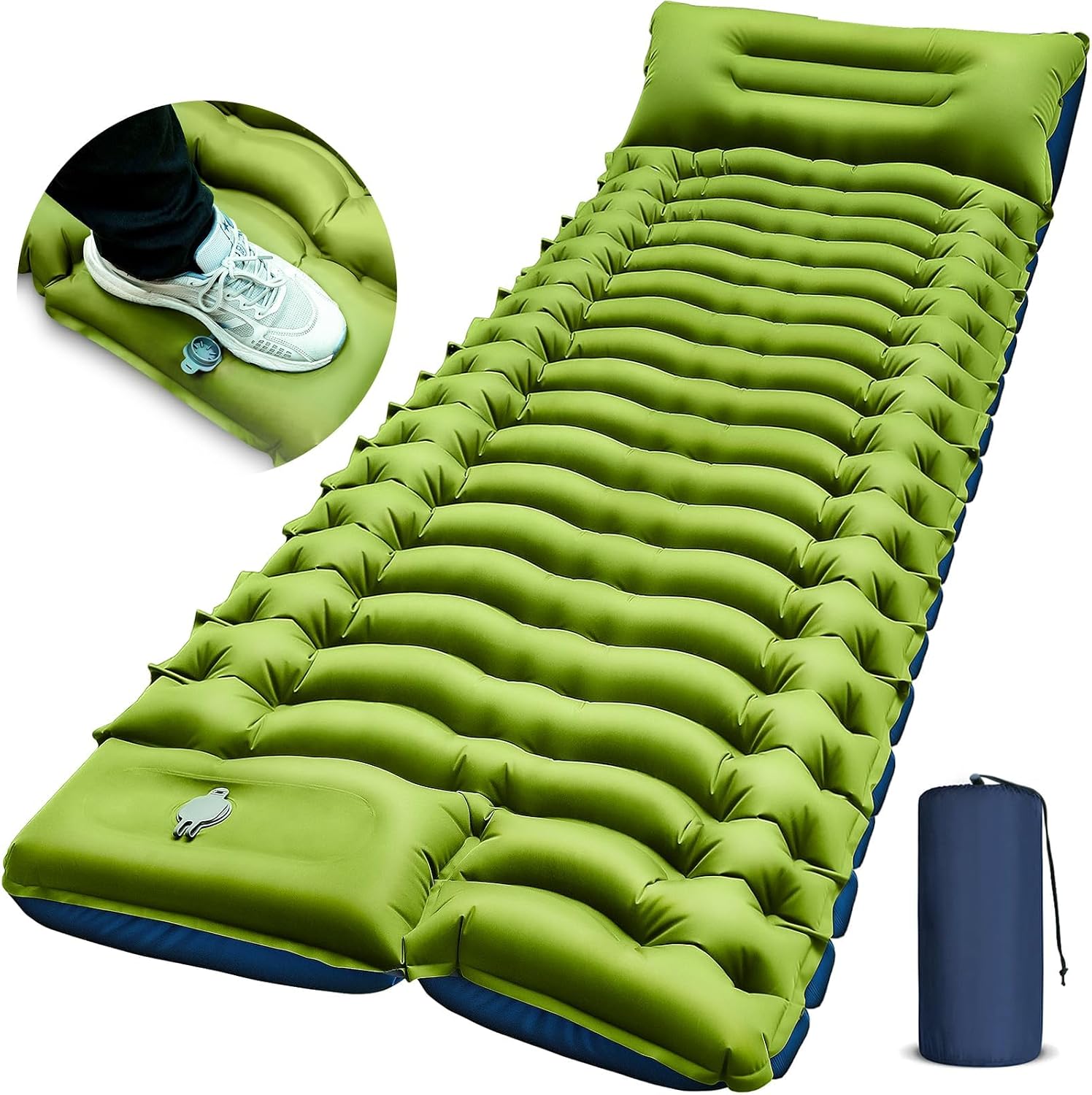
FUN PAC Camping Sleeping Pad, Ultralight Camping Mat with Pillow, Built-in Foot Pump
An inflatable air pad rather than a self-inflating mat, in a single width. The built-in foot pump and integrated pillow mean you do not carry a separate inflator or a camp pillow for a short trip.
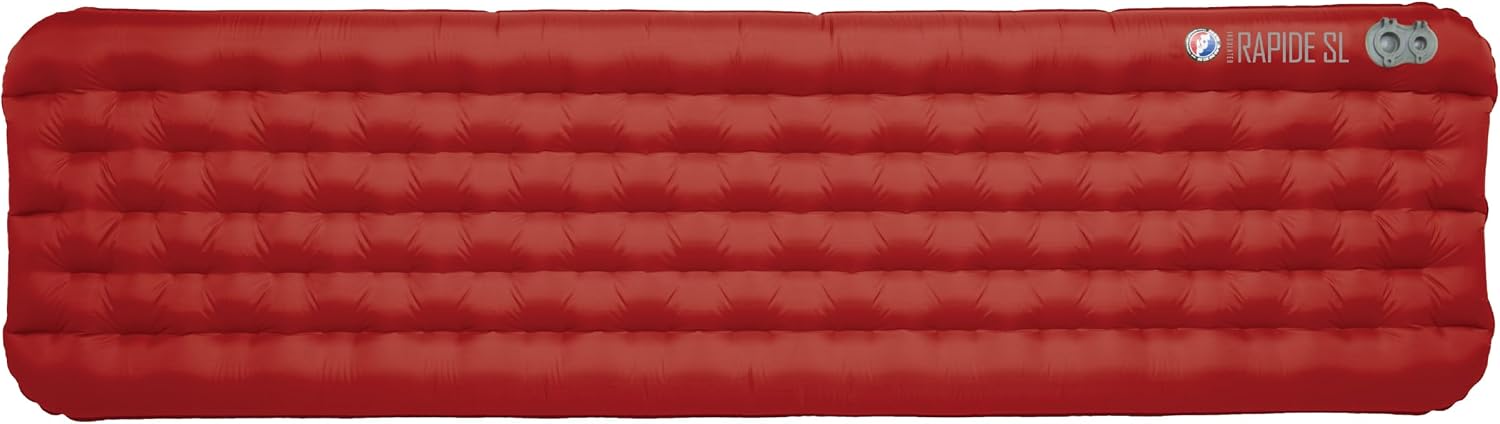
Big Agnes Rapide Super Light Insulated Sleeping Pad, Wide Regular (25×72)
Super light insulated air pad in a stated wide regular 25 by 72 inch size, the widest footprint named in this group. The one to look at when packed size and weight lead the decision rather than convenience.
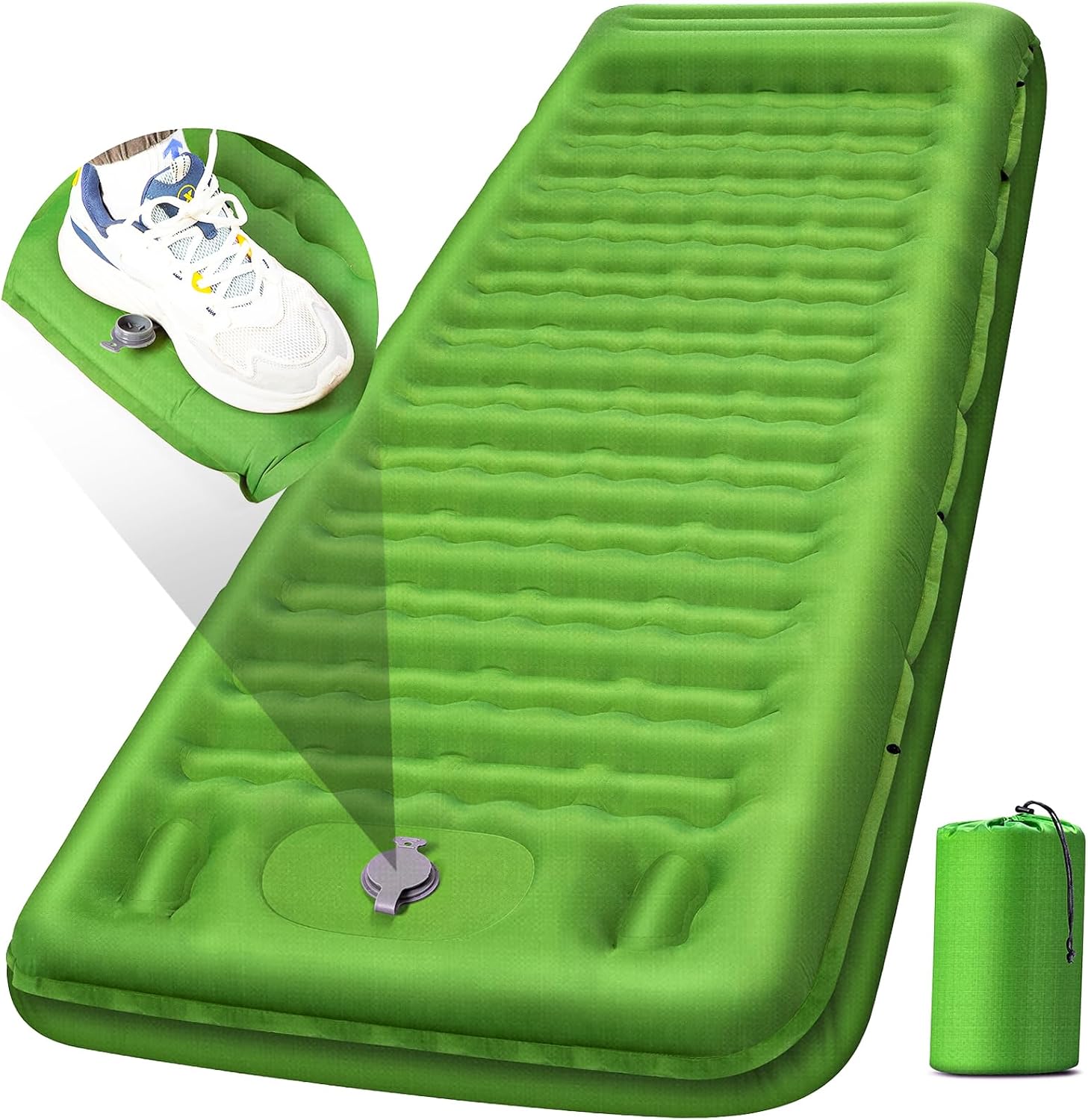
Camping Sleeping Pad, Extra Thick 5 Inch Camping Mat with Pillow, Built-in Foot Pump
Extra thick 5-inch inflatable pad with a built-in foot pump and an integrated pillow. Thickness is the selling point; it is an air pad, so it inflates by pump rather than by foam, and it packs down to a pump-pad footprint.
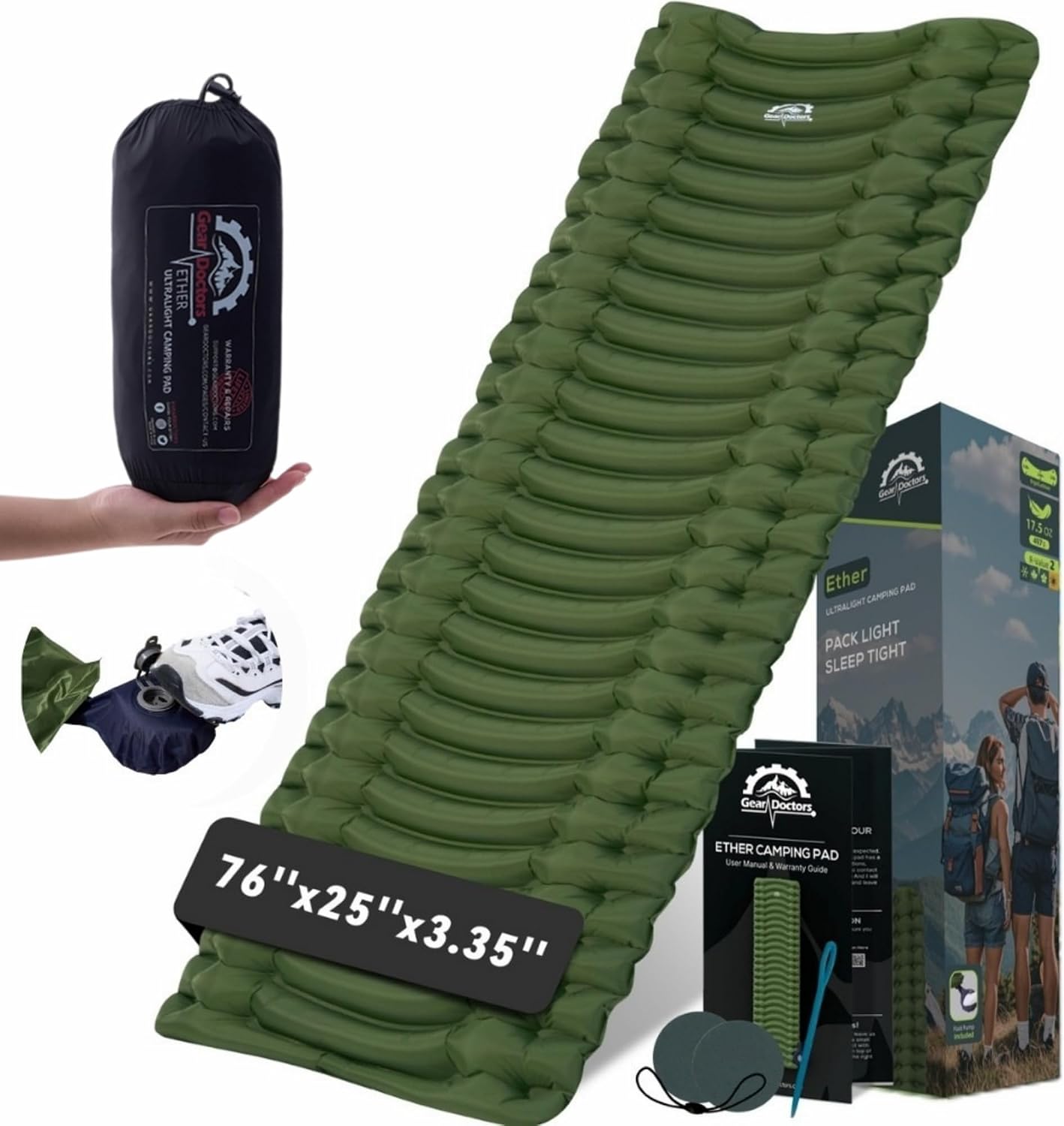
Gear Doctors Ether 17.5oz Ultralight Camping Sleeping Pad
A 17.5 oz ultralight inflatable pad built for backpacking, with the lightest stated weight in this group. Comfort comes from air volume rather than foam, so it suits weight-limited trips and warm-weather use.
How these products were compared
Self-Inflating Sleeping Mats buying guide coverage tends to blur the two categories together, so this one separates them at the top: foam-core self-inflating versus pump-inflated air pad.
The comparison uses six criteria: inflation mechanism, the stated R-value where the listing gives one, thickness and stated dimensions, stated weight, valve or pump design, and how completely the listing states the numbers that decide a purchase. Product names, images, and retailer links are matched by ASIN so that every card points to the product shown.
Nothing here is presented as hands-on testing. Where a number is not in the product data, the copy says so and sends you to the listing rather than guessing at it. Self-Inflating Sleeping Mats reviews are most useful when you read for the repeated failure instead of the star average: a valve that will not seal, a foam core that stops rebounding, a pump housing that cracks at the seam. What separates top rated Self-Inflating Sleeping Mats from the rest is rarely the marketing; it is whether the listing states an R-value, a weight, and a packed size at all.
How to choose the right self-inflating sleeping mat
Start with the mechanism, not the thickness. A foam-core self-inflating mat is the lower-effort option at the campsite: unroll, open the valve, stake the tent, then close the valve and add a breath or two. A foot-pump air pad is the lower-effort option in the pack, because the pump is built into the pad and there is no foam bulk to carry. If most of your nights involve a vehicle, the foam core wins. If most of your nights involve a trailhead, the pump pad usually does.
R-value is the number that tells you how much cold the ground takes out of you, and it is the spec most listings leave out. The Oxylus states 4.3, which is the only R-value named in this group and the reason it leads when you are comparing affordable self-inflating sleeping mats for three-season use. Treat an unstated R-value as unknown rather than average, and do not assume two pads are comparable just because both call themselves insulated.
Thickness, width, and length come next. The OGERY lists a 3-inch memory foam surface, the extra-thick pad lists 5 inches, and the Big Agnes pad states a wide regular 25 by 72 inch footprint. A Self-Inflating Sleeping Mats size guide is really two measurements: your shoulder width plus a little margin, and the floor space your tent can spare. A wide pad in a two-person tent leaves less room for a partner and their gear, so measure the floor before you size up.
Weight only matters in proportion to how far you carry the pad. The Ether states 17.5 oz, which is the lightest figure in this group and the one to weigh against a foam-core pad that will be heavier and bulkier for the same thickness. For a car-camping pad, weight is close to irrelevant; for a pad that flies in a checked bag or rides on a pack, it is the first column in the spreadsheet.
Finally, look at the valve and pump design and at how the pad is stored. A valve that seals cleanly and a pump housing that does not flex underfoot are what keep a pad usable in year three. Pair the pad's insulation with the bag's comfort rating rather than its limit rating; sleeping bag comfort ratings explained covers why the comfort number is the one to plan around. If the pad has to fly, packed size becomes a luggage question too, and packing camping gear into a carry-on is the place to check the dimensions against a real bag.
Gear Doctors Oxylus 4.3 R-Value Insulated Air Foam Self Inflating Sleeping Pad
The Oxylus is the one pad in this group that is both self-inflating and explicit about insulation. The product data states a 4.3 R-value, a four-season claim, and an insulated air foam core, which is the combination that makes it the pick for three-season and cold-ground camping. It is the only listing here that gives you a thermal number to compare against anything else, and that alone puts it ahead of pads that use the word insulated with no figure attached.
The trade-off is the one every foam-core pad carries. Foam is bulkier and heavier than an air-only pad of similar thickness, and the listing's compact-pack language is not a measurement. If your trunk is small or the pad has to fit inside a carry-on, confirm the packed dimensions and the weight on the listing before you buy, and be prepared to accept a larger roll than a pump pad would need. Self-inflation also takes a few minutes of waiting plus a top-up breath or two, which is the price of not carrying a pump or spending ten minutes on the floor.
Where it fits best is the trip most people actually take: a car or a short walk to a tent pad, a three-season forecast, and a pad that gets unrolled in the same spot for a long weekend. It is not the pad for a fast-and-light backpacking list, and it is not trying to be.
Alternatives to consider
The OGERY Self-Inflating Sleeping Pad, 3-Inch Memory Foam Camping Mattress is better suited to basecamp comfort, where a 3-inch memory foam surface matters more than packed size, while the Big Agnes Rapide Super Light Insulated Sleeping Pad, Wide Regular (25×72) is a stronger fit when you are carrying the pad on your back and the stated 25 by 72 inch footprint is worth the trade in weight.
The FUN PAC Camping Sleeping Pad, the Camping Sleeping Pad, Extra Thick 5 Inch, and the Gear Doctors Ether 17.5oz Ultralight Camping Sleeping Pad cover the air-pad side of the question: foot-pump convenience with an integrated pillow on the first two, and the lightest stated weight in the group on the Ether. None of the three self-inflates, so if the whole point for you is opening a valve and walking away, they are the wrong shortlist.
Skip the self-inflating category entirely if you sleep cold and the listing gives no R-value, or if you are packing for a flight with a hard weight limit. In both cases an air pad with a stated weight and a bag rated for the conditions is the more honest answer.
Day-to-day use and maintenance
A self-inflating pad rewards a routine. Unroll it the moment you pick your spot, open the valve fully, and let the foam pull air while you pitch the tent. Close the valve, add a breath or two if the pad still feels soft, and give it a few minutes before you lie down; foam that has been compressed in a pack all day needs time to rebound. Deflating is the reverse: open the valve, roll from the foot end toward the valve to push air out, and close it before you stuff or roll the pad for travel.
At home, store a foam-core pad unrolled with the valve open so the foam is not held compressed for months. Wipe it with mild soap and water rather than solvents, dry it fully before storage, and keep it off sharp ground and away from hot surfaces at camp. A patch kit lives in the same bag as the pad, not in the car. For pump pads, the foot pump and valve are the parts that fail first, so do not stand on the pump housing with a boot on and do not over-tighten the valve cap.
Treat R-value as one part of a sleep system, not a guarantee. A pad insulates what is under you; it does not replace a bag rated for the conditions, and no listing here makes a comfort claim beyond what its own product data states.
Buying checklist
- Measure your tent floor and your shoulder width before choosing a pad size; the Big Agnes wide regular is stated at 25 by 72 inches.
- Choose the inflation mechanism for your normal trip: foam core for car camping and cold ground, foot pump for backpacking convenience.
- Confirm the exact model states an R-value if you sleep cold; the Oxylus states 4.3, and the others in this group do not state one.
- Check the stated weight and packed size against your pack or luggage before you buy.
- Read the cleaning, storage, and warranty terms on the listing.
- Verify the current retailer price, availability, and return terms through the link rather than trusting a cached number.
Final recommendation
Choose the Gear Doctors Oxylus 4.3 R-Value Insulated Air Foam Self Inflating Sleeping Pad when you want a self-inflating pad for three-season car camping and the listing's stated 4.3 R-value is the kind of number you can actually plan around. Choose the OGERY Self-Inflating Sleeping Pad, 3-Inch Memory Foam Camping Mattress when comfort at basecamp outranks pack size, and the Big Agnes Rapide Super Light Insulated Sleeping Pad, Wide Regular (25×72) when you are carrying the pad and a wide, light footprint is the priority.
The best affordable self-inflating sleeping mats are not the ones with the loudest listing copy; they are the ones that state an R-value, a weight, and a packed size so you can compare them at all. Start there, verify the rest on the listing, and buy the pad that matches the trip you take most.