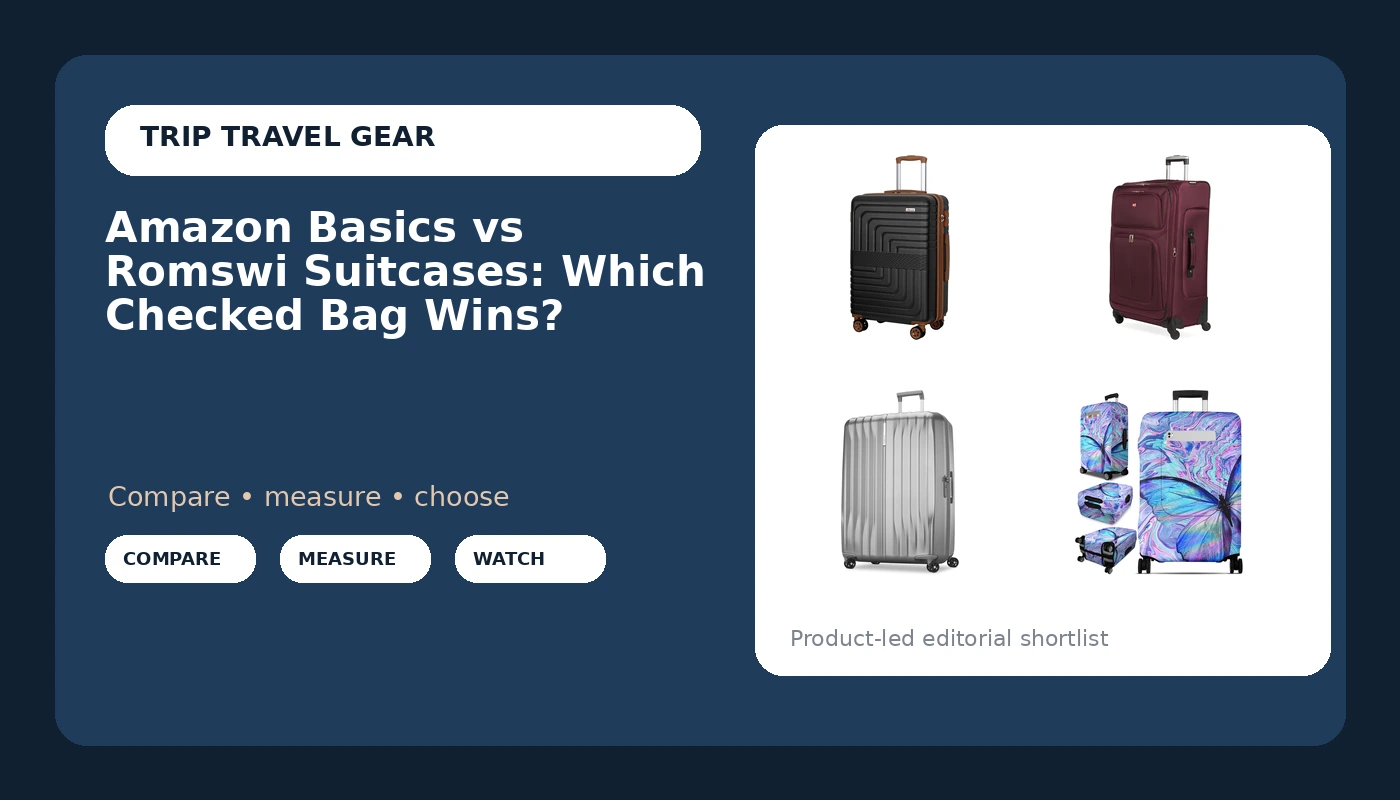
Eleven years of regional sales travel, ninety-plus flight segments a year, and two years running gear checks for an adventure-travel operator taught me one thing about luggage arguments: the amazon basics vs romswi suitcases question is never really about the badge on the front. It is about the shell, the wheel housing, the telescoping handle, and whether the listing bothers to publish the linear-inch number your airline will actually measure. This comparison puts four listings side by side on those terms: the Romswi 30-inch hardside, the SwissGear Sion softside, the Samsonite UpLIFT X-large, and the Slohif stretch cover that protects a shell you already own.
My pick from this group for most checked-bag travelers is the Romswi 30-inch hardside, because a scratch-resistant hardshell, dual 360-degree spinner wheels, a TSA lock and a YKK zipper is the checklist I want on a bag that rides in a hold, and the product name states all four. That is a spec-sheet verdict, not a test result. I have not flown with these four bags, and I am not going to pretend I have. What follows is what each listing promises, what it leaves out, and which traveler each one actually suits.
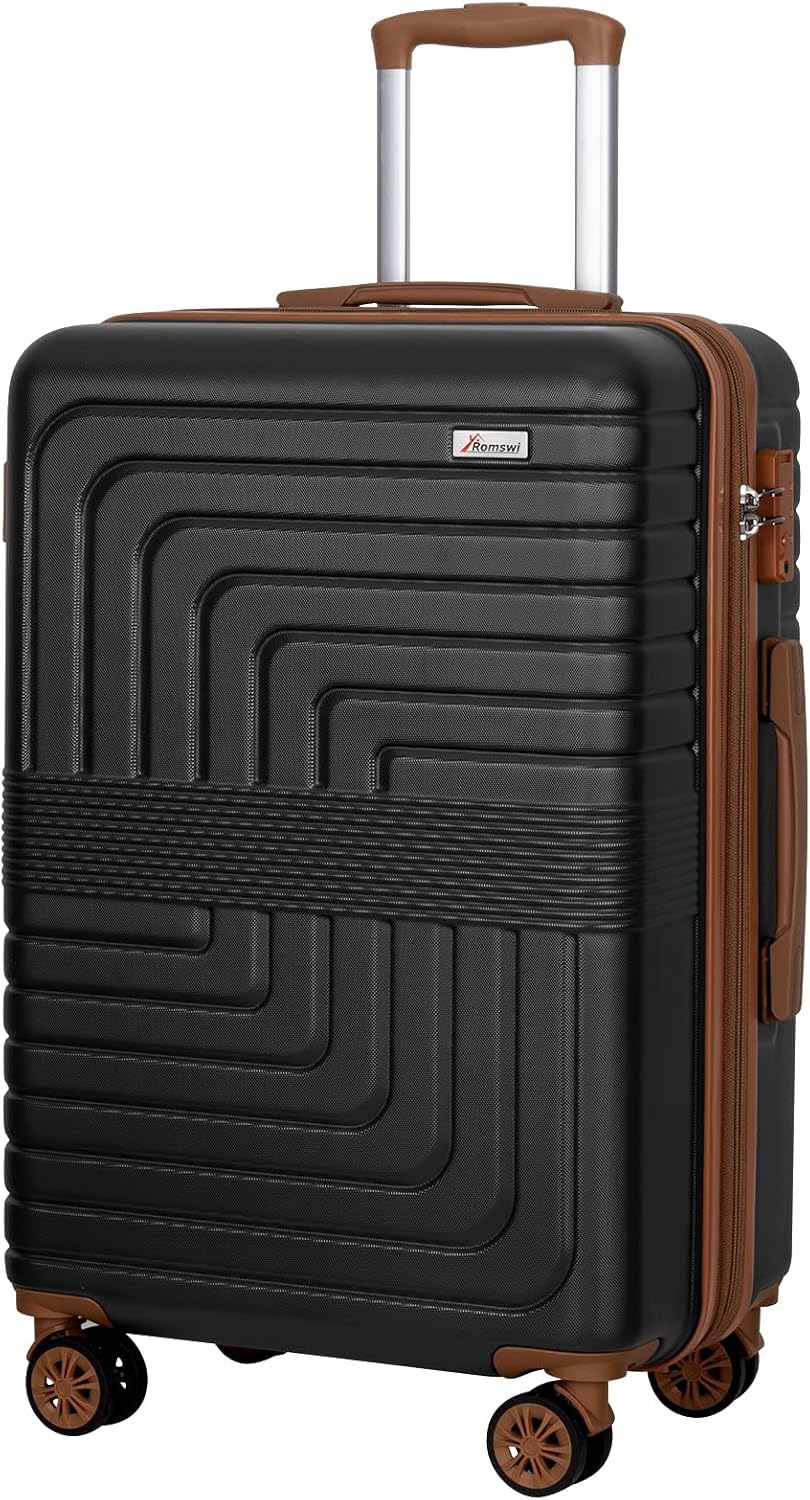
Romswi 30" Hardside Checked Luggage
States the full hardware list: dual spinner wheels, TSA lock, YKK zipper, scratch-resistant shell
30 inches is a big bag to fill, and a full one gets heavy fast
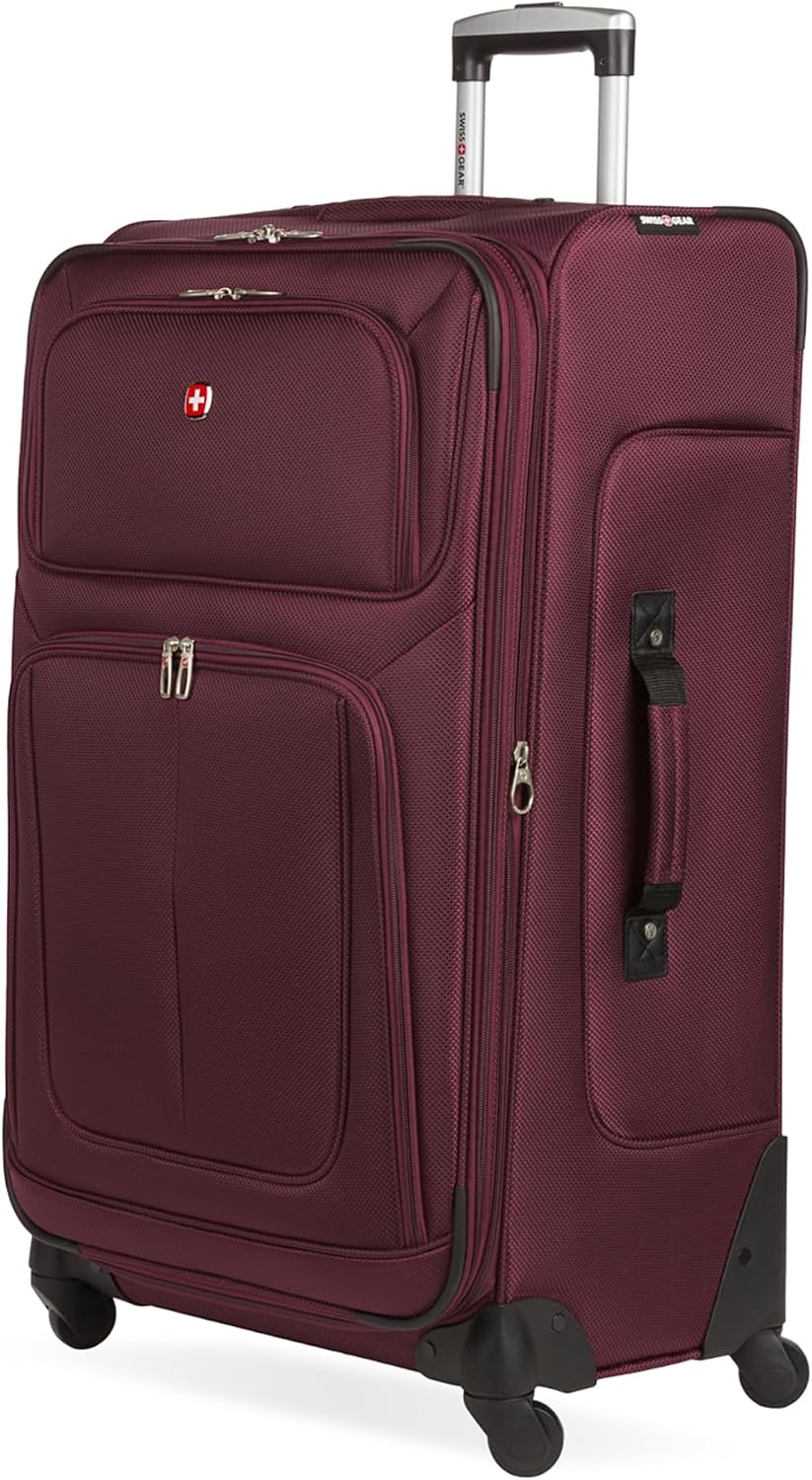
SwissGear Sion Softside Expandable Spinner
Expandable fabric gives you give where a shell gives you nothing
Fabric and zippers are the parts that fail first, and fabric soaks up a wet jet bridge
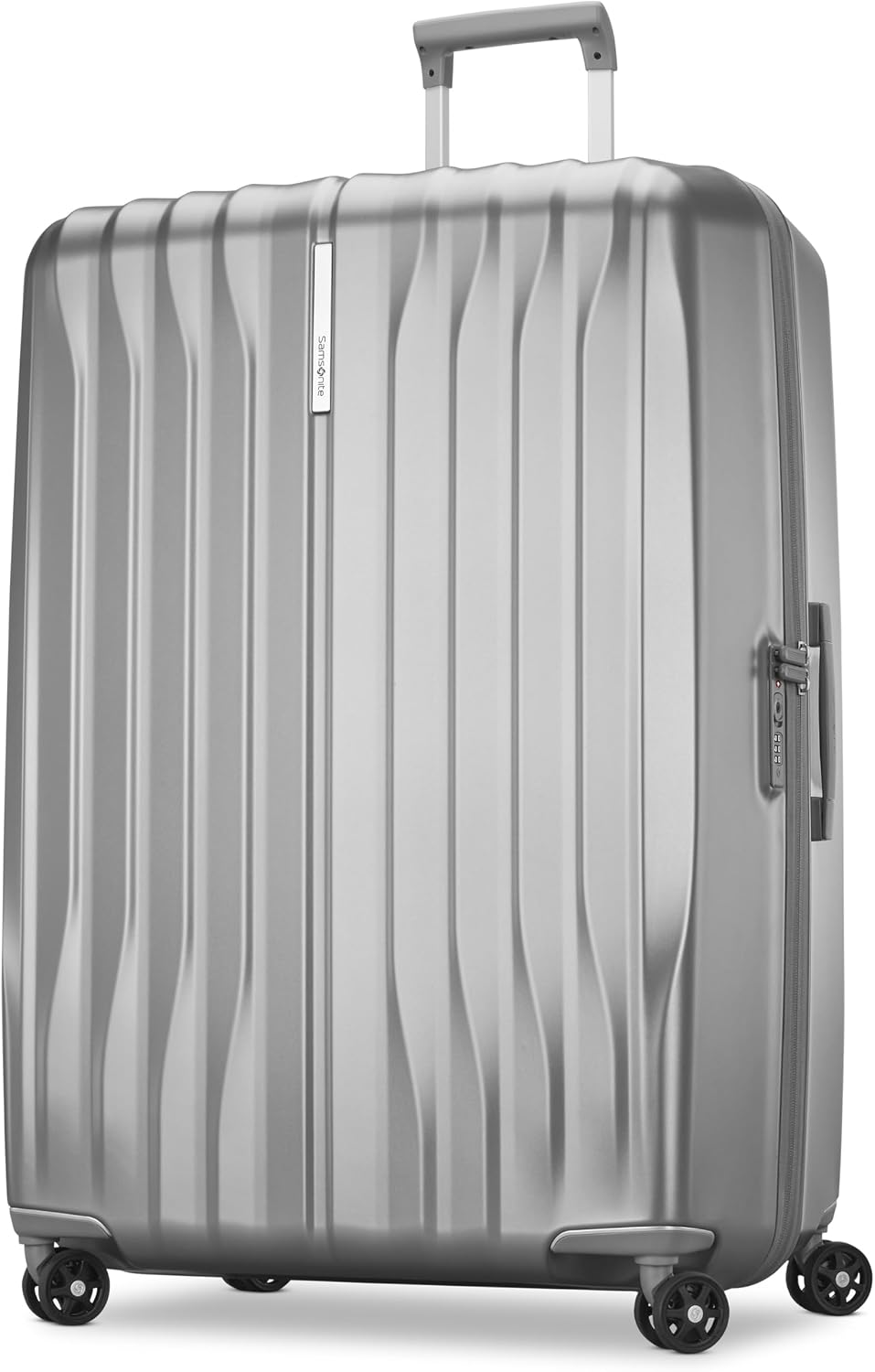
Samsonite UpLIFT X-Large Checked Hardside
Polycarbonate shell, TSA lock, adjustable handle system, X-large capacity
"Airline-approved" appears with no carrier named and no linear inches in the title
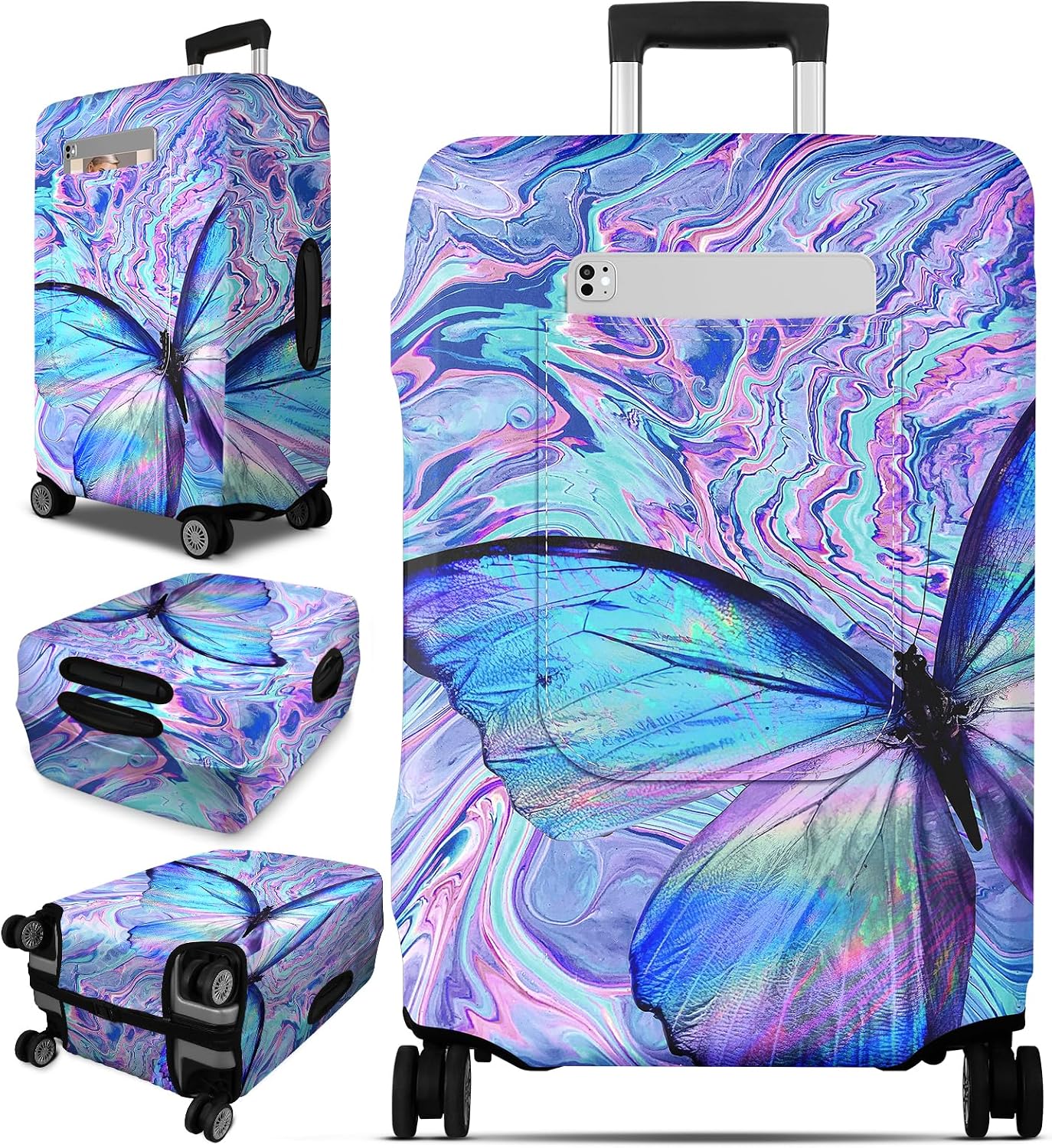
Slohif Luggage Cover, 28-30 Inch
Cheap insurance against scuffs and belt-grease on a black shell
It is a cover, not luggage, and "TSA approved" on a sleeve means nothing
Prices and availability may change.
amazon basics vs romswi suitcases: the specs that actually decide it
The Amazon Basics hardside has been the default budget answer for years, and it is the bag shoppers mentally stack the Romswi against even when it is not on the same shelf. It is not one of the four listings here, so I am not going to quote its dimensions, its shell thickness or its warranty from memory. What I can do is name the four things that separate one hardside from another, because those are the things that decide whether a bag survives fifty gate-checks or dies at the seam.
The first is shell material. Polycarbonate flexes and returns. ABS blends flex and eventually crack, usually at the corner where the wheel housing meets the shell, which is exactly where a baggage handler grabs it. A scratch-resistant finish is a nice-to-have; a shell that bends instead of shattering is the actual requirement.
The second is the wheel assembly. Dual spinner wheels track better on carpet and tile than single wheels, and a wheel housing that is bolted through the shell beats one that is riveted into a plastic plate. When a wheel fails, it is almost never the wheel itself. It is the housing pulling out.
The third is the telescoping handle. Count the stages. A two-stage handle leaves the bag hanging low behind you; a multi-stage or adjustable system lets a tall traveler walk upright. Wobble in the handle is the complaint I see most often in reviews of any wheeled bag, at any price.
The fourth is the lock and the zipper. A TSA-accepted lock is a convenience, not a security guarantee, and a YKK zipper is a named component rather than a generic one. Those two details tell you whether the manufacturer was specifying parts or shopping by price.
Romswi 30-inch hardside: the checklist bag
The Romswi listing is the only one in this group that names its hardware in the product title, and that matters more than it sounds. Dual 360-degree spinner wheels, a TSA lock, a YKK zipper, a scratch-resistant black shell, 30 inches, hardside. If you are building a Suitcases comparison table from scratch, those are the columns you would want, and this bag fills most of them.
What it does not state in the name is the linear-inch number, and that is the number the airline measures. Thirty inches of height is a size class, not a guarantee. Before you buy, open the listing and find the exterior dimensions, add length plus width plus height, and compare that total to the limit your carrier publishes. If the number is not on the page, that is your answer about how carefully the listing was built.
The honest trade-off with a 30-inch checked bag is weight. A large hardside holds enough that you can push past the fifty-pound limit without noticing, and then you are repacking on the floor by the check-in counter. The Romswi's dual wheels and hardshell are built for the size; your packing discipline is the variable. For a two-week trip with one bag, this is the shape of suitcase that makes sense. For a long weekend, it is more bag than you need.
SwissGear Sion: the softside argument
The SwissGear Sion is the counter-argument to everything above. Softside, expandable, spinner wheels, checked-large, merlot. Fabric gives you something a hardshell cannot: expansion. When you buy one thing too many on the last day, an expandable softside zips open an extra inch or two and swallows it. A polycarbonate shell does not negotiate.
The cost is the material itself. Fabric and zippers are the parts that fail first on any softside, and a softside that gets gate-checked into a puddle on a rainy jet bridge soaks up water in a way a shell never will. Merlot hides dirt better than a light color, which is a small mercy, and the spinner wheels are the same configuration as the hardsides here.
Where the Sion wins is versatility. It is the bag for the traveler who packs soft goods, who wants exterior access, and who would rather have give than rigidity. Where it loses is in the long run: every softside I have owned eventually went at a zipper or a seam, and the Sion's listing does not name its zipper hardware the way the Romswi does. That is not a knock on the bag. It is a note about what you are buying.
Samsonite UpLIFT: polycarbonate at the top of the group
The Samsonite UpLIFT is the most specified bag in this comparison on paper: polycarbonate hardside, spinner wheels, TSA lock, adjustable handle system, X-large checked size, silver shimmer. Polycarbonate is the shell material I would choose if I were buying a hardside for a decade of checked travel, because it flexes under impact instead of cracking, and the adjustable handle system addresses the wobble complaint directly.
Two phrases in that listing deserve a raised eyebrow, and I raise them out of principle rather than brand bashing. "Airline-approved" appears with no carrier named and no linear inches in the title. No bag is approved by every airline, and the phrase means nothing without a number attached to it. "Ultra lightweight" is a marketing adjective, not a measurement. The X-large size class also means you should check the linear inches against your specific carrier before you commit, because X-large is exactly the size class that crosses limits.
If the polycarbonate shell and the adjustable handle are real, and the listing says they are, this is the bag for the traveler who flies enough to care about shell material and handle height and who wants a shell that will not crack at the seam. The silver shimmer finish is a taste decision. The shell material is not.
Slohif luggage cover: protection, not luggage
The Slohif cover is in this comparison because it solves a different problem: the black hardshell that comes off the belt looking like it lost a fight with a conveyor. It is a stretch sleeve, washable, sized for 28 to 30 inch cases, with a butterfly print. If you already own a large hardside and you are tired of scuffs and belt grease, a cover is the cheapest way to change that, and it makes your bag instantly identifiable on a crowded carousel.
Two honest caveats. First, "TSA approved" on a fabric sleeve is meaningless. TSA accepts locks, not covers, and a cover does not need approval from anyone. That phrase is a pet peeve of mine and it appears on far too many listings. Second, a cover adds bulk and can interfere with a bag's own handles and zipper access if it fits loosely. Buy it for a 28 to 30 inch case, as stated, and expect to wrestle it on the first time.
This is not a bag you compare against the Romswi or the Samsonite. It is an accessory for a bag you already own, and at the price of a couple of airport sandwiches it is a reasonable one.
Suitcases size guide: linear inches, not liters
The single most useful number on any checked bag is the linear-inch total: exterior length plus width plus height, wheels and handles included. Most US carriers publish a limit in that format, commonly 62 linear inches for a standard checked bag, and the number that matters is the one your carrier prints on its own site, not the one in a listing. Verify it before you fly, because limits change and they vary by fare class and aircraft.
Liters are the number that gets quoted and the number that means least. A capacity in liters with no interior dimensions tells you nothing about whether your packing cubes will fit. If you want to know how to choose Suitcases by capacity, ignore the liter figure and measure your own folded clothes against the interior dimensions. That is the only comparison that transfers.
Weigh the packed bag on a kitchen scale before you leave. Fifty pounds arrives faster than you think in a 30-inch hardside, and a scale at home costs less than an overweight fee at the counter.
Suitcases buying guide: how to choose Suitcases you will keep
Suitcases for beginners come down to a short list. Decide hardside or softside based on what you pack and whether you need expansion. Decide the size class based on trip length, then check the linear inches against your carrier. Decide the wheel configuration: four spinner wheels roll beside you, two inline wheels take more abuse on rough ground. Then read the hardware list. A named zipper, a stated lock type, a handle with a stated number of stages, and a shell material named in the listing are all signs that someone specified the bag rather than assembling it.
For best budget Suitcases, the calculation is different. A budget hardside that names its shell material and its wheel type is a better bet than a budget softside that names nothing, because there is less to fail. The Romswi sits in that conversation as the value pick of this group on hardware alone. The Samsonite sits above it on shell material. The SwissGear sits beside both as the fabric option.
And if you are shopping a Suitcases buying guide for the first time, buy one bag, not a set. A set locks you into sizes you may not need and hardware you did not choose.
What Suitcases reviews repeat, and the trade-offs that decide it
Suitcases reviews for any wheeled bag tend to converge on the same four failure points: the telescoping handle wobbles, the zipper pull separates, the wheel housing cracks or pulls out, and the shell cracks at a corner seam. When you read top rated Suitcases listings, look for reviews that mention those four things specifically, and discount the ones that only mention how the bag looked on the carousel.
The trade-offs in this group are clean. The Romswi gives you the full hardware checklist in a large hardshell, and asks you to manage the weight. The SwissGear gives you expansion and exterior access, and asks you to accept fabric's failure modes. The Samsonite gives you polycarbonate and an adjustable handle, and asks you to verify the linear inches yourself because the listing will not tell you. The Slohif cover gives you protection for a bag you already own, and asks nothing except that you ignore the TSA claim.
That is the whole amazon basics vs romswi suitcases decision, and it lands where most luggage decisions land: on the spec sheet, not the badge. Pick the shell material you can live with, confirm the linear inches against your airline, check the wheel housing and the handle stages, and buy the bag that states its parts. The Romswi is my pick from this group for a checked hardside. The Samsonite is the upgrade if polycarbonate matters to you. The SwissGear is the right call if you pack fabric and need give. And the cover is what you buy after the first scuff.