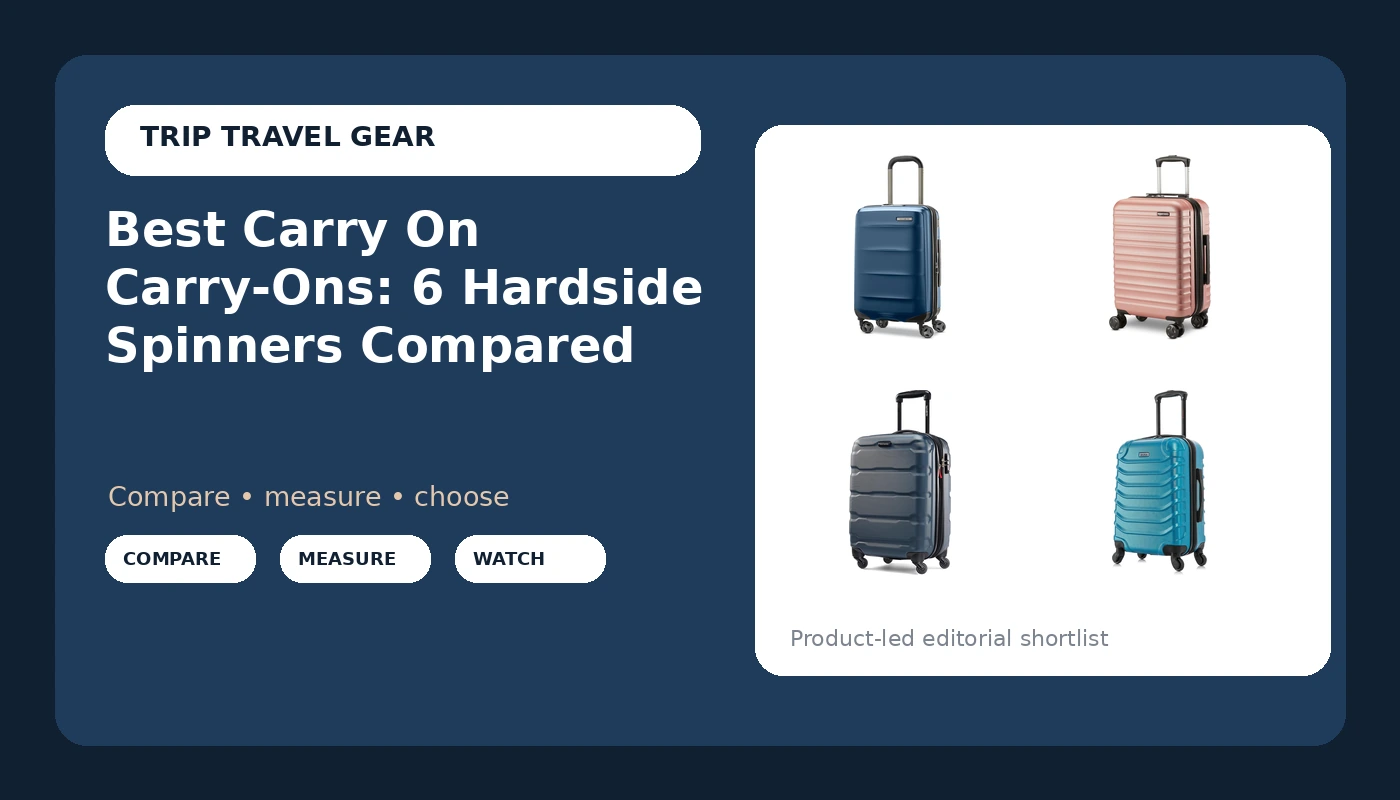
Carry-on shopping goes wrong in a familiar way: the bag looks right on the product page, then it meets an airline sizer and loses. All six bags below are sold as cabin luggage, but only five are actually sized for the overhead bin. The sixth is a 28-inch checked case, included on purpose, because the fastest way to understand the size question is to see how far a bag can drift from it. This guide to the best carry on carry-ons sticks to what each listing states: the wheeled size in inches, the shell type named in the model, the wheel design, the handle, and whether the main compartment expands. There are no guessed weights, no invented linear-inch totals, and no price printed as a fact, because prices move and spec sheets do not. The rule is the one I use before every trip: if the number is not published, it does not go into the recommendation.
Quick answer
The Samsonite Octiv Lightweight Hardshell 20-Inch Carry-On Luggage is the strongest fit for most trips because it combines a stated 20-inch wheeled size with an expandable main compartment, four 360-degree Aero Trac spinner wheels, and a built-in combination lock, a package no other bag in this group matches. Choose the Samsonite Omni PC Hardside Expandable Luggage instead when you want a 20-inch expandable hardshell and do not need lock hardware built into the bag.
Best carry on carry-ons worth comparing
A carry-on is a set of measurements before it is anything else, and when you line up carry on carry-ons side by side, five details do most of the deciding.
Stated size. This is the number in the product name, and it is the one an airline agent checks against a sizer. Twenty inches is the conservative choice. Twenty-one inches is inside some published limits and outside others. Twenty-two inches is where the arguing starts, because a 22-inch case is a carry-on in the seller's terminology and a maybe in the real world. The Travelers Club Skyline is listed at 22 inches. The Rockland Melbourne is listed at 28 inches and is a checked bag, full stop.
Shell. Five of the six are hardshells, which means a rigid panel that resists crushing and does not soak up a puddle the way fabric does. The trade-off is that a hardshell has no give, so the packing limit is genuinely the packing limit.
Wheels. Every bag here is a spinner, meaning four wheels and the ability to roll upright beside you. Wheel housing is the part that fails first on inexpensive luggage, so look at how the wheels attach rather than how they photograph from the front.
Handle. Only the Octiv listing spells out an adjustable telescopic handle. On the others the handle is described but the number of telescoping stages is not published, which is exactly the sort of gap worth opening on the retailer page before you buy.
Expansion and locks. Expansion is stated on the Amazon Basics bag at up to 25 percent more space, and it is named on the Omni PC and the Octiv. The Octiv also carries a built-in combination lock that the listing describes as TSA approved. Neither feature is free: expansion can push a packed bag past the size you bought it for, and a lock adds a mechanism that can jam at the worst moment.
Think of this as a short Carry-Ons buying guide built on spec sheets rather than samples. Sorting a retailer page by top rated Carry-Ons will give you a different order than the one below, because ratings measure satisfaction over time and this list measures fit for a specific trip.
The carry-on luggage worth comparing
Top pick
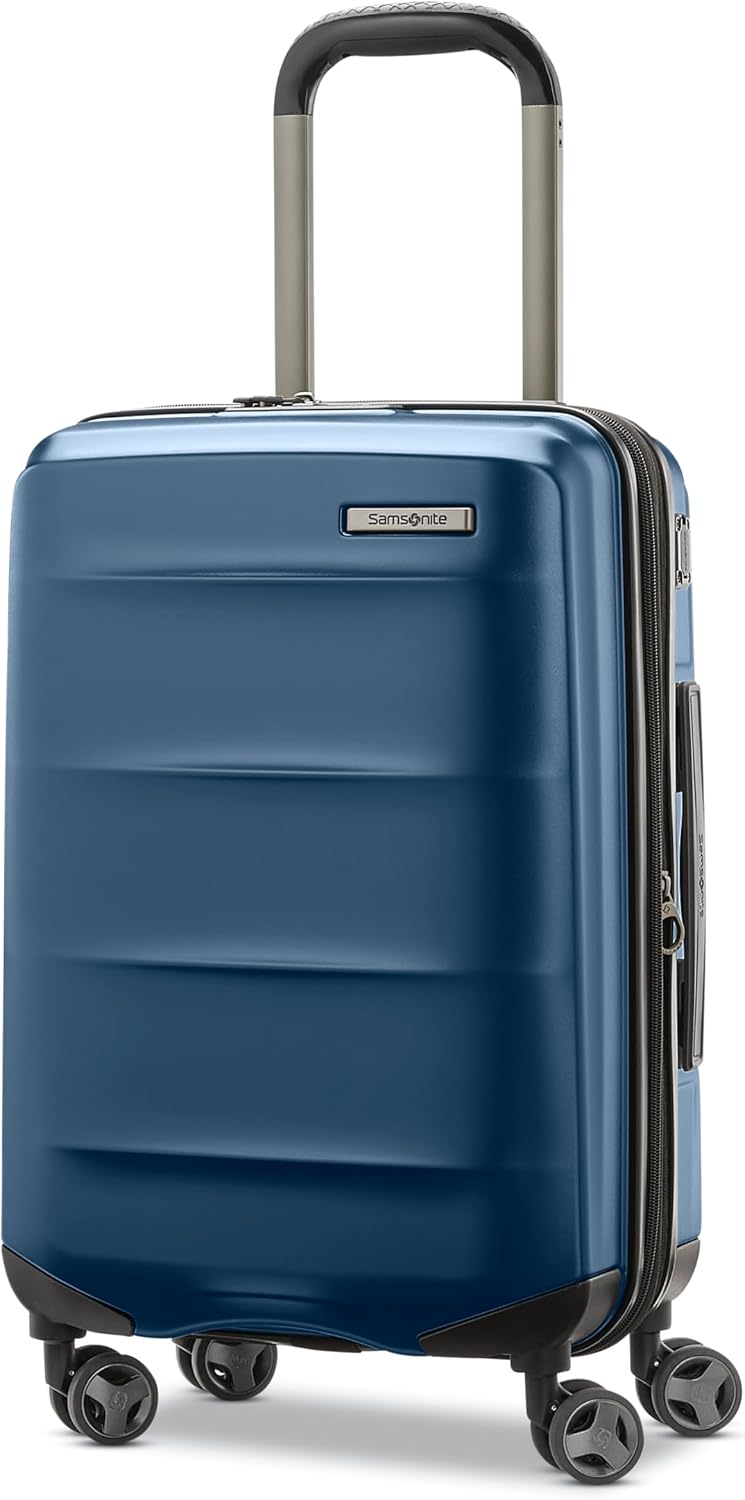
Samsonite Octiv Lightweight Hardshell 20-Inch Carry-On Luggage – Durable & Impact Resistant, 360° Aero Trac Spinner Wheels, Adjustable Telescopic Handle, Expandable Suitcase, TSA Approved Lock – Blue
A 20-inch impact-resistant hardshell with an expandable main compartment, four 360-degree Aero Trac spinner wheels, an adjustable telescopic handle, and a built-in combination lock the listing describes as TSA approved.
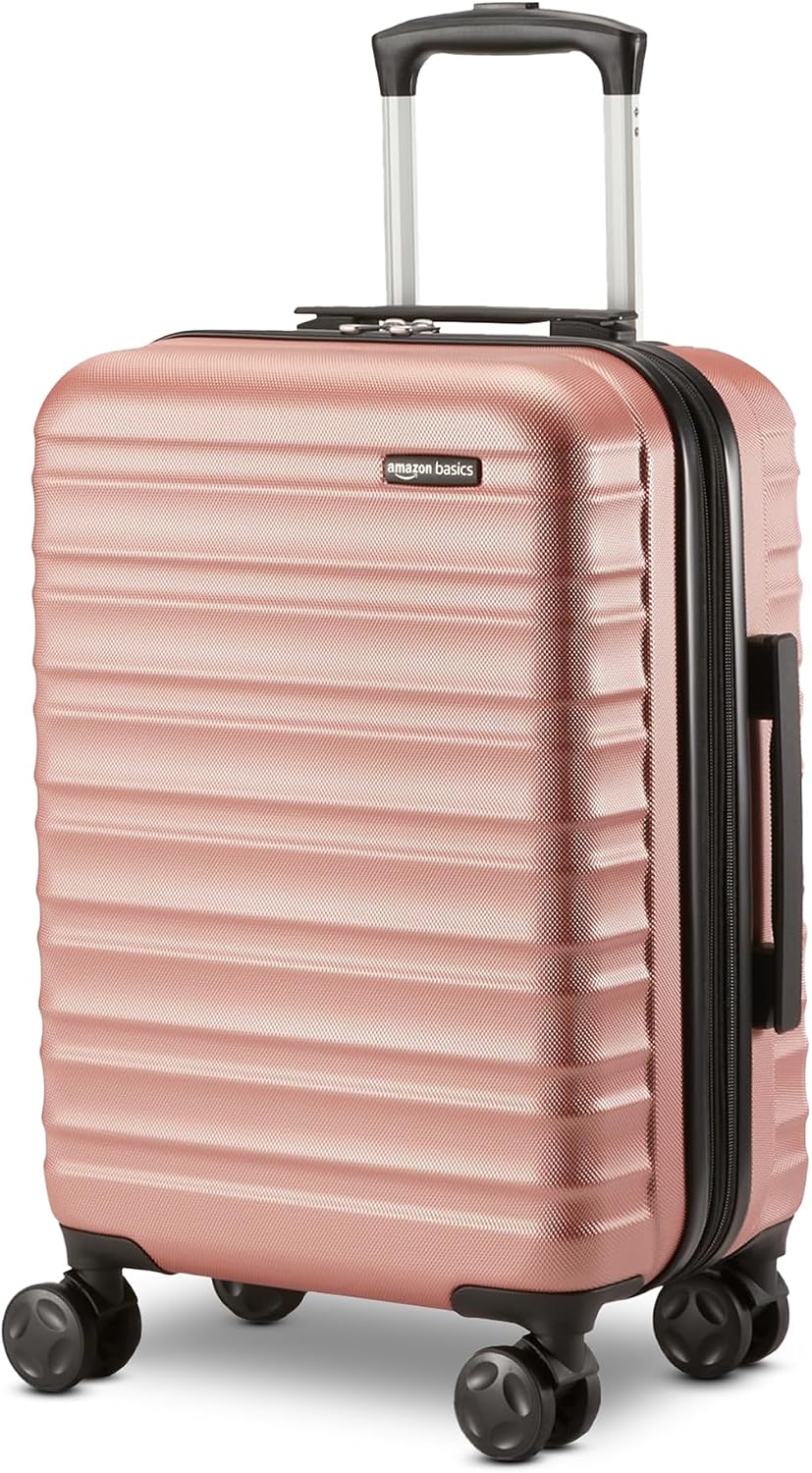
Amazon Basics 21" Hardside Carry-On Luggage with Multi-directional Wheels, Expandable for Up to 25% More Space, Scratch-Resistant Surface, Rose Gold
A 21-inch scratch-resistant hardshell in rose gold with multi-directional wheels and an expandable main compartment the listing rates at up to 25 percent more space.
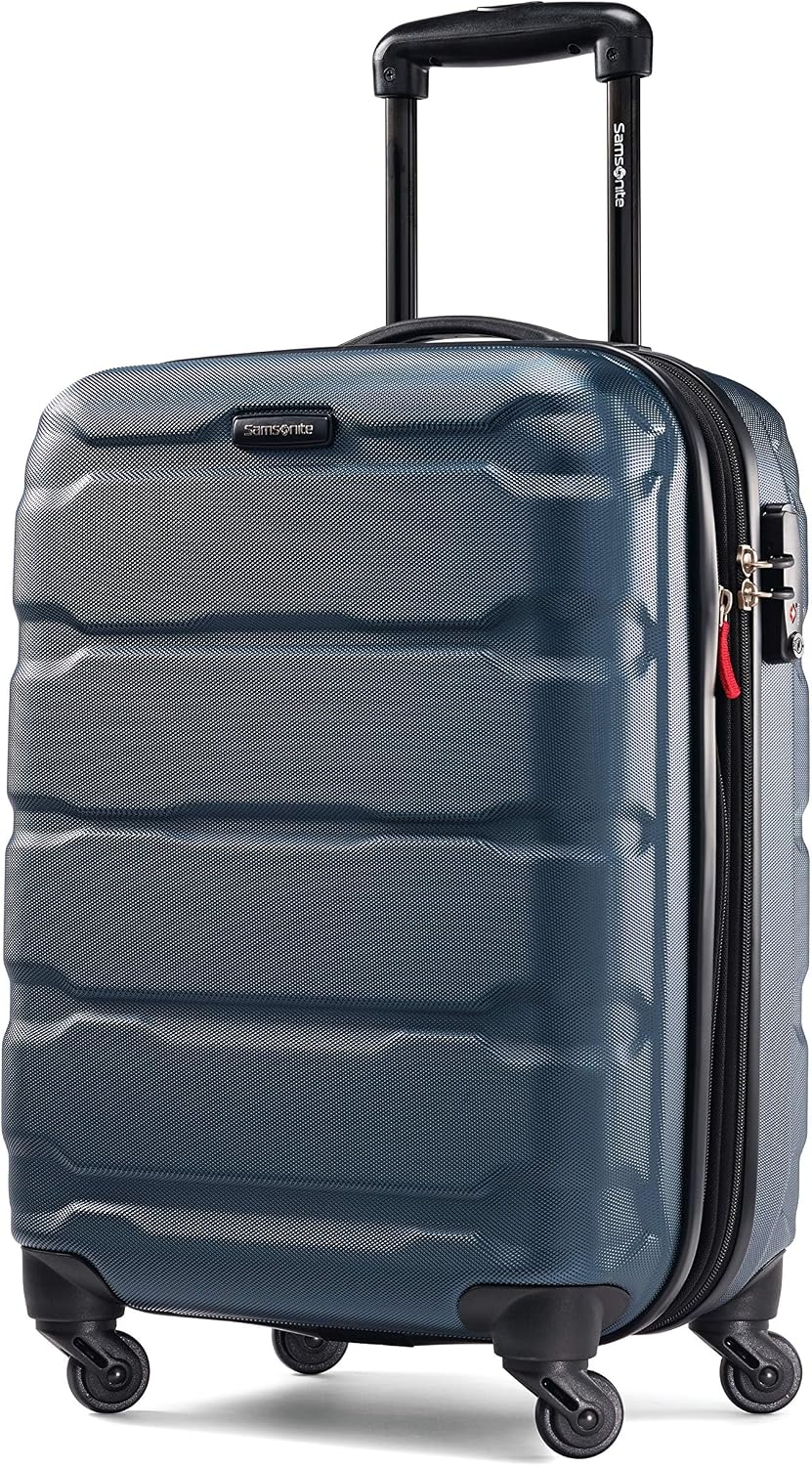
Samsonite Omni PC Hardside Expandable Luggage with Spinner Wheels, Teal, Carry-On 20-Inch
A 20-inch expandable hardshell from the Omni PC line in teal, with four spinner wheels and a telescoping handle, and no built-in lock in the listing.
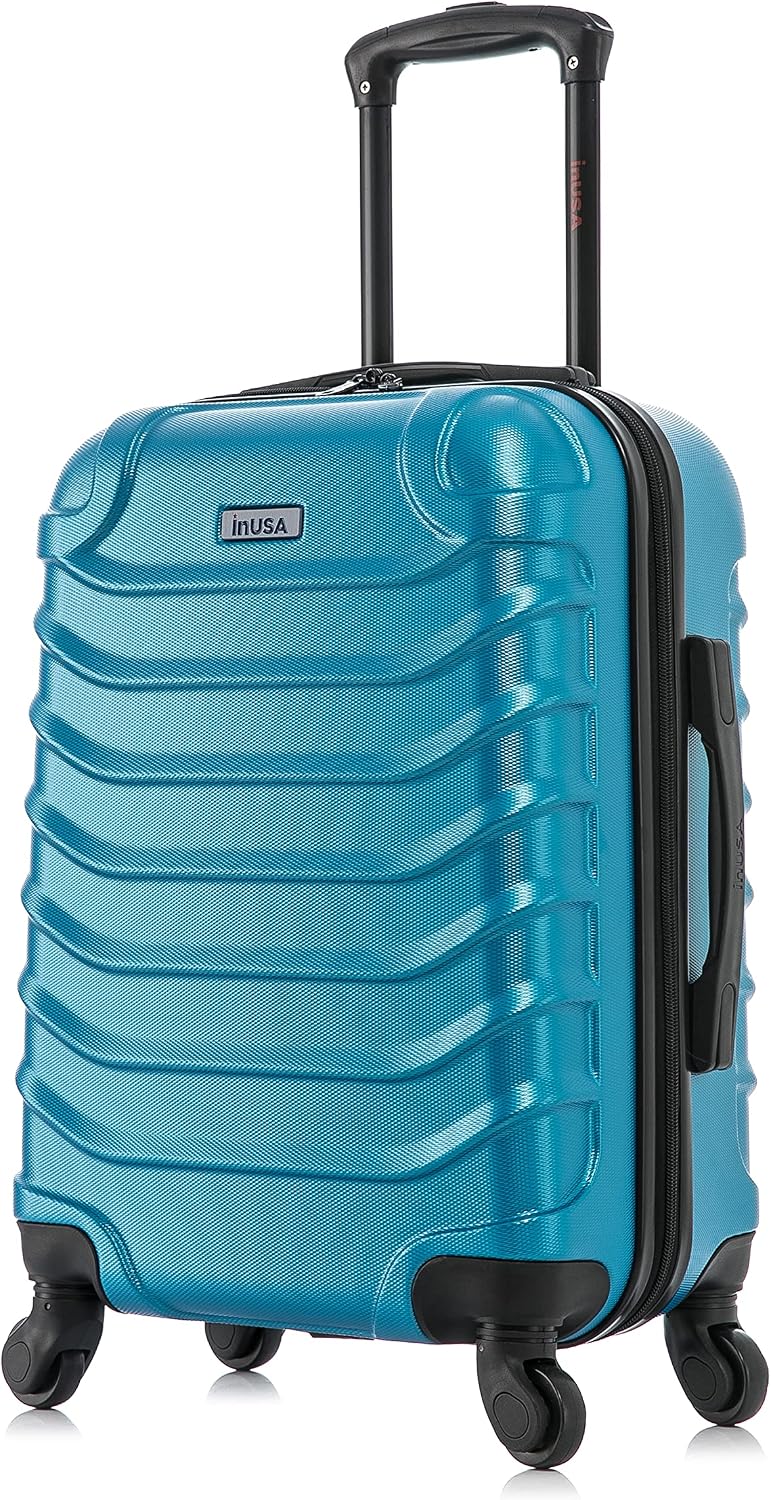
InUSA ENDURANCE Luggage with Spinner Wheels | Durable Lightweight Hardshell Suitcase, Spacious Travel Bag with Handle and Trolley | 20-Inch Carry On Small Luggage | Teal
A 20-inch lightweight hardshell in teal with spinner wheels and a trolley handle, listed as small carry-on luggage with no expansion stated.
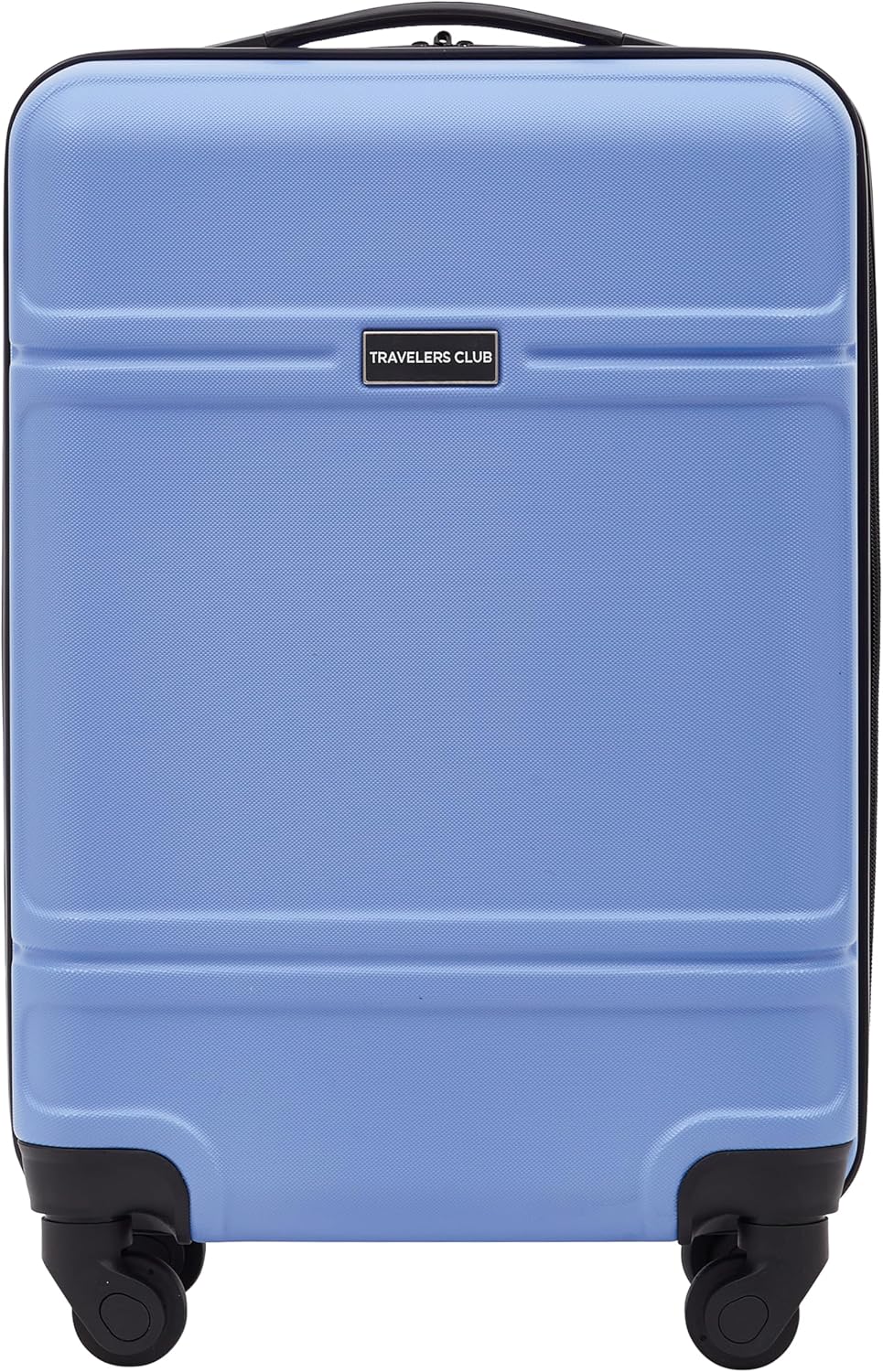
Travelers Club Skyline 22" Carry-On Spinner Luggage, Skyline Blue
A 22-inch spinner in skyline blue, sized at the top edge of what many carriers call a carry-on, so the sizer check matters before the first flight.
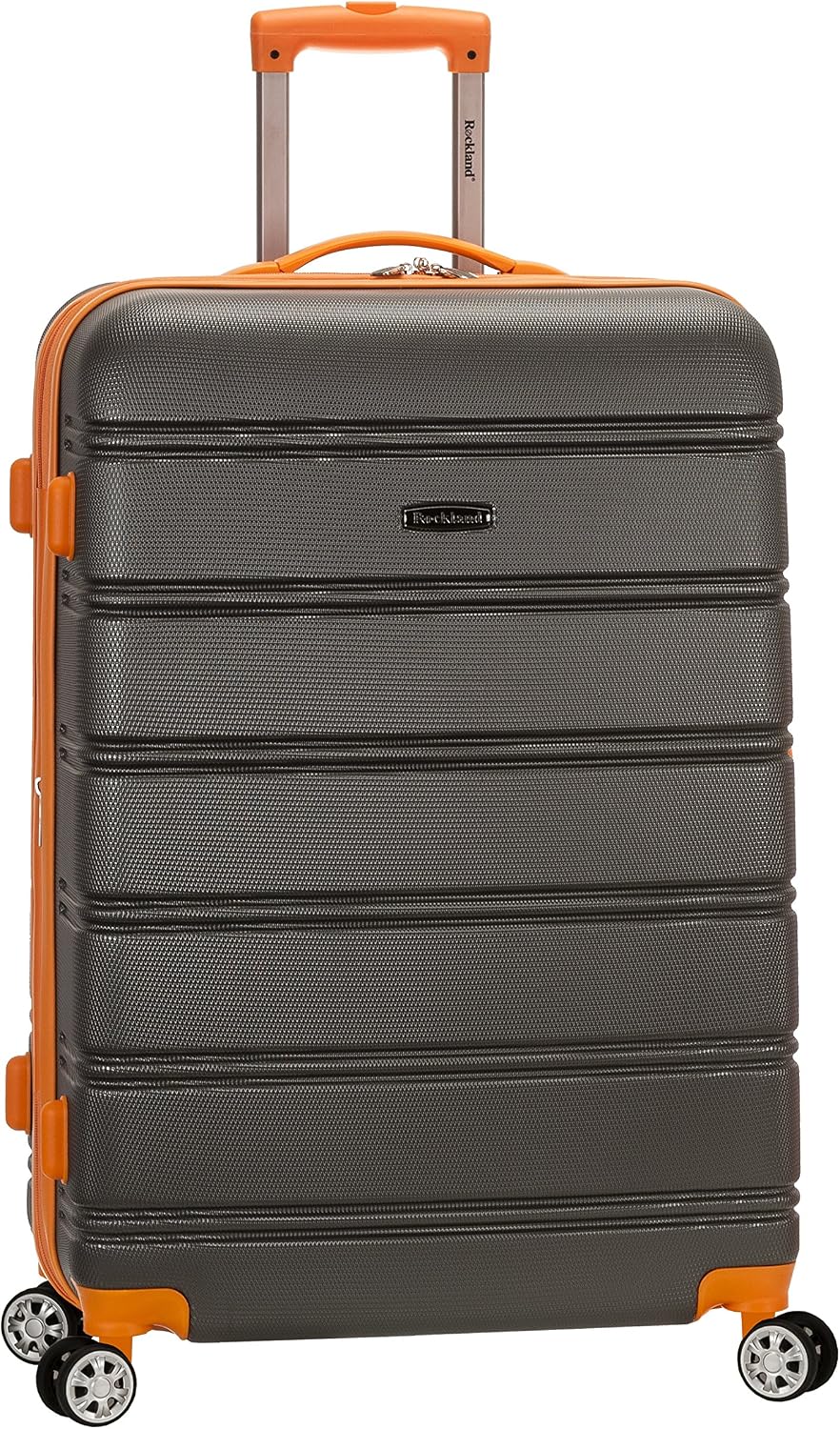
Rockland Melbourne Hardside Expandable Spinner Wheel Luggage, Checked Large 28", Charcoal
Not a carry-on: the Melbourne is a 28-inch checked case with a hardshell body and expandable spinner construction, included here as the size contrast.
How these products were compared
This guide compares stated wheeled size in inches, hardshell construction as described in each model name, wheel and handle hardware, expansion and lock features, and how each bag's published size sits against the cabin limits airlines publish. Product names, images, and retailer links are matched so that every card points to the product shown.
Nothing here comes from a lab, an airline, or a sponsored trip. It is a comparison of published specifications, and it treats the repetition in Carry-Ons reviews the way a frequent flyer does: as a hint about which part fails first, not as proof. Where a listing does not state a number, this guide says so rather than filling the gap. That is why a 21-inch bag and a 22-inch bag can both call themselves carry-ons without either seller being wrong on the page, and why the number has to be checked against a specific carrier before you pack.
How to choose the right carry-on
Start with the carrier, not the bag. Airlines publish their own cabin dimensions, and those dimensions differ by carrier and by aircraft, so the honest first step is to look up the limit for the airline you actually booked. The carry-on size limits by airline reference is the place to begin, then narrow the list.
Next, decide which size band you are shopping in. A 20-inch case is the safe choice for regional jets, strict carriers, and anyone who wants to walk past the sizer without thinking about it. A 21-inch case buys a little more packing room and stays inside the limits of some carriers. A 22-inch case is a judgement call that only makes sense if you have confirmed your airline's published number, which is why the Skyline is presented here as a size decision rather than a default.
Then look at hardware, because hardware is what fails. Four spinner wheels with housings that look firmly attached, a telescoping handle with as many stages as the listing will confirm, and zipper pulls you can actually grip matter more than the colour. Expansion is an overflow valve for the return trip, not a packing strategy, and once a bag is expanded its footprint changes. A built-in combination lock saves you from buying a separate one and hoping it fits the zipper pulls.
If you are building the rest of the kit, match the organizers to the interior rather than the exterior; the packing cubes that fit a 20-inch hardshell guide covers how that measurement works.
Samsonite Octiv Lightweight Hardshell 20-Inch Carry-On Luggage
The Octiv answers all four practical questions at once. It is listed at 20 inches, the size most likely to clear a sizer. Its main compartment is expandable for the trip home. It rolls on four 360-degree Aero Trac spinner wheels. And it has a built-in combination lock that the listing describes as TSA approved, so you are not buying a separate lock and hoping it threads the pulls. The shell is described as impact resistant, and the handle is listed as adjustable and telescopic rather than fixed.
The trade-off is complexity. A built-in lock is one more mechanism that can fail, and the combination set procedure is worth reading at home rather than at a check-in counter. Expansion is useful but not free: once the zip is open, the bag is no longer the size you measured, and on a strict carrier that is the difference between the cabin and the gate-check belt. If you want the simplest honest 20-inch hardshell, the Omni PC keeps the expansion and drops the lock.
Alternatives to consider
The Samsonite Omni PC Hardside Expandable Luggage is better suited to travelers who want a 20-inch expandable hardshell and would rather carry a separate lock or none at all, while the InUSA ENDURANCE is a stronger fit when the priority is a plain 20-inch spinner with no expansion and no lock to think about.
The Amazon Basics 21" Hardside covers the one-size-up case, pairing a 21-inch body with multi-directional wheels, a scratch-resistant surface, and a stated 25 percent expansion. The Travelers Club Skyline 22" covers the traveler whose carrier publishes a generous limit and who wants the extra packing room a 20-inch bag cannot give. The Rockland Melbourne 28" is not a carry-on and is not pretending to be one; it is here as the contrast, for the trip where you have already decided to check a bag and want the same hardshell, spinner approach in a checked size.
Day-to-day use and maintenance
Treat the expansion zip as a return-trip tool. Pack the bag with it closed, then open it for laundry and souvenirs, and re-measure before the flight home if you have used it. Wipe a hardshell with a damp cloth rather than solvent cleaners, and keep abrasive grit away from the wheel housings, where it wears the axle. Spin the bag on a hard floor before every trip and listen for a wobble; a wheel that rattles in the kitchen is a wheel that will complain on a jet bridge. Work the lock through a full cycle at home, including the reset, so you are not learning it at the counter. Store the bag empty with the expansion zipped and the handle retracted, and keep a photo of the published dimensions on your phone so you can compare it against a new carrier's sizer without guessing. No bag is indestructible, and no listing here promises a warranty outcome, so keep the retailer receipt and the packaging until you have flown with it once.
Buying checklist
- Measure the packed bag, not the empty one, and compare it against your specific airline's published limit.
- Choose the stated wheeled size for normal trips rather than an occasional edge case; 20 inches is the safest starting point.
- Confirm the exact model includes the feature you are counting on, whether that is expansion, a built-in lock, or four spinner wheels.
- Read the care and lock-setting instructions before you travel, not at the airport.
- Verify the current retailer price, availability, and return terms through the link on each card.
Final recommendation
Choose the Samsonite Octiv Lightweight Hardshell 20-Inch Carry-On Luggage when you want one bag that covers size, expansion, spinner wheels, and a built-in lock, and you are willing to accept one more mechanism in exchange. Choose the Samsonite Omni PC Hardside Expandable Luggage when a 20-inch expandable hardshell without lock hardware is the simpler answer for you. If your airline's published limit is genuinely generous, the 22-inch Skyline is a defensible step up, and if you are checking a bag anyway, the 28-inch Melbourne is the honest way to say so. Anything smaller than a confirmed measurement against a named carrier is a guess, and this list is built to avoid those.