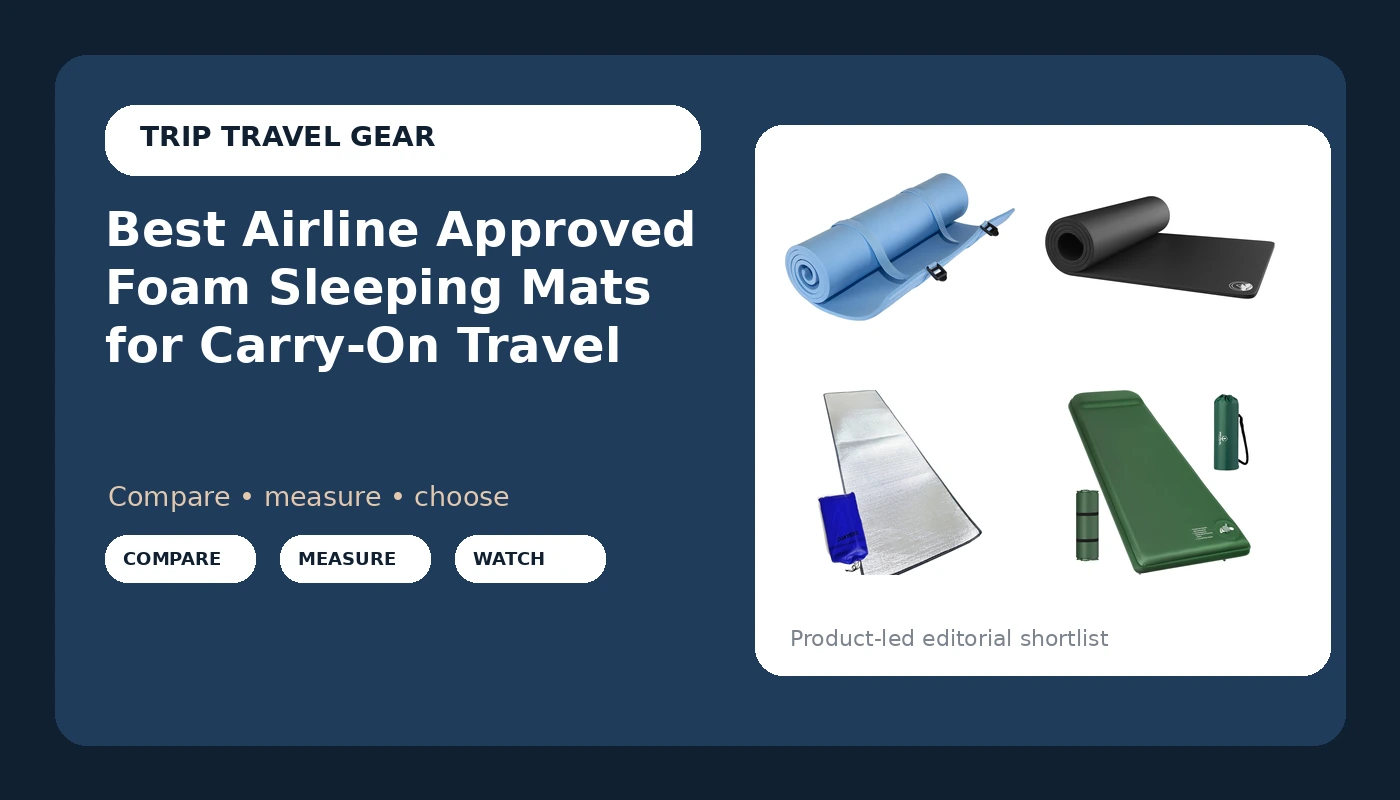
No airline publishes a list of airline approved foam sleeping mats. Carriers publish a carry-on size limit, a weight limit, and in some cases a sizer at the gate, and that is the entire vocabulary behind the phrase. The workable question is narrower: does the mat roll or fold down to a size that goes inside the bag you already own, and is it thick enough to put something between your hip and a tent floor or an airport carpet?
This guide covers six mats, from a closed cell foam pad that rolls into a strap-tied cylinder to inflatable pads with stated thickness and R-values. Everything below is read off the listings: thickness, stated dimensions, insulation value where a number is printed, packed form, and the material the mat is made from. Nothing here is a claim about how any of these slept, because no one slept on them for this article.
Quick answer
The Stansport Pack Lite Camping & Backpacking Sleeping Pad is the strongest fit for carry-on travel because closed cell foam is the one construction here with no valve to fail and no air chamber to leak, and the listing states a waterproof, puncture-proof mat with a roll-up design and straps included. Choose the Naturehike Connectable Self Inflating Sleeping Pad instead when two people want to sleep side by side and a joined surface matters more than a small packed cylinder.
What to compare in airline approved foam sleeping mats
Carry-on limits are set per airline, they change, and none of them mention sleeping mats. So the phrase does not describe a certification; it describes a fit problem. A pad that rolls into a long, fat cylinder will not drop into a 22 x 14 x 9 inch carry-on without eating half the usable space, while a thinner closed cell mat compresses into a corner. Measure the interior of your bag before you trust any claim about packability, and check the carrier's own published limit rather than a third-party chart.
Construction is the first real fork. Closed cell foam has no valve and no air chamber, so there is nothing to puncture and nothing to leak; it is also the firmest option at packable thickness. Self-inflating pads open a valve and let foam-stuffed air expand inside the chamber. Inflatable pads with a stated thickness and R-value give the most cushion per packed inch but add a valve, and often a pump or a stuff sack, to the kit.
Thickness and R-value are the two numbers worth comparing. Thickness in inches tells you how far your hip sits from the ground. R-value measures thermal resistance, and for three-season use the common guidance is roughly 2 to 4, with higher figures for cold ground; a stated 9 or 9.5 is a winter-leaning number. If a listing prints no R-value, treat the mat as unrated rather than assuming a figure.
Surface claims matter more on a tent floor than inside a duffel. Waterproof and non-slip finishes keep a pad from sliding off a cot or a shelter floor, and a connectable design lets two pads join. Those practical differences decide which of the best airline approved foam sleeping mats is worth carrying.
Top pick
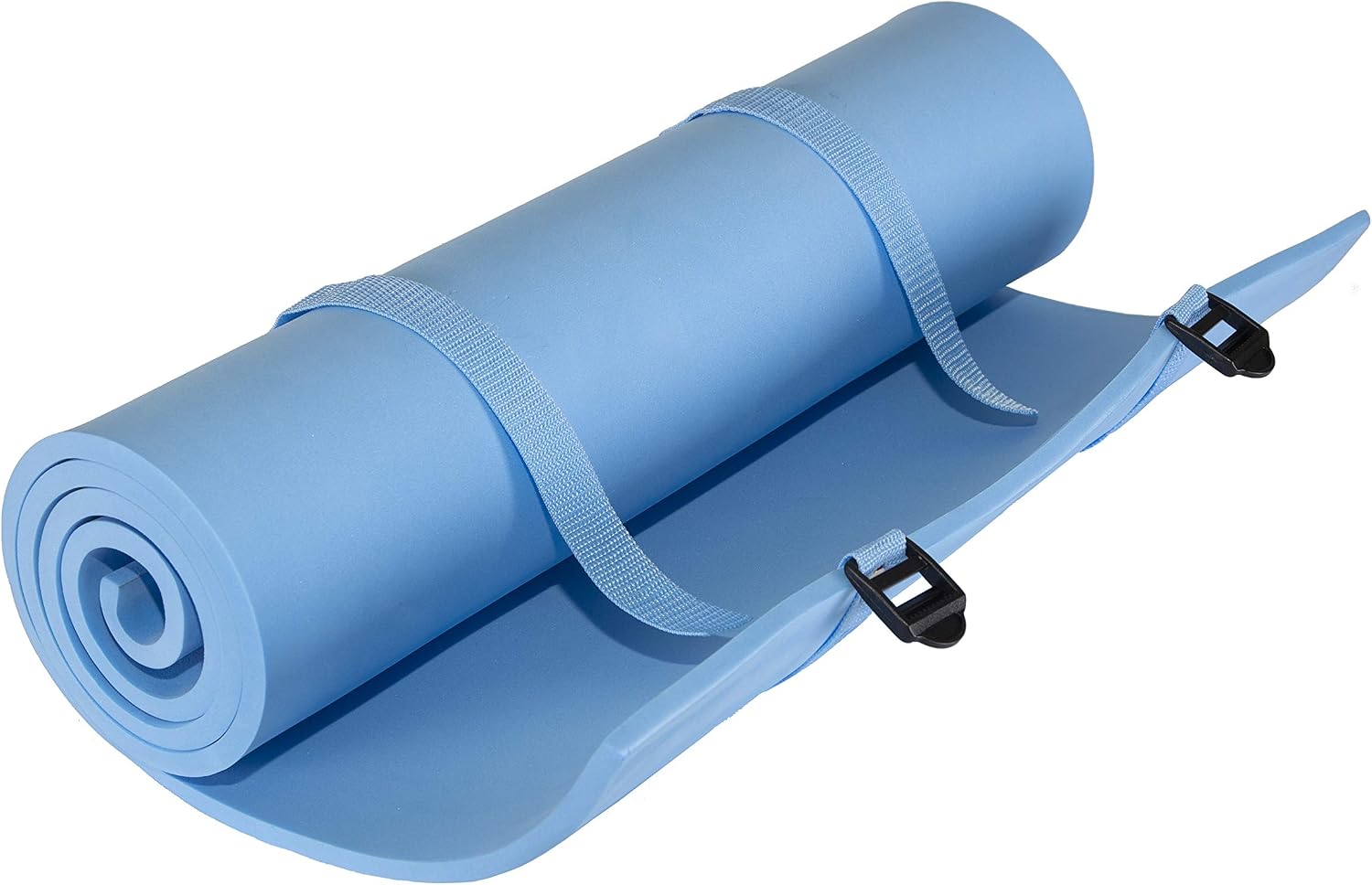
Stansport Pack Lite Camping & Backpacking Sleeping Pad, Lightweight Closed Cell Foam Mat, Waterproof & Puncture-Proof, Roll-Up Portable Design for Hiking & Outdoor Sleep, Straps Included
A closed cell foam mat with a stated roll-up design and straps included. The listing describes it as waterproof and puncture-proof, which suits ground sleep and makes it a spare pad for a guest or a tent floor.
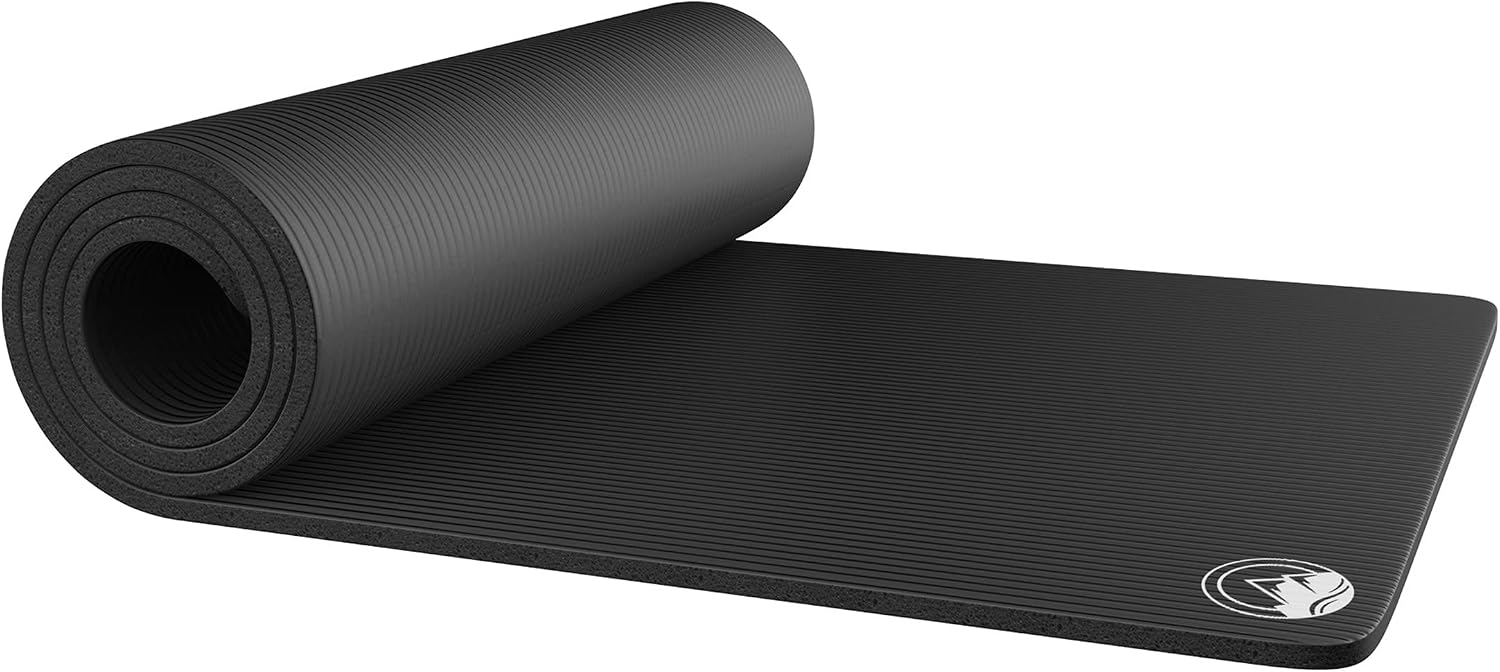
Foam Sleeping Pad – Lightweight Mat for Camping, Cots, Tents, Backpacking, and Yoga – Non-Slip and Waterproof with Handle by Wakeman
A foam mat with a built-in handle, listed as non-slip and waterproof, and named for camping, cots, tents, backpacking, and yoga. The handle makes it easier to carry unrolled or strapped to a pack.
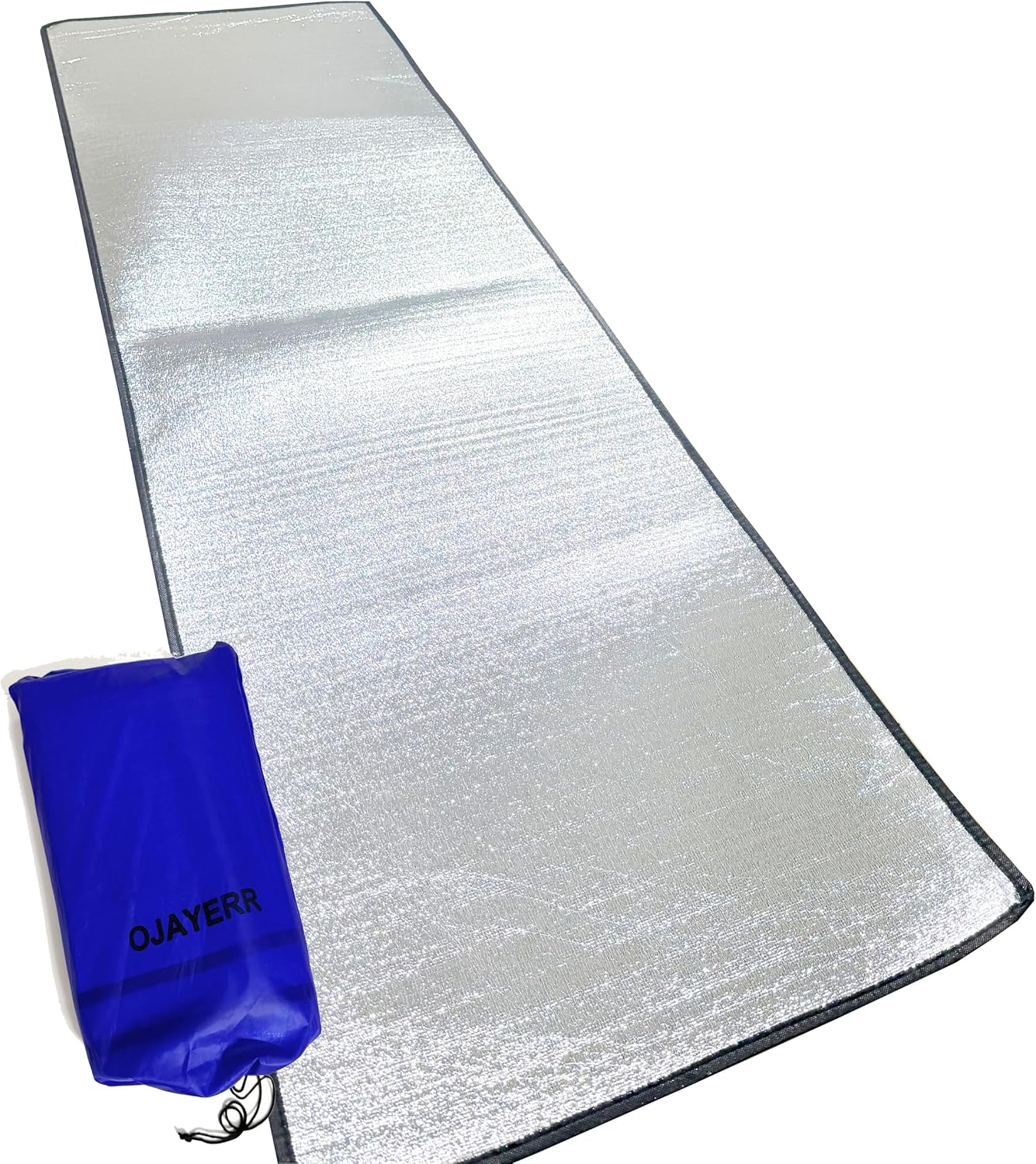
Camping Mat Insulated Sleeping Pad 78" x 39" Tent Floor Thermal Blanket
An insulated mat in a stated 78 by 39 inch size, described as a tent floor thermal blanket. The larger footprint suits two sleepers or one person who wants coverage beyond a standard single pad.
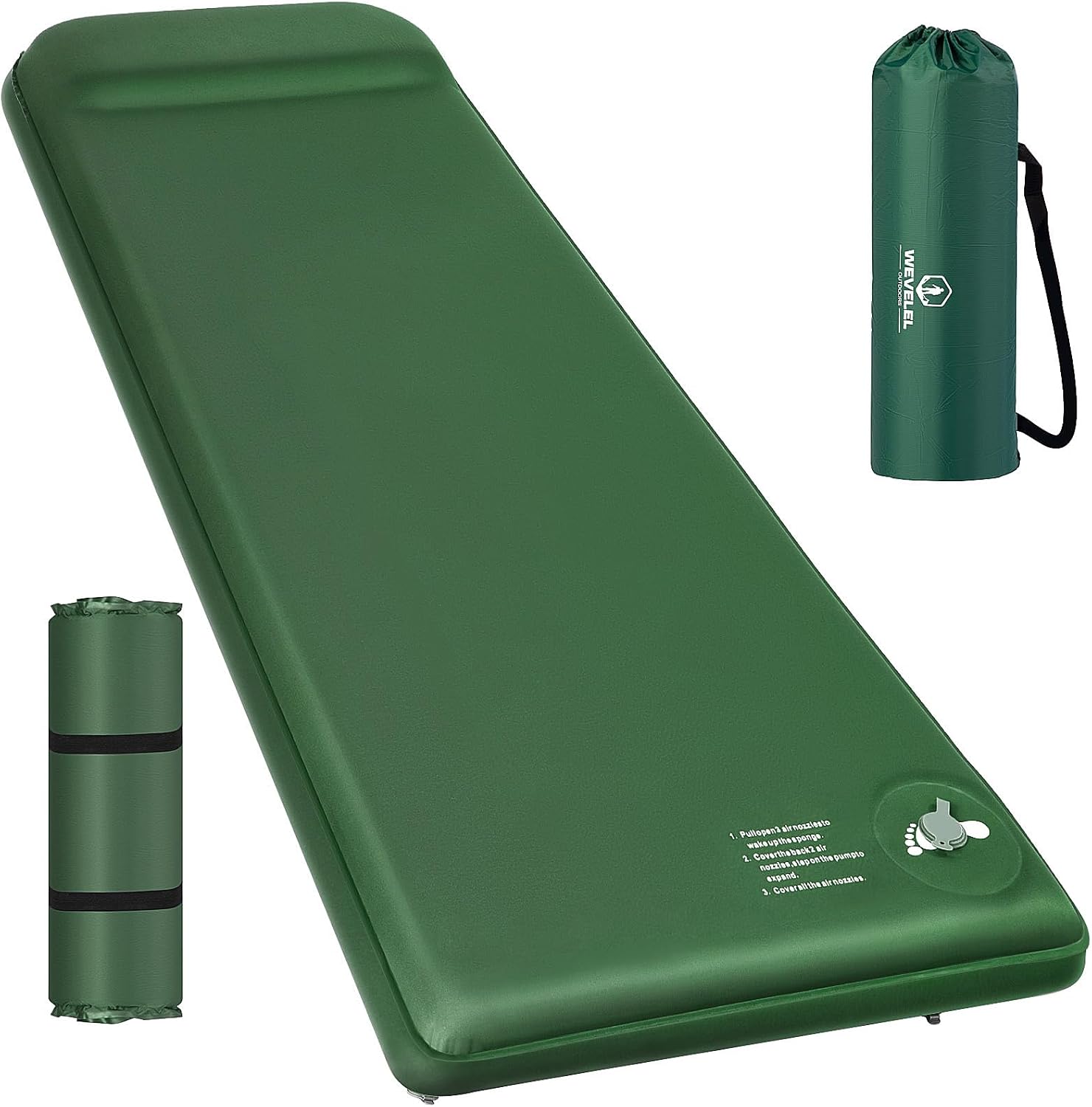
Memory Sleeping Pad, 3.1" Ultra-Thick Foam Sleeping Mats for Camping, Easy Inflate&Deflate,9.5 R-Value Insulated Camping Mattress Pad with Pillow, for Car Travel Tent
A 3.1 inch thick foam pad with a stated 9.5 R-value, a built-in pillow, and an inflate and deflate design. Aimed at car travel and tent camping where cushion and warmth outrank packed size.
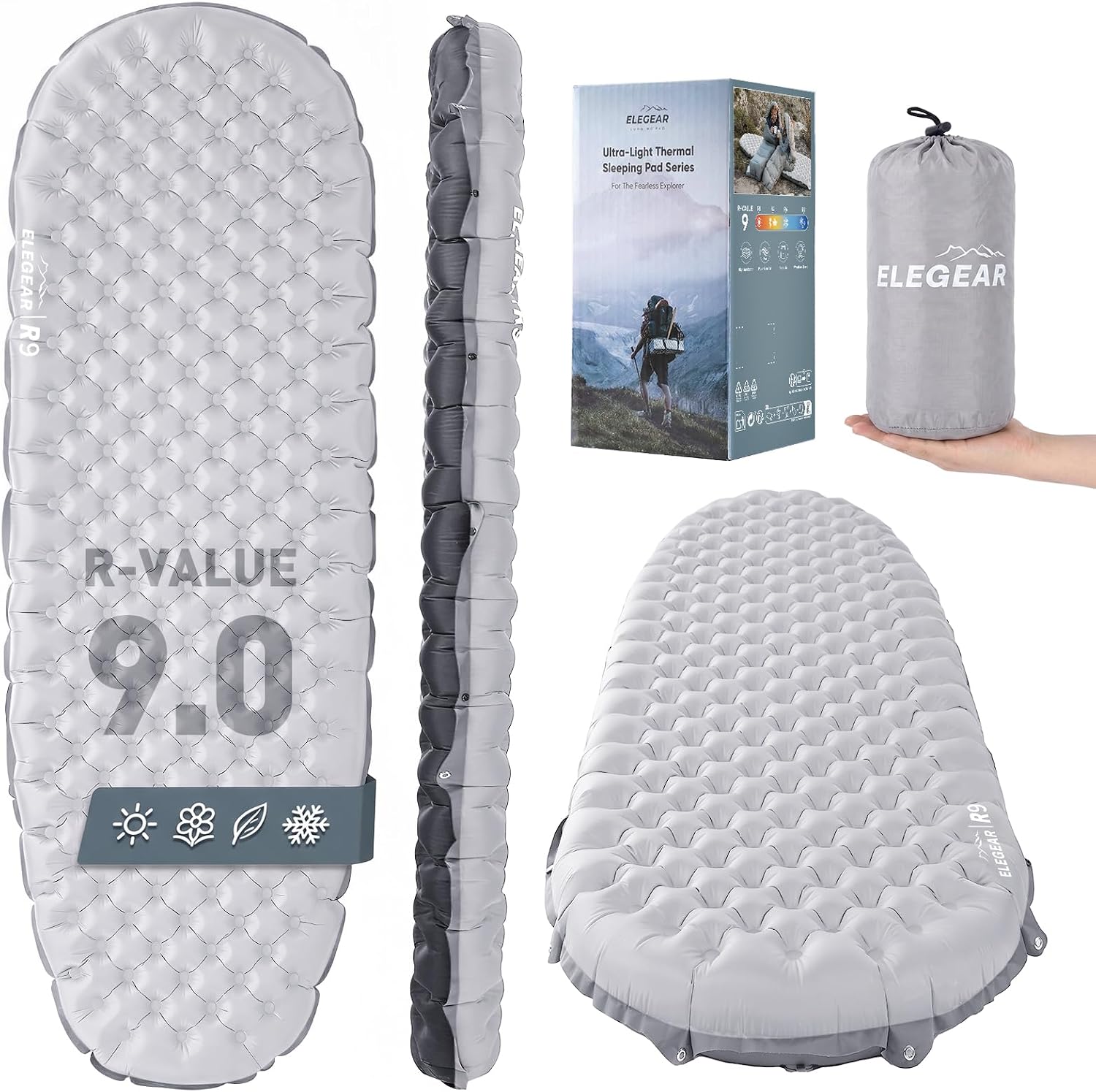
Elegear 4” Thick Sleeping Pad for Camping with 9 R-Value Insulated, Single
A single pad at a stated 4 inches thick with a stated 9 R-value. The thickness is the headline figure, and pads this deep generally pack larger than closed cell foam.
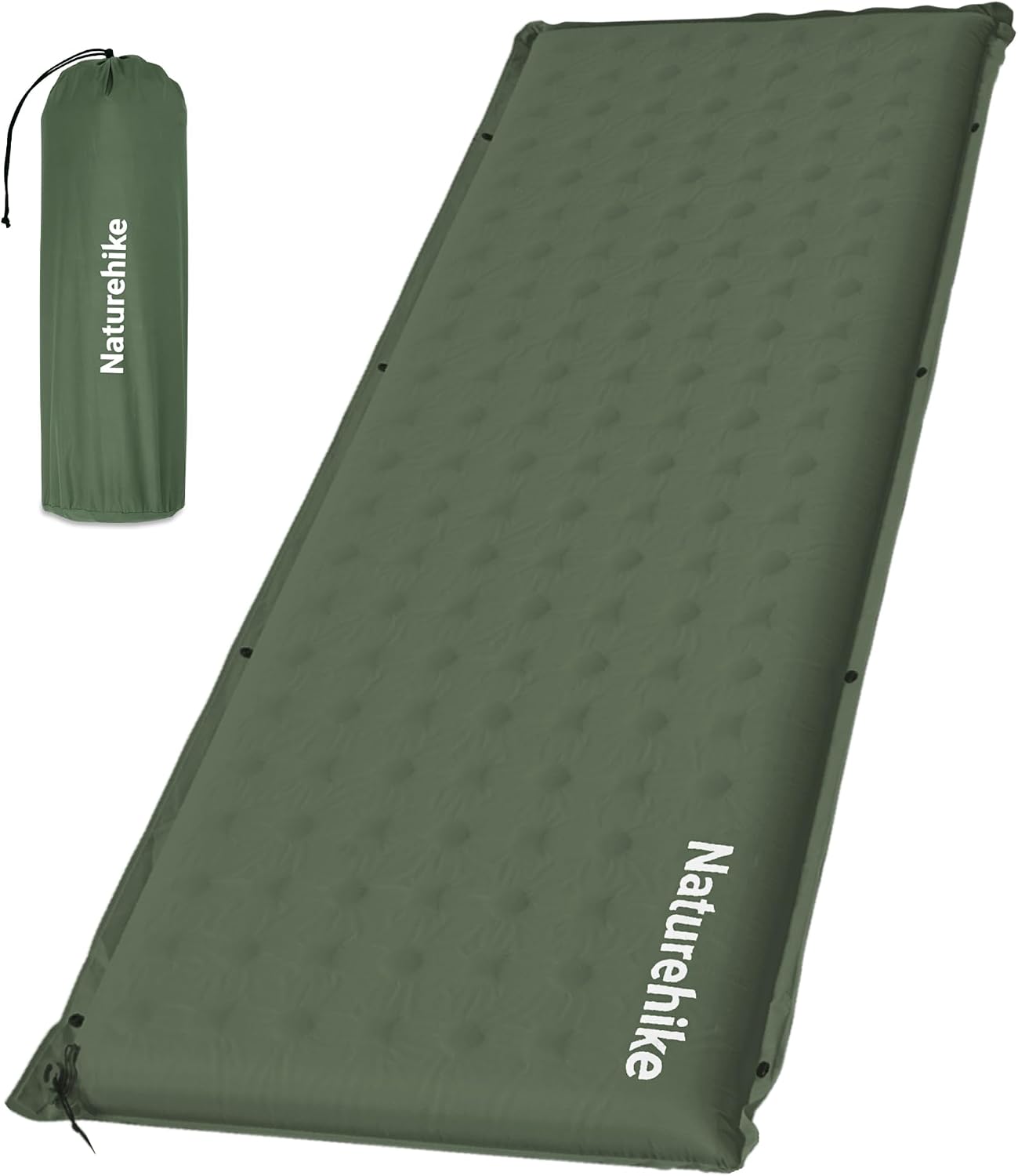
Naturehike Connectable Self Inflating Sleeping Pad
A self-inflating pad with a connectable design, so two pads can be joined. Self-inflating construction means a valve to open and foam inside the chamber.
How these products were compared
The top rated Foam Sleeping Mats are not separated by photography; they are separated by printed numbers. Every card above is matched to its listing by product identifier so the image, name, and link point at the same item. The comparison runs on five things: stated thickness in inches, stated R-value where the listing prints one, construction type (closed cell foam, self-inflating, or inflatable with foam), the packed or rolled form the listing describes, and surface claims such as waterproof, non-slip, or connectable.
Nothing here is a hands-on test. No one slept on these mats for this article, and no measurement was taken with a caliper or a scale. What you are reading is a spec read: the figures and descriptions the manufacturer publishes, set side by side so the differences are visible. That is why thickness and R-value are quoted where given, and why a mat with no stated R-value is called unrated instead of guessed at.
When you read Foam Sleeping Mats reviews on a listing, weigh what failed rather than what delighted. A valve that leaks, a seam that separates, or a pad that slides across a tent floor is a repeatable complaint; "comfortable" is not. For airline approved foam sleeping mats the question is narrower still: does the rolled size fit the bag, and does the foam survive being compressed trip after trip.
How to choose the right foam sleeping mat
Start with the ground, not the bag. For hostel floors, airport carpets, and tent floors in mild weather, a closed cell mat at modest thickness solves the problem with the least gear: nothing to inflate, nothing to patch. For cold ground the stated R-value becomes the deciding number, and a 9 or 9.5 figure belongs to a winter-leaning pad rather than a summer one. For car camping, where weight is irrelevant, thickness is the comfort lever, and a 3.1 or 4 inch pad is the one that keeps a side sleeper off the floor. If you want the longer version of this reasoning, our Foam Sleeping Mats buying guide covers thickness, insulation, and packed size in more detail than a single roundup can.
Then check the packed form against your actual bag. A carry-on is a fixed box; a mat is a soft object that has to fit inside it alongside clothes. Rolled diameter matters more than the mat's flat dimensions, and a strap set is what keeps a closed cell pad from unrolling into your clothes. Where the listing describes a stuff sack, that sack's size is the number to hold against your bag's interior. Confirm the carrier's own limit before you fly, because the size a bag is sold as and the size an airline enforces are not always the same figure.
Stansport Pack Lite Camping & Backpacking Sleeping Pad
A closed cell foam mat is the simplest object in this guide: a slab of foam and a strap, with no valve anywhere. The listing describes this one as lightweight, waterproof, and puncture-proof, with a roll-up portable design and straps included. Closed cell foam does not take on water the way open cell foam does, so a damp tent floor is less of an event, and there is no air chamber to fail in the middle of the night. It also does double duty as a sit pad at a trailhead or a spare layer under a thinner inflatable.
The trade-off is cushioning. Closed cell foam at packable thickness is firmer than a 3 inch inflatable, and side sleepers often feel the ground through it. This is a mat for people who value a guaranteed flat surface and a small packed cylinder over plushness, and for anyone who has had an inflatable valve give out on a trip. The straps are the detail worth noticing: they hold the roll, which is the difference between a pad that packs and a pad that unrolls inside your duffel.
Alternatives to consider
The Foam Sleeping Pad – Lightweight Mat for Camping, Cots, Tents, Backpacking, and Yoga – Non-Slip and Waterproof with Handle by Wakeman is better suited to cot duty, tent floors, and a yoga class, since the listing names those uses directly and describes a non-slip, waterproof surface with a handle for carrying. The Camping Mat Insulated Sleeping Pad 78" x 39" Tent Floor Thermal Blanket is a stronger fit when the job is covering a tent floor or sleeping two people, because the stated 78 by 39 inch footprint is larger than a standard single pad and the listing frames it as a thermal blanket as much as a mat.
The Memory Sleeping Pad covers car travel and tent camping where the priority is cushion and warmth, with a stated 3.1 inches of thickness, a 9.5 R-value, and a built-in pillow. The Elegear 4” Thick Sleeping Pad answers the same brief with a thicker stated spec and a 9 R-value. The Naturehike Connectable Self Inflating Sleeping Pad rounds out the set for couples and family trips, where a joined surface matters more than saving an inch of packed size.
Day-to-day use and maintenance
Closed cell foam needs almost nothing: wipe it with a damp cloth and mild soap, rinse, and let it dry fully before rolling. Do not machine wash or tumble dry it, and do not leave it compressed for months, since foam that stays crushed loses loft. Store it rolled loosely or flat, out of direct sun, and keep it off sharp gravel and away from gear with burrs. Puncture-proof is a claim about normal use, not a warranty against a tent stake.
Self-inflating and inflatable pads need the valve looked after. Open the valve and store the pad flat so trapped air and moisture can escape, and keep both out of hot car interiors and away from radiators. A patch kit belongs in the bag for any air chamber. For all of these mats, a quick airing after a trip is cheaper than a replacement.
If the mat travels by air, pack it where a bag's frame cannot crush it, and check its rolled size against the carrier's published cabin limit before the airport rather than at the gate. Our carry-on dimensions by airline notes the numbers carriers print, which is the only version of "airline approved" that means anything.
Buying checklist
- Measure the interior of the bag the mat has to travel in, then compare it with the rolled or stuffed size the listing states.
- Choose construction based on normal use: closed cell for durability and no valve, inflatable with foam for cushion and warmth on cold ground.
- Confirm the exact model includes the feature you are relying on, whether that is a strap set, a built-in pillow, or a connectable edge.
- Read the cleaning and storage instructions for the foam and for the valve.
- Verify the current retailer price, availability, and return terms through the link on each card, since listings change.
Final recommendation
Choose the Stansport Pack Lite Camping & Backpacking Sleeping Pad when you want a mat that rolls small, straps shut, and has no valve to fail, which is the closest thing to a carry-on friendly answer in this set. Choose the Naturehike Connectable Self Inflating Sleeping Pad when two people want one joined surface, and choose the Elegear 4” Thick Sleeping Pad or the Memory Sleeping Pad when warmth and thickness matter more than packed size.
The honest limit: the best airline approved foam sleeping mats are the ones whose rolled size fits your bag and whose stated numbers match your ground and your season. Where a listing gives no thickness and no R-value, there is no comparison to make, and a guess dressed up as a recommendation is worse than saying so.