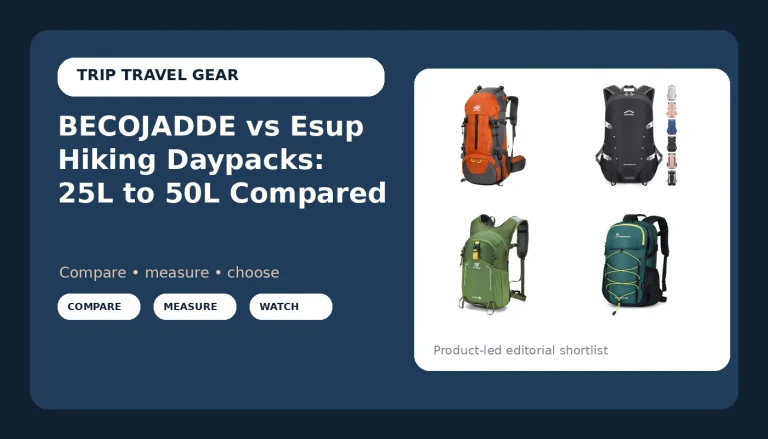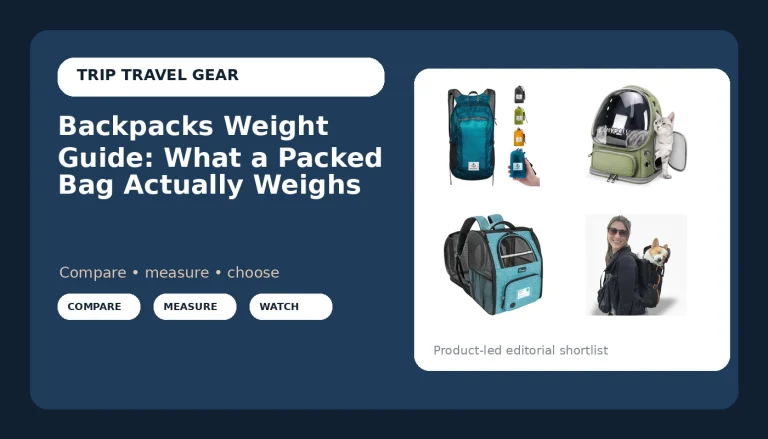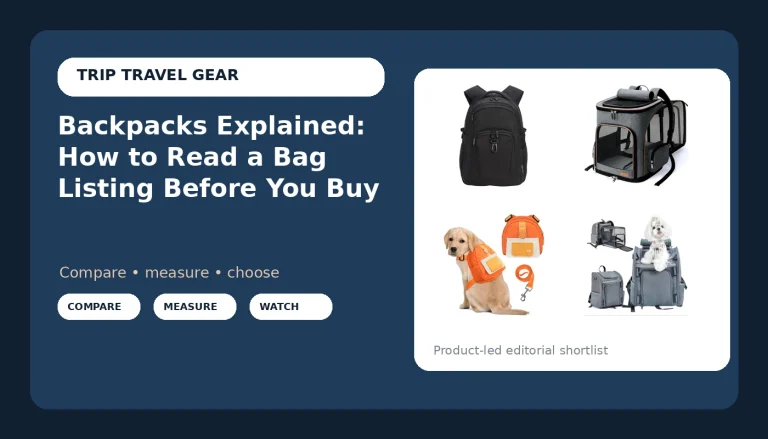
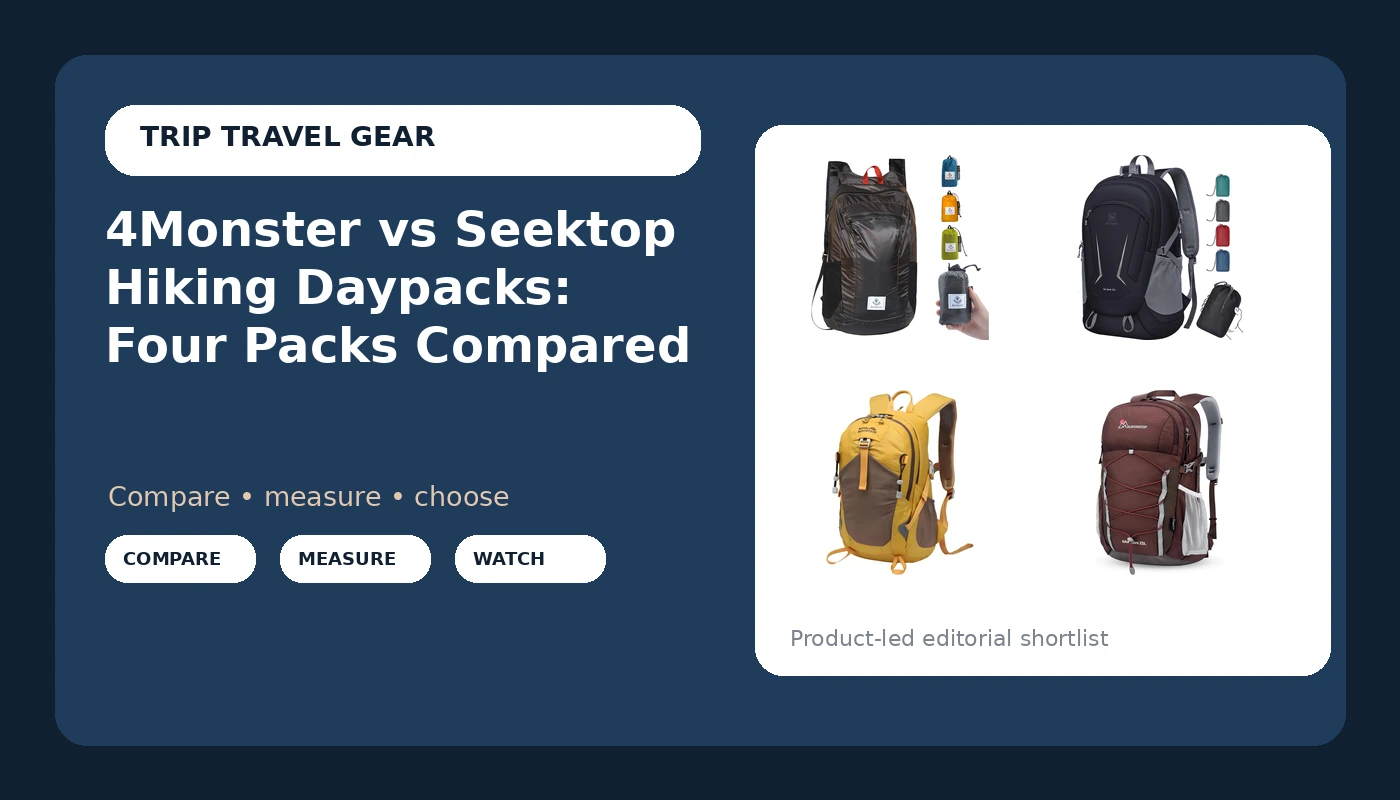
Eleven years as a regional sales rep meant living out of a bag for 90-plus flights a year, and two years of gear checks for an adventure-travel operator meant watching daypacks fail in the field before the people carrying them noticed. Searches for 4monster vs seektop hiking daypacks tend to land on the same problem I see in every carry-on thread: a wall of product photos, a brand name or two, and almost no numbers. Seektop is not part of this comparison. The four packs below are, and each one states its capacity in its own listing name, which is already ahead of half the daypacks I look at.
The pack most day hikers should buy from this group is the MOUNTAINTOP 25L, because 25 liters carries a shell, two liters of water, lunch and a small first-aid kit without turning into a load you carry badly. If the pack has to live inside a suitcase between hikes, the 4Monster Hiking Daypack is the one that earns its space back. The MIYCOO has the largest stated capacity of the four, and the 20L pack is the only one here whose own name includes a rain cover.
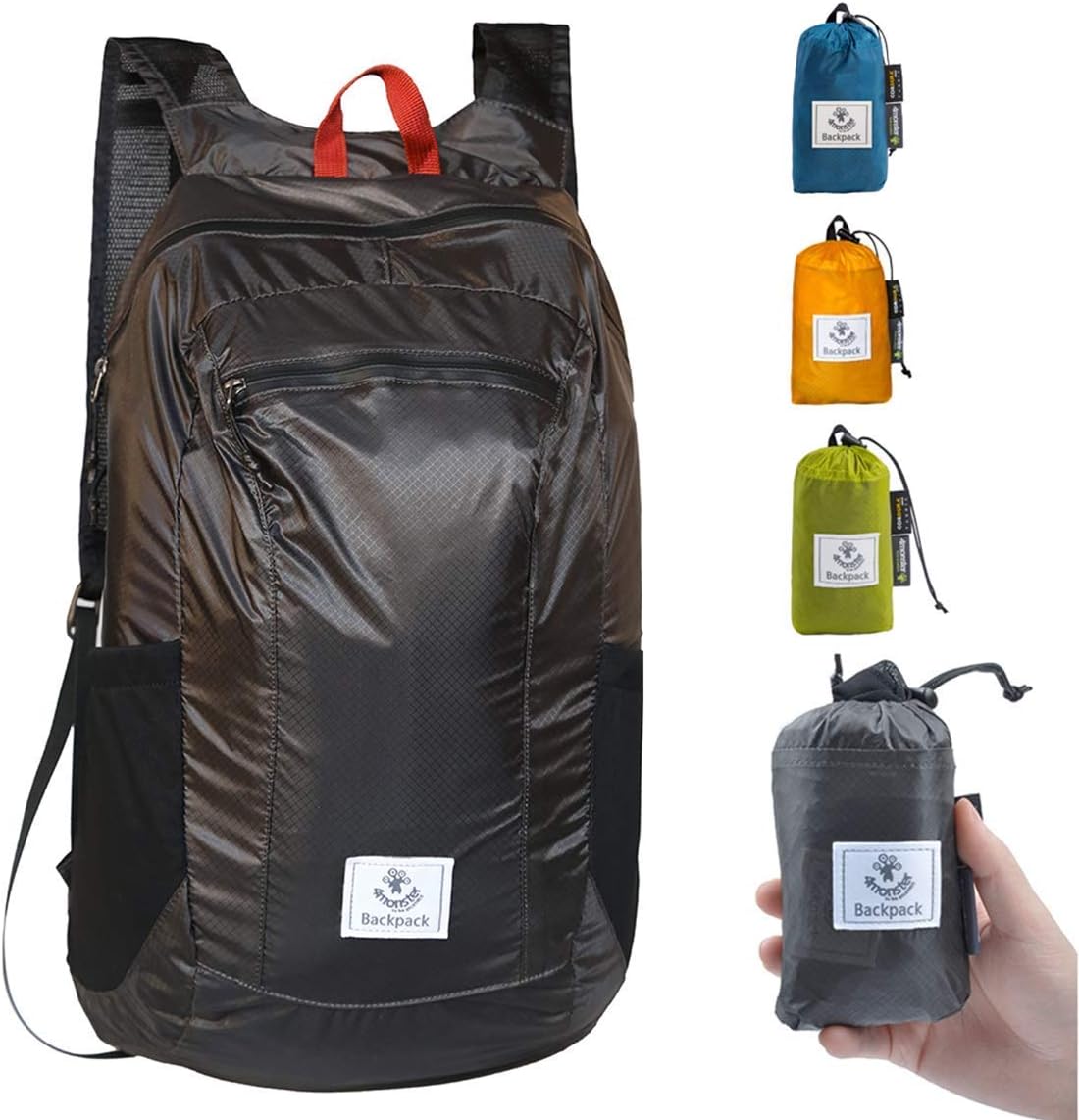
4Monster Hiking Daypack, Water Resistant Lightweight Packable Backpack for Travel Camping Outdoor
Folds down for travel and the listing states water resistance, so it earns its suitcase space
No frame and no load transfer, so it is the wrong tool for a full mountain day
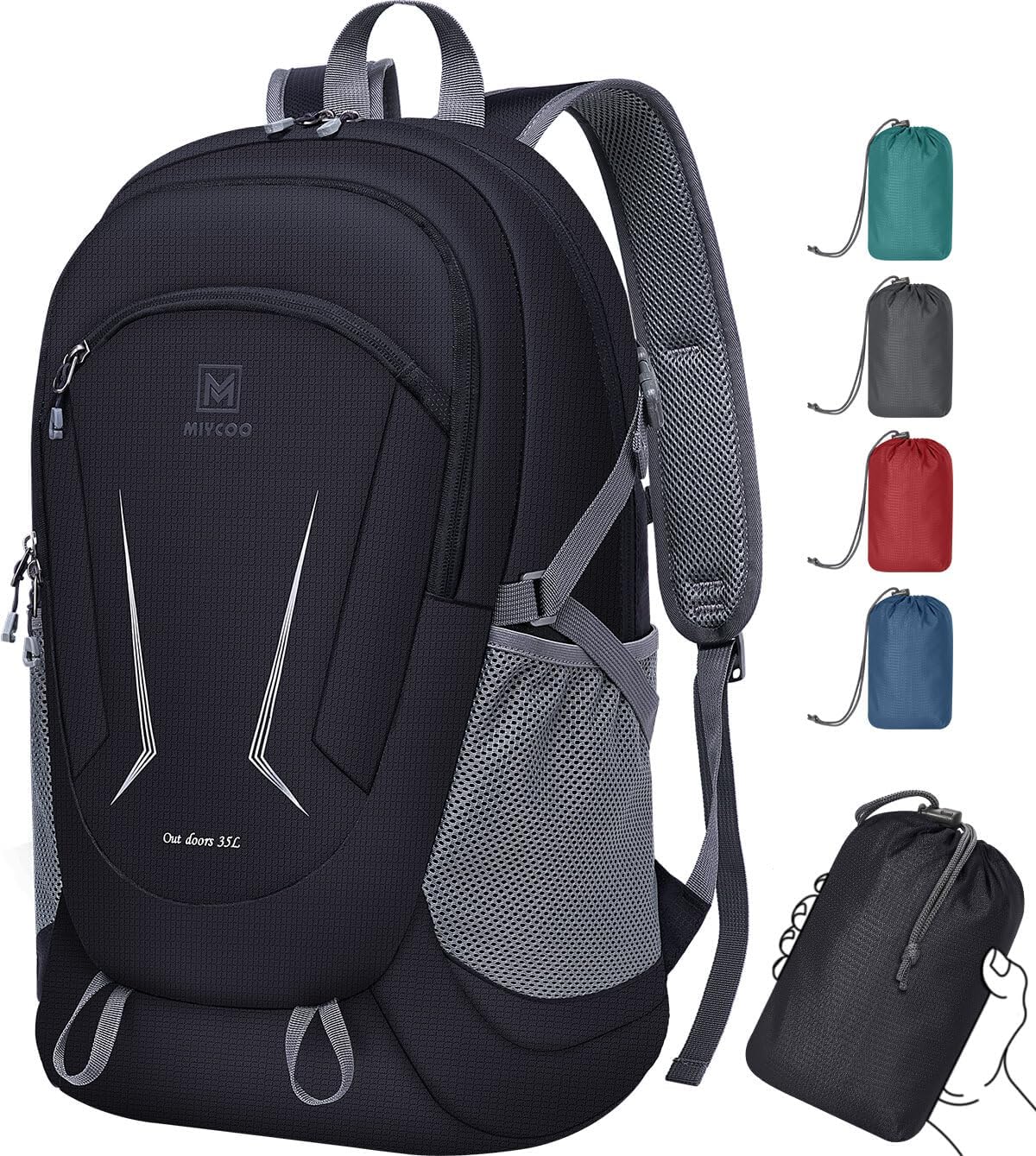
MIYCOO Ultralight Packable Backpack, 35L Waterproof Hiking Daypack
The largest stated volume here at 35L, and it still packs down
Soft volume puts weight on your shoulders, and waterproof is worth checking at the seams
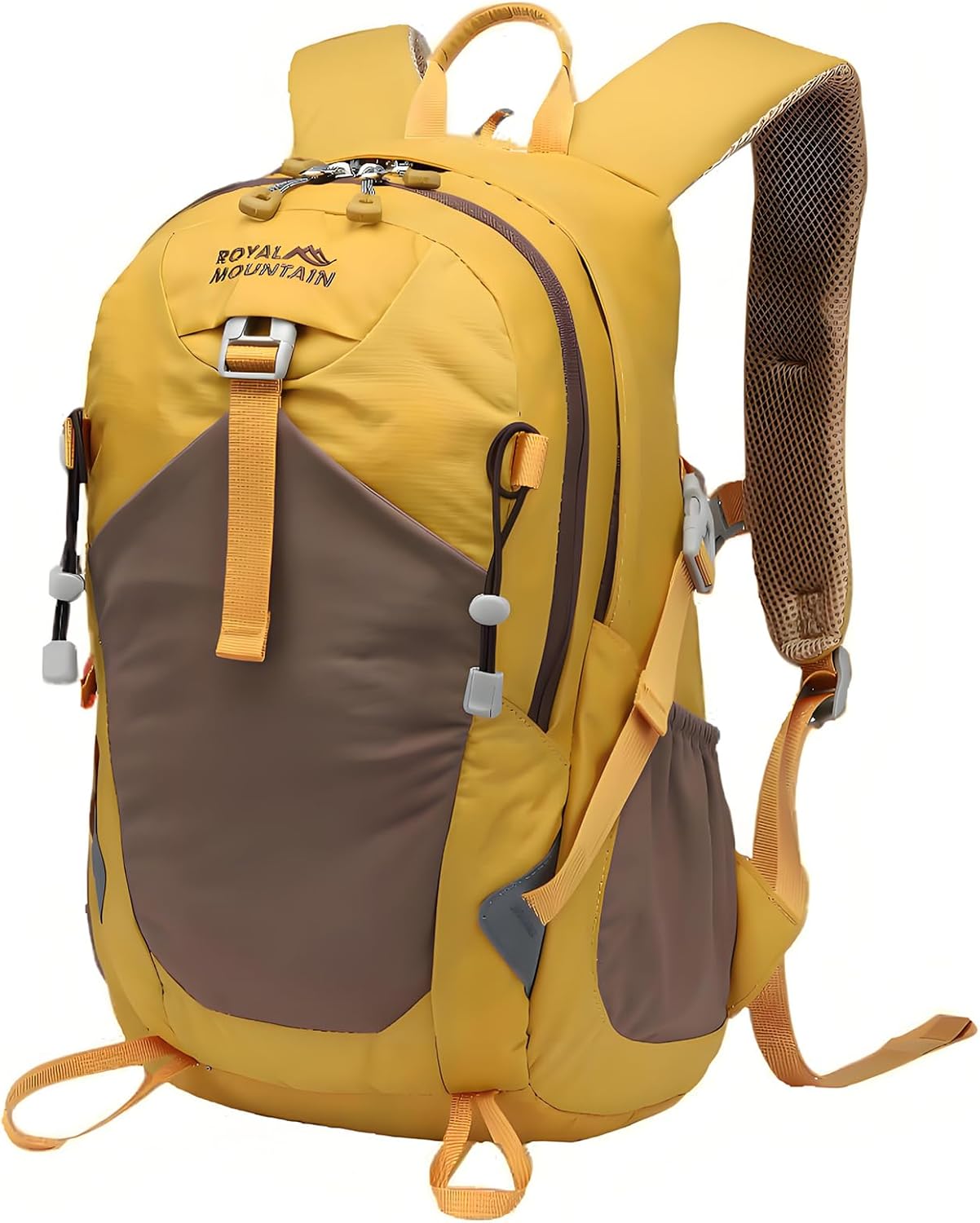
Small Hiking Backpack, 20L Lightweight Travel Backpacks For Men Women, Water Resistant Outdoor Day Pack, Ultralight Camping Daypack Backpacks Fit For Camping. (With Rain-cover)
The only pack here with a rain cover named in the listing, and 20L suits a half day
Fills fast, and it does not pack into itself, so it takes suitcase room
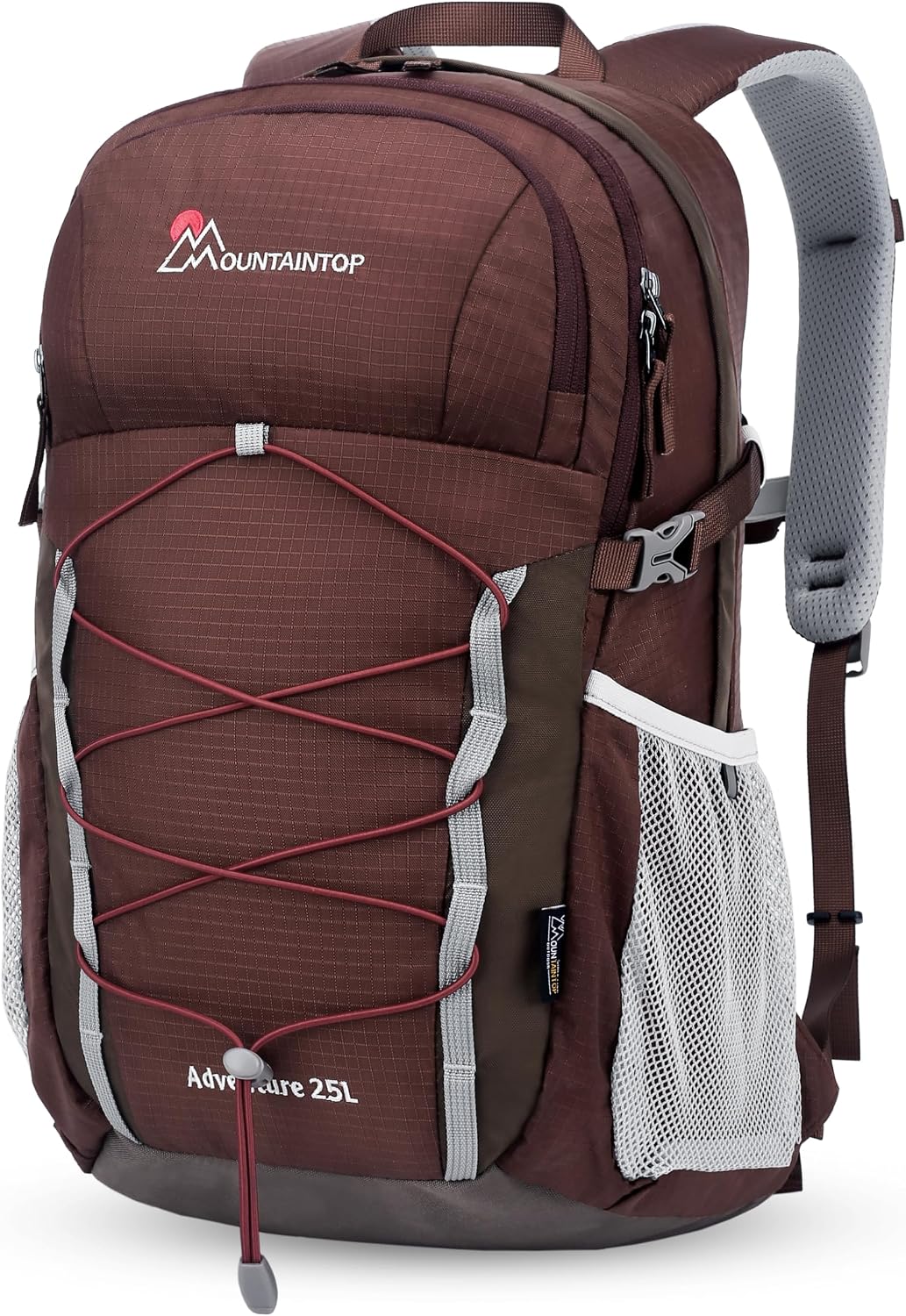
MOUNTAINTOP 25L Hiking Backpack, Lightweight Outdoor Backpacking Pack
25L is the do-everything day size, and the listing sells it as a hiking pack
Thin on stated detail, so the back panel and hip belt need verifying on the page
Prices and availability may change.
How I read these listings
I have not hiked with these four packs and I am not going to pretend I have. What I can do is what I do with a carry-on before a trip: read the listing for the numbers it actually states, note which numbers are missing, and then look at what buyers repeat about the part that fails first. A listing that states capacity, weight, fabric and a warranty is telling you something. A listing that states a color and a mood is telling you something too.
Read enough Hiking Daypacks reviews and the complaints cluster in the same four places: the shoulder strap stitching where it meets the body, the main zipper pull, the plastic buckles, and the coating on packable fabric after a season of being stuffed into a suitcase. None of those failures are exotic. They are the cheapest parts to get right, which makes them the most useful signal about how the rest of the pack was built.
Consider this your Hiking Daypacks buying guide for the four specific packs below: the numbers first, the trade-offs second, the marketing language last.
The numbers that decide a hiking daypack
This is the short answer to how to choose Hiking Daypacks, and it applies to every pack in this comparison.
Capacity. Stated liters are a rough volume, not a usable volume. A frameless 35L sack and a structured 25L pack can swallow the same real kit, because the structured pack holds its shape while the sack bulges and sags. Once a soft pack sags, the load moves from your hips to your shoulders, and that is the point where a two-hour walk stops being fun.
Fit. Look for a stated torso range, or at minimum a stated strap length and an adjustable sternum strap. Five minutes of strap adjustment beats an extra half inch of padding every time.
Weight. If a listing does not state the weight, that is a data point about the listing. Packable packs are light because there is almost nothing to them. That is the trade, and it is a fair one as long as you know you are making it.
Fabric and coating. Water resistant and waterproof are not synonyms, and neither one means seam sealed. Look for a stated denier, a named coating or a hydrostatic head. If none of those appear anywhere on the page, treat the claim as weather resistance, which is fine for drizzle and useless in a downpour.
Warranty. A pack with a stated warranty and a repair path beats a slightly cheaper pack without one, because the failure you actually care about shows up in year two, not week one.
A Hiking Daypacks size guide: 20L, 25L and 35L
20 liters is a half day, or a full summer day with one layer and no camera. It is also the size that fits under an airplane seat. The 20L pack here sits exactly in that slot, and its listing goes further than most by naming a rain cover.
25 liters is the size I would buy first. Shell, insulation, water, lunch, first-aid kit, phone, keys. The MOUNTAINTOP 25L is that number, and 25L is the most forgiving capacity in this group because it is big enough for a real day and small enough that you cannot load it into misery.
35 liters is a gear-heavy day or a fast overnight: climbing kit, a camera body with a lens attached, or a winter walk with bulk. The MIYCOO states that number in a packable body, which is a lot of volume with nothing to hold its shape. It is the right pick for soft kit and the wrong pick for anything dense.
Packable is not a size, it is a behavior, and the 4Monster is built around it. Its job is to disappear into a suitcase or a tote and reappear at the trailhead. Judge it on that, not on how it carries a full day of mountain weather.
The 4monster vs seektop hiking daypacks question
The 4monster vs seektop hiking daypacks framing is a reasonable search, but only one of those two names has a product record in front of me, so only one of them gets compared here. Seektop is a name that turns up in daypack searches; I am not covering it because there is nothing verifiable to line up against the other three. Comparing a pack whose spec sheet you can read against one you cannot is how people end up with the wrong size.
If you typed 4Monster vs Seektop hiking daypacks into a search bar hoping for a decisive answer, here is the one I would give: the 4Monster Hiking Daypack is a water resistant packable travel pack, and the listing describes the job it does well. It folds down, it lives in a suitcase or a day bag, and it comes out for a trail lunch and a rain shell. Ask it to carry a full day of winter layers and it will sag like any frameless sack.
Water resistance, rain covers and what the words mean
Three different claims appear across these four listings, and they are not graded on the same scale.
Water resistant (the 4Monster and the 20L pack) means the fabric carries a treatment that sheds light rain and buys you time. It does not mean the zippers are sealed, and zippers are where water gets in.
Waterproof (the MIYCOO) is a stronger word, and it is worth checking what backs it up on the page: taped seams, a coated fabric, a roll top. If none of that is stated, read it as water resistant with better marketing.
A rain cover (the 20L pack) is the most honest of the three, because it is a separate layer doing a separate job. Check whether the cover attaches to the pack or rides as a loose sack, since a loose cover is easy to leave in a car.
Where each pack wins and where it loses
4Monster Hiking Daypack. The travel-first pick. This is the one I would fold into a carry-on for a trip that includes a single hike, because it costs you almost no luggage space and the listing states water resistance. It loses on structure: no frame, no load transfer, and a soft body that sags once it is heavy. 4Monster Hiking Daypack. Check current Amazon price.
MIYCOO Ultralight Packable Backpack. The volume pick at a stated 35L. If your day kit is soft, meaning clothes, a towel, food and a shell, a 35L packable is a genuinely useful thing to own, and it doubles as a summit bag or a beach bag. It loses the same way every frameless pack loses: 35 liters of soft volume on two shoulder straps gets old by mid-afternoon. MIYCOO Ultralight Packable Backpack.
Small Hiking Backpack, 20L. The half-day pick, and the only one here with a rain cover in its own name. For a beginner doing two-hour walks in changeable weather, that cover matters more than a spare liter. It loses on capacity and on travel: 20L fills fast, and it does not pack into itself, so it takes suitcase room. Small Hiking Backpack, 20L.
MOUNTAINTOP 25L Hiking Backpack. The all-day pick and the one I would buy as a first real daypack. The listing positions it as a hiking pack rather than a packable travel sack, and 25L covers most day hikes in most seasons. It loses on information: the listing name gives you the capacity and little else, so verify the back panel, the hip belt and the warranty on the page before you order. MOUNTAINTOP 25L Hiking Backpack.
Hiking Daypacks for beginners: the short version
If this is your first pack, buy 25L, verify a rain cover, and check that the sternum strap adjusts. Weigh the pack on a kitchen scale when it arrives with your normal day kit inside, because the number that matters is the loaded weight, not the catalog weight. Then walk a mile with it before you commit to a longer hike. Hiking Daypacks for beginners get oversold on features and undersold on fit, and fit is the one thing you can actually test in an afternoon.
The best budget Hiking Daypacks are not the cheapest ones. They are the ones that state their limits clearly: capacity, weight, fabric, warranty. A pack that tells you what it is beats a pack that tells you how it feels.
Verdict
In a Hiking Daypacks comparison of these four, the MOUNTAINTOP 25L is the pick for most people, the 4Monster is the pick for travelers who want a pack in the suitcase, the MIYCOO is the pick for soft kit in volume, and the 20L is the pick for a half day in wet weather. The top rated Hiking Daypacks in any size class get there by stating their numbers and holding up at the seams, and that is the standard to hold these four to.